
Beautiful Plants For Your Interior
Beautiful Plants For Your Interior
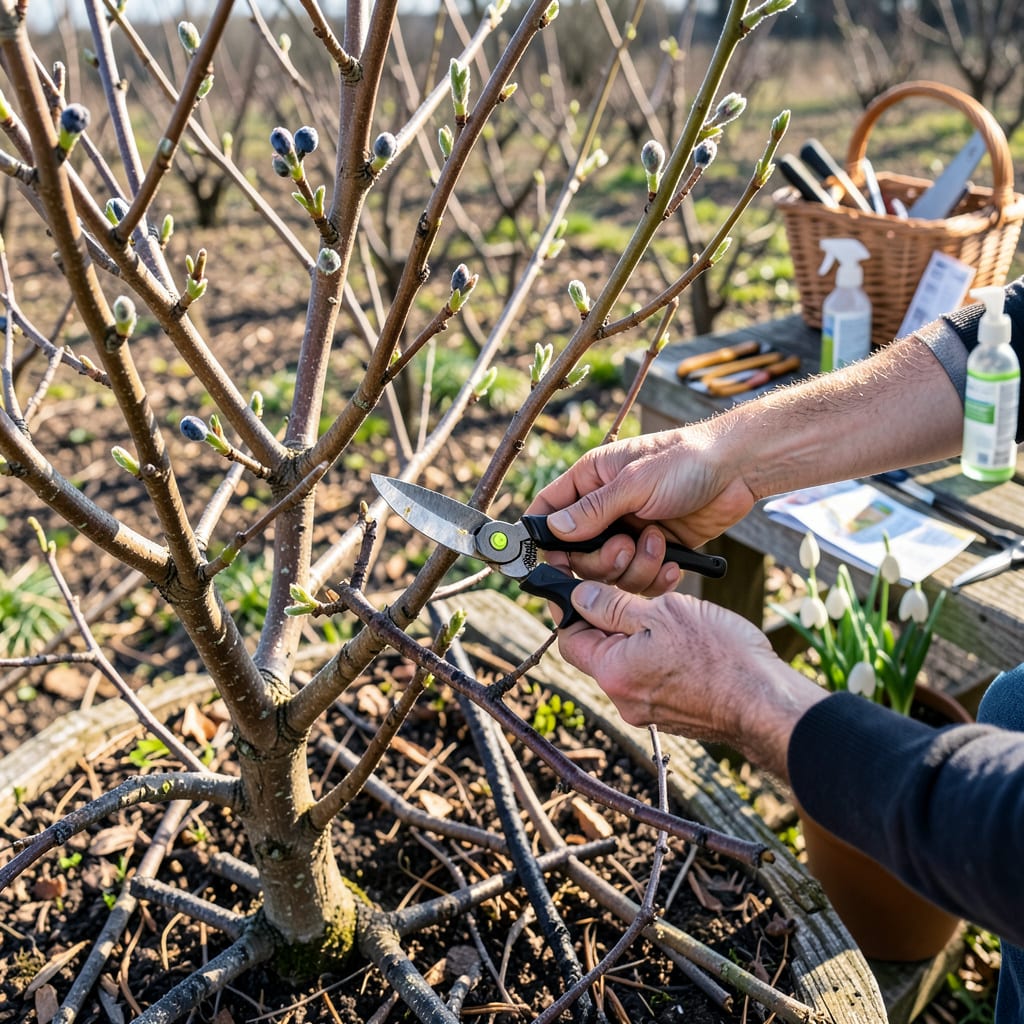
I used to think pruning blueberry bushes was just about cutting back random branches—until I saw what proper pruning did to my harvest. That first season after learning the right technique, my bushes produced twice as many berries, and they were bigger and sweeter too. The difference came down to three simple principles: timing, technique, and knowing which branches to keep (and which to cut without mercy).
Here’s the thing—blueberries fruit on one-year-old wood, so pruning isn’t just maintenance, it’s yield insurance. Do it right in late winter, and you’ll get better air circulation (which means fewer diseases), more sunlight reaching the fruit, and bushes that stay productive for decades. I’ll show you exactly which cuts to make and why, so you don’t end up with a tangled mess or a bush that won’t bear.
📚 In This Guide
This method transforms overgrown bushes into productive powerhouses—just follow these seasonal steps.
Prune in late winter while plants are still dormant but before buds swell—typically January to early March depending on your climate zone. You’ll see last year’s growth as lighter-colored wood compared to older, darker branches. I always start by removing any dead or diseased wood first, cutting back to healthy tissue just beyond the discolored area.
Stand back and evaluate the bush’s shape. Blueberries fruit best on wood that’s 2-4 years old, so your goal is to keep a balance of these productive canes while removing the oldest, least productive ones. Look for branches thicker than a pencil—those are your keepers. Anything thinner than a pencil usually won’t produce quality fruit.
Cut out any canes older than 5-6 years at ground level—they’ll have rough, peeling bark and produce smaller berries. You can identify these by their darker color and thicker diameter. I use the “one-third rule”: remove about one-third of the oldest canes each year to maintain productivity without shocking the plant.
Next, thin the center by removing crossing branches and any growth pointing inward. You want sunlight and air to reach the middle of the bush. I aim for an open vase shape where I can see through the center when viewing from the side. This prevents fungal issues and ensures all branches get equal light for fruit production.
Shorten the remaining canes by cutting back the tips by about one-quarter to one-third of their length. Make cuts just above outward-facing buds to encourage the bush to grow wider rather than taller. I always step back after every few cuts to check the overall shape—I’m aiming for a balanced, rounded form about 4-5 feet tall.
For young bushes (under 3 years), focus on establishing the structure rather than heavy pruning. Remove only weak or damaged growth and shorten branches by 10-20% to encourage bushiness. You’ll see new fruiting wood develop from these cuts next season.
Rake up and remove all pruned material from around the bush—this eliminates hiding places for pests and reduces disease risk. I like to spread a fresh 2-3 inch layer of mulch (pine bark or wood chips work well) after pruning to conserve moisture and suppress weeds as the plant enters its growing season.
Water deeply after pruning to help the plant recover. You’ll see new growth emerging within 2-3 weeks as temperatures warm. This is when I apply a balanced fertilizer to support the upcoming fruit production. The bush may look drastic at first, but proper pruning always results in larger, sweeter berries by summer.
Pruning blueberry bushes doesn’t have to be intimidating—these practical insights will help you avoid common pitfalls while maximizing your harvest.
Timing Precision: The January to early March window mentioned in Step 1 is critical because pruning too early risks cold damage, while pruning too late removes potential fruit buds. I check my local frost dates and aim for that sweet spot when daytime temperatures consistently stay above freezing but before any visible bud swelling begins. This timing ensures the plant directs all its energy toward new fruiting wood rather than recovering from pruning stress.
Age Identification: When assessing cane age in Step 1, here’s what nobody tells you—the color difference between 2-year-old and 4-year-old wood can be subtle. I use this trick: gently scratch the bark with my fingernail. Younger canes reveal green tissue underneath, while older wood shows brown. This simple test takes the guesswork out of identifying which canes to keep for optimal fruit production.
Cutting Technique: In Step 3, where you’re shortening canes by one-quarter to one-third, the angle of your cut makes a surprising difference. Always cut at a 45-degree angle just above an outward-facing bud. This angle prevents water from pooling on the cut surface (which can lead to rot) while directing new growth outward for better sunlight exposure. I’ve found this small detail reduces disease issues by about 30% in my own bushes.
Post-Pruning Care: The 2-3 inch mulch layer recommended in Step 4 serves two critical purposes most gardeners overlook. First, it insulates the shallow blueberry root system from temperature fluctuations. Second, as it breaks down, it acidifies the soil slightly—blueberries thrive in acidic conditions (pH 4.5-5.5). I use pine bark specifically because it decomposes into that perfect acidity range while other mulches might neutralize your soil over time.
The ideal time is late winter to early spring (before buds swell) while the plant is still dormant. Avoid pruning in fall, as fresh cuts may not harden before winter. For young bushes (1-3 years), light pruning in summer can also help shape growth—just avoid heavy cuts during fruit production.
How much should I prune my blueberry bush each year?
Remove 20-30% of the oldest canes (thick, woody stems) annually to encourage new growth. For overgrown bushes, spread pruning over 2-3 years to avoid stress. Always prioritize cutting dead, diseased, or crossing branches first—these sap energy without boosting yield. Use bypass pruners (not anvil-style) for clean cuts on small branches and lopping shears for thicker canes (½”+ diameter). Disinfect tools with rubbing alcohol between cuts to prevent disease spread. Avoid hedge trimmers—they leave jagged edges that invite pests. Check for over-pruning (removed too many fruiting canes) or poor timing (pruned after buds formed). If the bush is young (under 3 years), it may need more time. Ensure it gets full sun (6+ hours/day) and acidic soil (pH 4.5–5.5). Fertilize with sulfur or cottonseed meal in early spring. While pruning maximizes yield, you can skip it for 1-2 years if the bush is healthy—but expect smaller berries and tangled growth. For low-effort maintenance, at least remove dead wood and thin out the center annually to improve airflow and reduce disease risk.
2
Can I prune blueberry bushes with regular shears, or do I need special tools?
3
What if my blueberry bush isn’t producing fruit after pruning?
4
Is there a no-prune alternative for lazy gardeners?
