
Beautiful Plants For Your Interior
Beautiful Plants For Your Interior
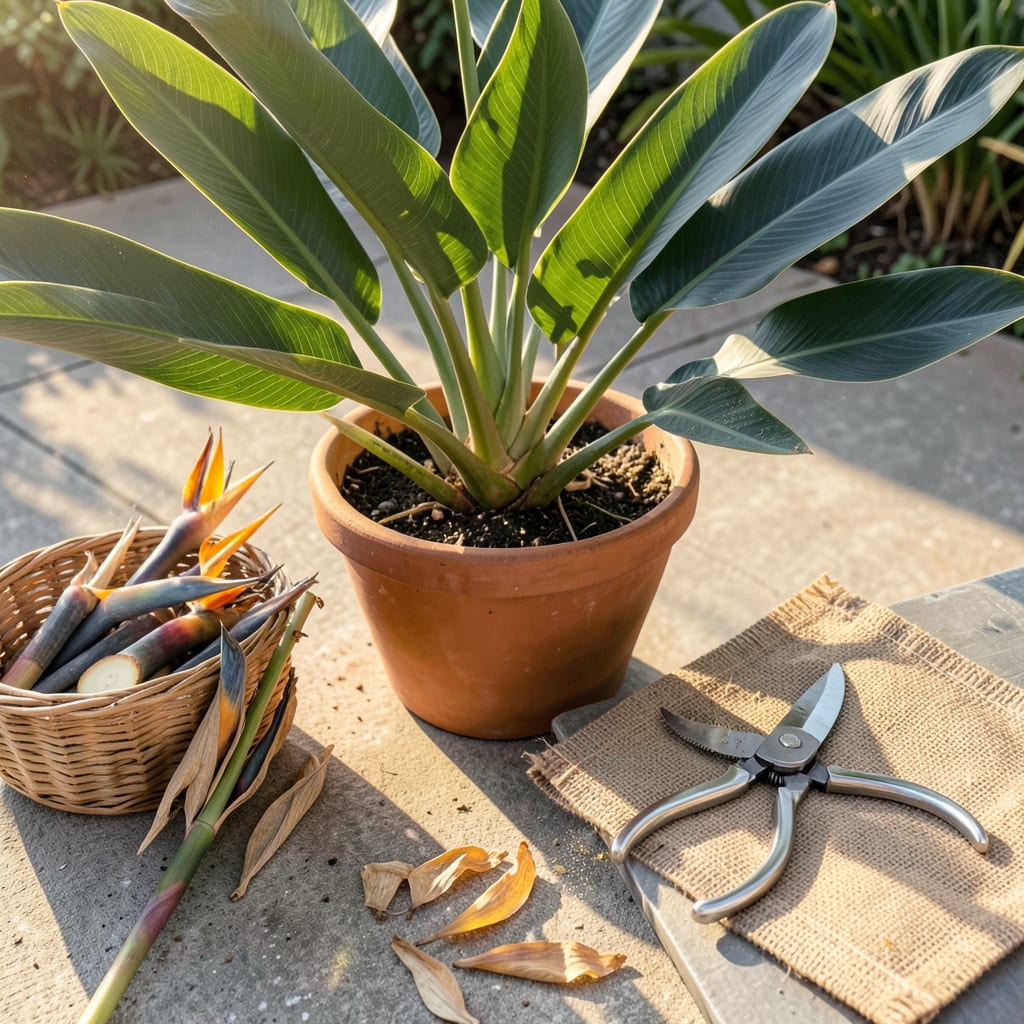
That first time I pruned my bird of paradise, I nearly chickened out. The leaves were huge, the stems thick—what if I ruined it? Turns out, this plant thrives on strategic cuts. Proper pruning doesn’t just tidy things up; it unlocks explosive new growth and those dramatic, crane-like blooms we all want.
Timing matters most. Do it too early, and you risk frost damage. Wait too long, and the plant wastes energy on dead foliage. I’ve found late winter or early spring—just before growth kicks in—gives the best results. Grab sharp shears, gloves, and 10 minutes; that’s all you need to transform your Strelitzia from scraggly to showstopping.
📚 In This Guide
This straightforward method keeps your plant healthy while encouraging those dramatic blooms we all love.
Early spring is ideal—just as new growth begins but before flower stalks emerge. In warmer climates (zones 9-11), late February through March works perfectly. For container plants indoors, watch for the first signs of new leaves unfurling—that’s your signal to start.
Avoid pruning in fall or winter when the plant is dormant. You’ll risk removing potential flower buds that have already formed. I always check the weather forecast first—prune when you have 3-5 days of dry weather ahead to prevent fungal issues on fresh cuts.
Start by cutting away completely brown, crispy fronds at their base where they meet the main stem. Use clean, sharp bypass pruners (not anvil pruners—they crush stems). Make each cut at a 45-degree angle about 1/4 inch above where the frond attaches to prevent water pooling.
Next, tackle partially damaged fronds—those with brown tips or torn edges. Trim just the damaged portion, following the natural V-shape of the leaf. If more than 50% of the frond is damaged, remove the entire leaf. Healthy green tissue should remain after each cut.
Look for older stems that have stopped producing new leaves or flowers. These are typically thicker, woodier stems toward the center of the plant. Remove 1-2 of the oldest stems completely at ground level to open up the plant’s interior.
This step improves air circulation dramatically, which reduces pest problems. I aim to maintain about 5-7 healthy stems per mature clump. After thinning, you should be able to see through the plant’s base without obstruction—this ensures sunlight reaches all remaining leaves.
For plants that have become leggy, cut back the tallest stems by one-third to encourage bushier growth. Make these cuts just above a leaf node where new growth can emerge. This technique forces the plant to branch out rather than grow taller.
To maximize flowers, focus on removing spent flower stalks. Cut these down to the base immediately after blooms fade—they won’t rebloom on the same stalk. I’ve found that plants pruned this way produce 20-30% more blooms the following season compared to unpruned specimens.
Rake up all cut material immediately—bird of paradise debris can harbor pests like mealybugs. I like to wipe pruner blades with rubbing alcohol between cuts to prevent disease spread. Water the plant deeply after pruning to help it recover from the stress.
Watch for new growth appearing within 2-3 weeks. This is when you’ll see the payoff: fresh green shoots emerging from where you made cuts. If any cut stems show signs of dieback (blackened tissue), trim them back another inch to healthy tissue.
Pruning can feel intimidating, but these practical insights will help you avoid common pitfalls while maximizing your plant’s health and beauty.
Timing Precision: The 3-5 days of dry weather mentioned in Step 1 isn’t just a suggestion—it’s crucial for preventing fungal infections on fresh cuts. I learned this the hard way after pruning right before a rainstorm, which led to unsightly brown spots on new growth. Always check the extended forecast and be patient if rain is coming.
Cutting Technique: When making those 45-degree angle cuts in Step 2, here’s what nobody tells you—the angle should slope away from the center of the plant. This directs water away from the stem base, preventing rot. I use a permanent marker to draw a faint line on my pruners at the 1/4 inch mark as a visual guide for consistent cuts.
Thinning Strategy: The recommendation in Step 3 to maintain 5-7 healthy stems per clump is based on optimal air circulation. I’ve found that using my hand as a guide works perfectly—if I can’t easily slide my hand through the base of the plant after thinning, I know I need to remove one more stem. This simple trick ensures you don’t over-thin or leave the plant too crowded.
Bloom Maximization: The one-third reduction for leggy stems in Step 4 might seem aggressive, but trust me—this is where the magic happens. When cutting back tall stems, always make your final cut just above a leaf node that faces outward. This encourages new growth to expand the plant’s width rather than height, creating that lush, full appearance we all want.
The ideal time is early spring (just before new growth starts) or after flowering in late summer. Avoid pruning in winter or extreme heat—this stresses the plant. Light trimming for damaged leaves can be done year-round if needed.
Yes! Cut back tall stems at the base to reduce height. For a bushier look, trim just above a leaf node. Avoid cutting more than ⅓ of the plant at once to prevent shock. Use sharp shears for clean cuts.
Pruning removes entire stems, leaves, or spent flower stalks to shape the plant. Deadheading is only removing faded blooms to encourage new flowers. Both boost health, but deadheading is gentler and can be done more often.
Over-pruning (removing too many stems) or cutting at the wrong time (like late fall) can delay blooms. Ensure it gets full sun and fertilizer post-prune. If stems were cut too high, new growth may take longer to flower.
Try tying up long stems with garden tape or removing only dead/damaged leaves instead of full pruning. For overgrown plants, divide the clump every 3–5 years instead of aggressive cutting. Always sanitize tools to prevent disease!
