
Beautiful Plants For Your Interior
Beautiful Plants For Your Interior
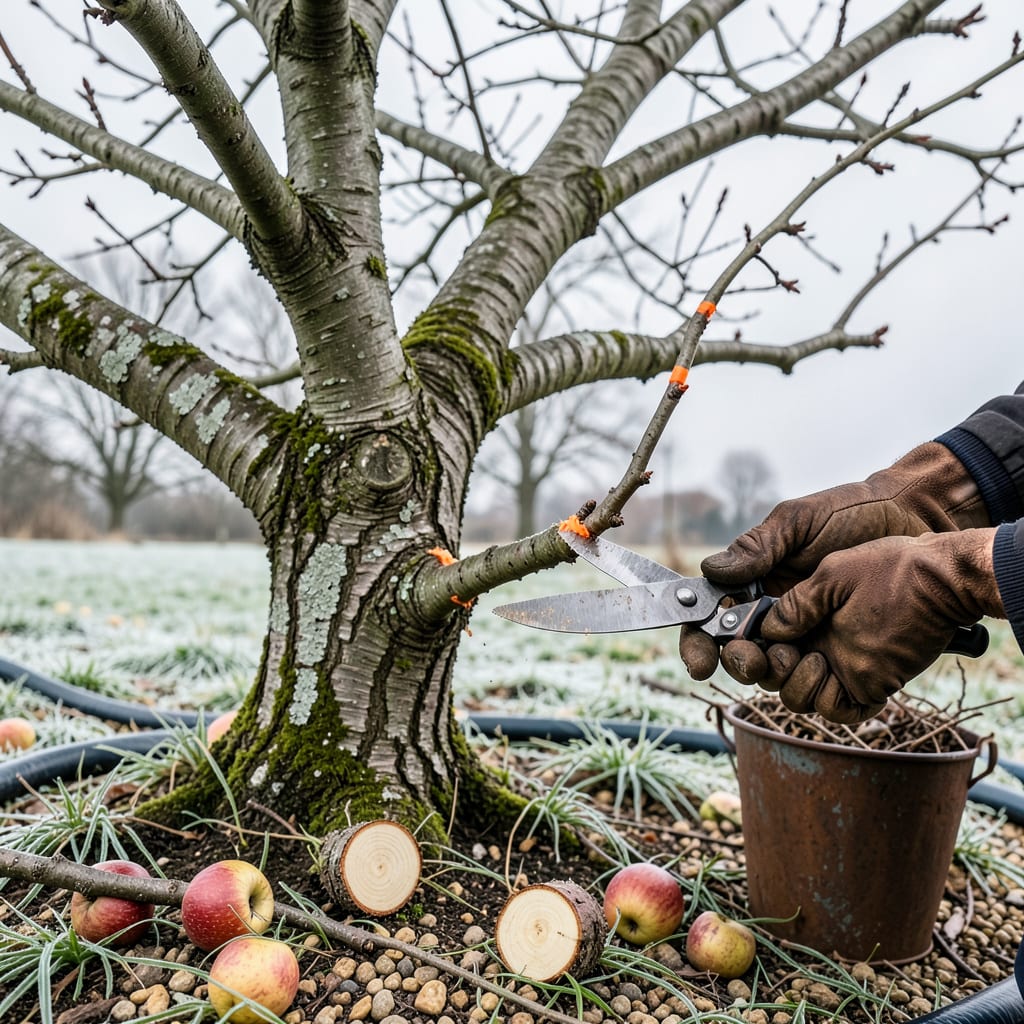
That first crisp bite of a homegrown apple makes every minute of pruning worth it. I used to dread cutting into my trees—what if I ruined them? Then I learned the right way, and my harvests doubled. Pruning isn’t about hacking away branches; it’s about guiding your tree to put energy where it matters most: bigger, sweeter fruit and a stronger structure that lasts for decades.
Timing and technique make all the difference. Do it in late winter while the tree’s still dormant, and you’ll see explosive spring growth. The key is knowing which branches to remove (hint: not just the dead ones) and making cuts that heal fast. My trees now produce 3x more apples than before I started pruning properly—no fancy tools required, just sharp bypass pruners and a little confidence.
📚 In This Guide
Pruning transforms a good apple tree into a great one—here’s how I shape mine for maximum fruit and health.
Late winter or early spring, when the tree is still dormant but the worst cold has passed, is ideal. I prune before buds swell but after the threat of 20°F temperatures has passed. This timing minimizes stress and disease risk while maximizing healing.
Use sharp bypass pruners for small branches, loppers for medium ones, and a pruning saw for anything thicker than 1.5 inches. Dull tools crush tissue instead of cutting cleanly, leaving wounds that invite pests. I disinfect my tools with rubbing alcohol between cuts to prevent spreading disease.
Start by cutting out any dead branches (they’ll be brittle and gray) or diseased wood (look for cankers, oozing sap, or discolored bark). Make clean cuts at a 45-degree angle just outside the branch collar—the slightly swollen area where the branch meets the trunk.
Next, remove branches that cross or rub against each other. These create wounds that never heal properly. I also take out any suckers growing straight up from the base or water sprouts shooting vertically from main branches—they steal energy without producing fruit.
Apple trees produce best when sunlight reaches all branches. I remove about 20-30% of the oldest branches each year, focusing on those growing inward. The goal is an open vase shape where air circulates freely and light penetrates to the center.
Cut back lateral branches by about one-third to encourage fruiting spurs. I look for branches with short, stubby growths (these are fruit spurs) and prune just above them. Never remove more than 25% of the canopy in one season—it stresses the tree.
Select 3-5 strong, well-spaced scaffold branches (the main limbs that form the tree’s structure) and remove competitors. These should be spaced 6-12 inches apart vertically and radiate outward at 45-60 degree angles from the trunk.
Shorten last year’s growth by about one-third to encourage branching. I always step back frequently to check my work—the tree should look balanced from all angles. Leave the center open enough that you could toss a basketball through it without hitting branches.
Rake up and remove all pruned material from the area—it can harbor pests and diseases. I apply a thin layer of compost around the base (keeping it 6 inches away from the trunk) to support recovery, then water deeply to help the tree heal.
Watch for new growth in spring. If you see excessive water sprouts, rub them off when they’re small. The tree will look dramatic at first, but within 4-6 weeks, you’ll see vigorous new growth exactly where you want it—along the remaining branches, ready to produce next year’s fruit.
Pruning apple trees properly can feel intimidating at first, but these practical insights will help you avoid common mistakes and set your tree up for success.
Timing Matters: The window between the last 20°F freeze and when buds begin to swell is critical. I learned this the hard way after pruning too early one year—cold damage set my tree back. Use a soil thermometer to confirm your ground temperature is consistently above freezing before starting. This ensures the tree is dormant enough to heal properly but not so dormant that cuts won’t seal.
Tool Technique: When making cuts thicker than 1.5 inches, use the three-cut method to prevent bark tearing. First, make an undercut about 12 inches from the trunk. Second, cut from the top a few inches further out until the branch falls. Finally, make your clean 45-degree angle cut just outside the branch collar. This prevents the heavy branch from stripping bark down the trunk as it falls.
Canopy Management: It’s tempting to remove more than 25% of the canopy when you see lots of problematic branches, but resist the urge. I once over-pruned and my tree produced almost no fruit that year. Instead, spread the work over two seasons if needed. Focus first on dead/diseased wood and crossing branches, then tackle shaping in subsequent years. The tree will thank you with better production.
Angle Awareness: Those 45-60 degree angles for scaffold branches aren’t just for looks—they’re structural. Branches at narrower angles (like the sharp V-crotches) are weakly attached and more likely to split under fruit load. When selecting branches to keep, prioritize those with wider angles—they’ll support more fruit without breaking. I use a protractor the first few times until I develop an eye for it.
The ideal time is late winter to early spring (before buds swell) when the tree is dormant. Avoid pruning in fall—fresh cuts won’t heal before winter, risking disease. Light summer pruning (June-July) can also help shape growth but avoid heavy cuts.
Yes, but only for light maintenance! Summer pruning slows vigorous growth and improves sunlight penetration. Focus on removing water sprouts or diseased wood. Avoid major cuts—it stresses the tree during active growth and reduces fruit production.
Skipping pruning leads to overcrowded branches, poor airflow (hello, fungi! ), and smaller, lower-quality fruit. The tree may also become top-heavy, risking limb breakage. Regular pruning keeps it healthy, productive, and easier to harvest.
Never remove more than 20-25% of the canopy in one year. Over-pruning shocks the tree and stunts growth. Prioritize dead/diseased wood first, then thin crowded branches. Aim for an open-center shape to let sunlight reach all fruit.
Pruning is strategic—removing specific branches to improve health, structure, or fruit production. Trimming is lighter, often for aesthetics (e.g., shaping hedges). For apple trees, pruning focuses on fruitwood renewal and disease prevention, not just looks!
