
Beautiful Plants For Your Interior
Beautiful Plants For Your Interior
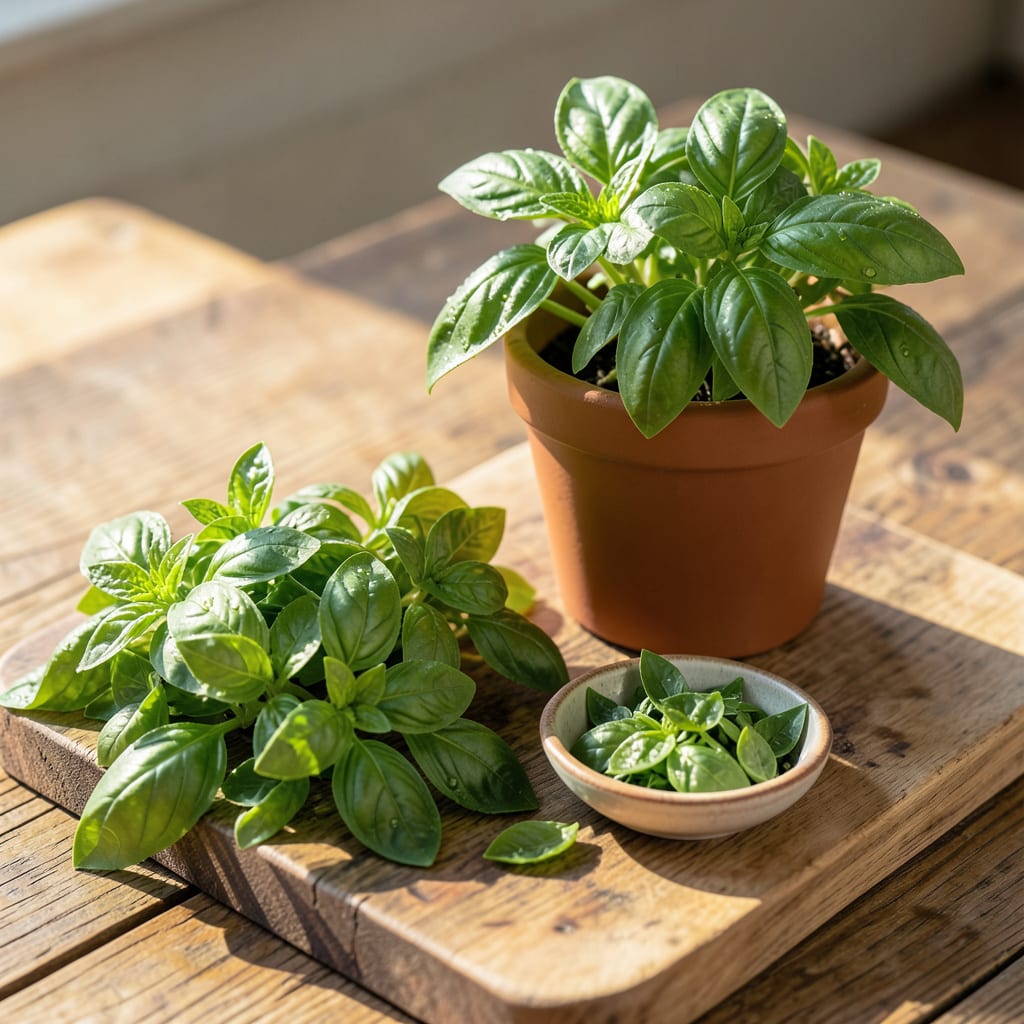
I used to tear basil leaves and wonder why my plants looked sad. Then I learned the gentle pinch method—game changer.
This technique keeps plants producing all season. You’ll get bushier growth and more leaves for your kitchen, with zero damage to the stems. Here’s how to do it right every time.
📚 In This Guide
Use this gentle method and you’ll encourage bushier growth while keeping your plant healthy and productive all season.
Start by locating the topmost pair of true leaves on each stem—these are the mature leaves growing just above a set of smaller leaves. Never remove more than one-third of the plant at once, as over-harvesting stresses the plant and slows regrowth.
Look for stems that are at least 6 inches tall with multiple sets of leaves. If a stem has only a few small leaves, leave it be. The best candidates are robust, healthy stems with vibrant green foliage and no signs of wilting or yellowing.
Check the leaf nodes—the points where leaves emerge from the stem. These are critical because pinching just above a node encourages the plant to branch out from that point, leading to a fuller, more productive plant over time.
Position your thumb and forefinger just above a leaf node, where the stem meets a set of leaves. Apply gentle but firm pressure and pinch the stem cleanly between your fingernails. Avoid tearing the stem, as jagged edges can invite disease or slow healing.
If the stem is thick or woody, use clean, sharp pruning shears instead of your fingers to make a precise cut. Always sanitize your tools with rubbing alcohol before and after use to prevent spreading pathogens between plants.
After pinching, inspect the stem to ensure you’ve removed it cleanly. A proper pinch leaves no frayed edges and minimizes stress on the plant, allowing it to recover quickly and redirect energy to new growth.
Pick leaves or stems every 1-2 weeks during the growing season to keep the plant from flowering. Once basil flowers, the leaves turn bitter, and the plant shifts energy from leaf production to seed development.
Focus on the outer leaves first, working your way inward. This approach allows the center of the plant to continue growing while you enjoy the mature outer foliage. Regular harvesting also prevents the plant from becoming leggy or overgrown.
If you notice the plant starting to flower, pinch off the flower buds immediately. This redirects the plant’s energy back to leaf production, ensuring a steady supply of fresh, flavorful leaves throughout the season.
Place freshly plucked leaves in a single layer on a clean, dry surface, avoiding direct sunlight. Basil leaves bruise easily, so handle them gently to preserve their flavor and appearance. Avoid washing them until you’re ready to use them, as excess moisture speeds up spoilage.
Store unwashed leaves in a loosely sealed container lined with a paper towel to absorb moisture. Keep the container in the refrigerator, but use the leaves within 3-4 days for the best flavor. For longer storage, blanch and freeze the leaves in ice cube trays with water or olive oil.
If you’re using the leaves immediately, rinse them under cool water and pat dry with a clean towel. This removes any dirt or debris while keeping the leaves intact and ready for culinary use.
These small adjustments make a big difference in keeping your plant thriving.
Node Identification: In Step 1, focus on the leaf nodes where stems meet leaves—these are your pinch points. Pinching just above a node, as described in Step 2, triggers the plant to branch out, creating that bushier growth we want. I always double-check I’m above a node, not between nodes, to avoid stunting growth.
Tool Sanitation: When Step 2 mentions using pruning shears for thicker stems, remember that sanitizing your tools with rubbing alcohol isn’t just a suggestion. I learned this the hard way after losing an entire basil plant to a simple pathogen transfer between cuts.
Harvest Frequency: The 1-2 week harvesting schedule in Step 3 is your golden rule. If you wait longer, you risk flowering, which turns leaves bitter. I set a calendar reminder so I never miss that window, and my plants reward me with continuous, flavorful growth.
Storage Wisdom: Step 4’s advice about storing unwashed leaves is critical. That paper towel lining absorbs moisture that would otherwise cause spoilage. I’ve extended my basil’s freshness to the full 3-4 days by following this method religiously.
Yes, but hand-plucking is gentler. If using scissors, ensure they’re clean and sharp to avoid crushing stems. Always cut just above a leaf pair to encourage bushier growth.
Pick in the morning after dew dries for peak flavor. Avoid harvesting when the plant is wet to prevent mold. Regular plucking (every 2-3 weeks) keeps it productive.
Blackening often signals bruising or overwatering. Pluck gently, and store leaves dry in a cool place. If the plant is stressed, check soil moisture and sunlight exposure.
Yes! Pinch off flowers to redirect energy to leaf growth. Flowering makes leaves bitter, so remove buds early to maintain flavor and prolong harvests.
