
Beautiful Plants For Your Interior
Beautiful Plants For Your Interior
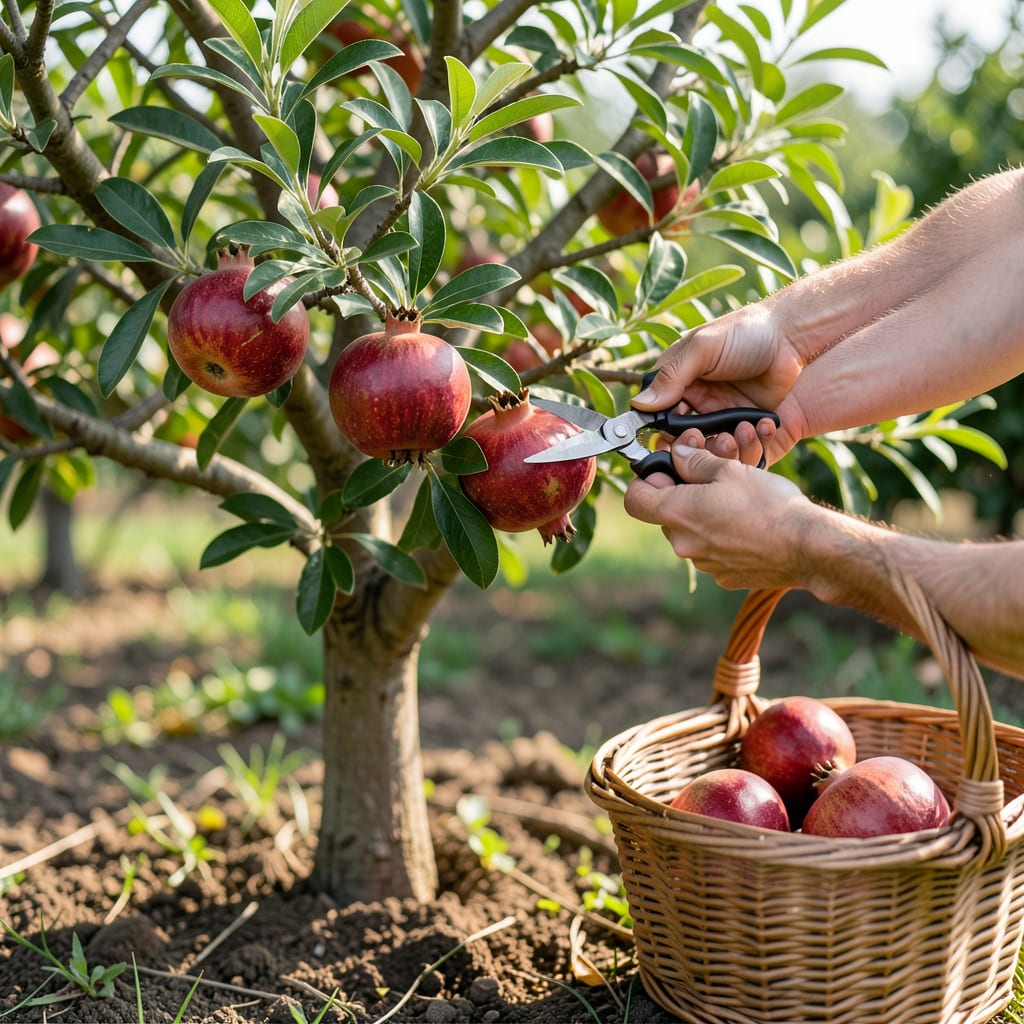
Nothing beats the satisfaction of harvesting your own 🍇 Pomegranate at peak ripeness. I remember my first attempt – I picked too early and ended up with tart, disappointing fruit.
Now I know the key signs to look for. Let me share what I’ve learned about timing and technique so you can enjoy the sweetest harvest from your tree.


I always check for deep color changes first when harvesting pomegranates. The fruit should be a rich, vibrant red or yellow, depending on the variety. A dull or green hue means it’s not ready yet.
Next, I examine the skin texture. Ripe pomegranates have a slightly leathery feel that’s firm to the touch. If it’s soft or mushy, it’s either overripe or not ready.
| Sign | Ripe Indicator | Not Ready Indicator |
|---|---|---|
| Color | Deep red/yellow | Green or pale |
| Texture | Firm, leathery | Soft or mushy |
| Sound | Metallic when tapped | Dull thud |
| Weight | Heavy for size | Light, underfilled |
The weight test is another great trick. Hold the fruit in your hand—if it feels heavy for its size, it’s likely full of juice. Lighter fruits often need more time on the tree.
I also listen for the metallic sound when I tap the fruit. A ripe pomegranate will produce a clear, ringing tone. A dull thud means it’s not ready to be picked.
For varieties like Wonderful, the skin will develop a slight glossy sheen when ripe. Haku Botan pomegranates, on the other hand, turn a deep yellow when ready.
Avoid harvesting if the seeds inside are still white or pale pink. Ripe seeds should be a rich, deep red and juicy. This is a sure sign the fruit is at peak ripeness.
I’ve made the mistake of picking too early before. The fruit won’t continue to ripen once harvested, so timing is everything. Overripe pomegranates may split open on the tree, which is a clear sign they’re past their prime.
Finally, check the stem end of the fruit. A ripe pomegranate will have a slightly dried and woody stem. If it’s still green, give it more time.
By combining these visual and physical signs, I’ve learned to harvest pomegranates at the perfect moment every time. It’s all about patience and attention to detail. ☀️
Timing your pomegranate harvest correctly depends on the variety. I’ve found that Wonderful pomegranates typically ripen in late September to October in most regions. Their deep red color is a dead giveaway.
For Haku Botan, the harvest window shifts to August to September. These have a unique yellow hue when ripe, so don’t wait for red. Climate plays a role too—cooler areas may need an extra week or two.
| Variety | Harvest Window | Ripe Color |
|---|---|---|
| Wonderful | Sept – Oct | Deep red |
| Haku Botan | Aug – Sept | Golden yellow |
| Eversweet | Aug – Sept | Pink-red |
| Russian 26 | July – Aug | Bright red |
In warmer climates like USDA zones 9-11, pomegranates often ripen earlier. I check my Russian 26 variety in July when temperatures stay above 85°F consistently.
For cooler zones like 7-8, I wait until late October. The fruit needs more time to develop its sugar content in milder weather. A soil thermometer can help track progress.
I always mark my calendar based on the first bloom date. Pomegranates typically take 180-200 days from flower to harvest. Counting forward from bloom time gives me a reliable estimate.
Regional microclimates matter too. My neighbor’s tree, just 50 feet away, ripens a week earlier because it gets more afternoon sun. Observe your tree’s specific conditions.
By matching the variety to your local climate and tracking days from bloom, you’ll nail the timing every year. 🌿
I always use sharp pruning shears to harvest my pomegranates. This prevents tearing the delicate fruit stem, which can lead to spoilage. Dull tools crush rather than cut cleanly.
I leave about 1-2 inches of stem attached to the fruit. This helps prevent splitting during storage. Never pull the fruit off by hand, as this damages both the pomegranate and the tree.
I’ve learned to harvest in the early morning when temperatures are cooler. The fruit is firmer then, reducing the risk of bruising. Afternoon heat can make the skin softer and more prone to damage.
Wearing gardening gloves is essential for me. Pomegranate plants have thorns, and some varieties have pink sap that can stain skin. Gloves also provide a better grip for handling the fruit.
After picking, I inspect each pomegranate carefully. Any with cuts or bruises get used first, as they won’t store as long. I store the rest in a single layer in a cool, dry place to prevent mold. ✂️
It depends on the variety. Wonderful turns deep red, while Haku Botan becomes golden yellow when ready. A dull or green hue means it needs more time.
Use the tap test: a ripe fruit makes a metallic sound when tapped. Also check for firm, leathery skin and a heavy feel for its size.
Pick in the early morning when temperatures are cooler. The fruit is firmer then, reducing bruising risk during handling.
Use sharp pruning shears to make clean cuts. Always leave 1-2 inches of stem attached to prevent splitting.
