
Beautiful Plants For Your Interior
Beautiful Plants For Your Interior
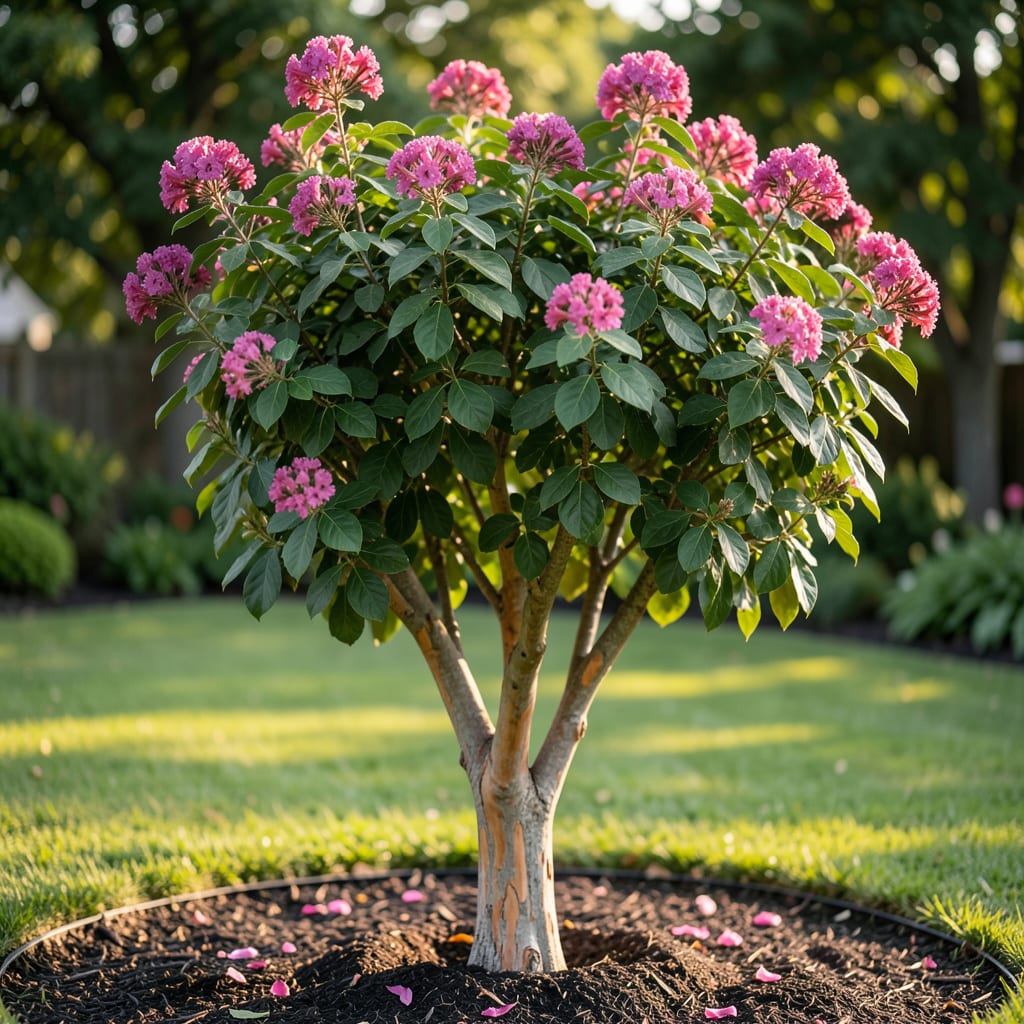
Ever looked at a neighbor’s towering Crepe Myrtles and wondered why yours seem stuck in shrub mode? The difference isn’t luck—it’s strategic care that unlocks their full potential. Those stunning 15-30 ft specimens don’t happen by accident.
I’ve helped dozens of gardeners transform stubby Crepe Myrtles into sky-high showstoppers—without fancy tools or expensive products. The secret lies in two often-misunderstood techniques: precision pruning and targeted feeding. Let me show you exactly how to make it happen this season.


If you want your crepe myrtles to reach their full 15-30 foot potential, pruning is your secret weapon. I’ve seen gardeners accidentally stunt their trees by topping (that brutal flat-cut method) instead of using selective pruning. The right cuts encourage upward growth while maintaining that gorgeous natural shape.
Timing matters just as much as technique. I always prune my crepe myrtles in late winter (February) before new growth starts. This gives the tree time to heal and channel energy into vertical shoots come spring. Never prune in fall—it invites disease and weakens the tree before winter dormancy.
Topping (cutting all branches to the same height) creates weak, bushy growth instead of tall, sturdy trunks. Instead:
For young crepe myrtles, I focus on establishing a single dominant trunk by removing competing stems at ground level. This creates that classic tree form rather than a multi-stemmed shrub. Use sharp bypass pruners and make cuts at a 45-degree angle just above outward-facing buds.
Mature trees need different attention. I look for water sprouts (those fast-growing vertical shoots) and remove about 50% of them each year. This might seem counterintuitive, but it forces the remaining sprouts to grow thicker and taller. Always leave the strongest, most vertical shoots to become your new main branches.
The “one-third rule” is my golden guideline—never remove more than 30% of the canopy in a single year. Over-pruning stresses the tree and actually reduces height potential. I like to step back frequently while pruning to check the tree’s natural shape and ensure I’m not overdoing it.
Don’t forget about tool sanitation! I wipe my pruners with rubbing alcohol between cuts to prevent spreading diseases. Crepe myrtles are susceptible to fungal issues, and clean tools make a noticeable difference in how quickly they recover and grow after pruning.
After pruning, I always apply a light fertilizer (more on this in the next section) to give the tree a growth boost. The combination of strategic cuts and proper nutrition is what transforms a stunted crepe myrtle into a towering garden centerpiece with those signature vibrant blooms.
Remember that different crepe myrtle varieties have different growth habits. My ‘Natchez’ variety grows much taller than my ‘Tonto’ dwarf version. Always check your specific variety’s mature height and adjust your pruning goals accordingly—some are naturally more compact.
Finally, be patient with young trees. In their first 3 years, I focus more on establishing a strong root system than aggressive pruning. A well-rooted crepe myrtle will naturally grow taller and faster once it’s established in your landscape. 🌳
If you want your crepe myrtles to reach their full 15-30 ft potential, the right fertilizer makes all the difference. These trees thrive on a balanced NPK ratio like 10-10-10 or 8-8-8, but phosphorus-heavy options boost root and height development.
I always recommend feeding in early spring as new growth starts, then lightly every 4-6 weeks through summer. Organic options like compost tea or worm castings work wonders for long-term soil health. Avoid over-fertilizing—it can lead to weak, leggy growth instead of strong upward expansion.
| Nutrient | Role for Height | Best Source |
|---|---|---|
| Nitrogen (N) | Promotes leafy growth and vigor | Blood meal, fish emulsion |
| Phosphorus (P) | Strengthens roots and stems for height | Bone meal, rock phosphate |
| Potassium (K) | Improves disease resistance and hardiness | Wood ash, kelp meal |
| pH Level | Ideal range: 6.0-6.5 for nutrient uptake | Lime (raises pH), sulfur (lowers pH) |
Don’t overlook soil amendments like compost or aged manure when planting. Mixing in 2-3 inches of organic matter improves drainage and nutrient retention. For existing trees, top-dress with compost in early spring before mulching.
Mulching with 2-4 inches of pine straw or shredded bark helps retain moisture while keeping roots cool. Just keep mulch 3 inches away from the trunk to prevent rot. This simple step can add 1-2 feet of growth per year!
If your soil is heavy clay, add perlite or sand to improve drainage. Crepe myrtles despise waterlogged roots, which stunt growth. For sandy soil, mix in peat moss to help retain moisture and nutrients.
Remember, consistent watering (about 2 gallons weekly for young trees) pairs with fertilization for best results. Deep watering encourages roots to grow downward, which stabilizes taller growth. Pair these tips with proper pruning, and you’ll have a sky-high crepe myrtle in no time! 🌳
If your crepe myrtles aren’t reaching their full height potential, the culprit is often one of three common mistakes. Even with the best intentions, small errors in care can stunt growth. The good news? Each issue has a simple fix to get your trees back on track.
First, overwatering is a silent growth killer. While crepe myrtles love moisture, soggy roots suffocate the plant and limit nutrient uptake. You’ll notice yellowing leaves or slow growth if this is the problem. The fix? Let the soil dry slightly between waterings.
Next, improper mulching can smother your crepe myrtle’s trunk. Many gardeners pile mulch right up against the base, which traps moisture and invites disease. Instead, create a 3-inch gap around the trunk to allow airflow while retaining soil moisture.
Finally, inadequate sunlight is a major height limiter. Crepe myrtles need 6+ hours of direct sun daily to thrive. If yours is stuck in shade, it’ll grow leggy and weak. Consider transplanting to a sunnier spot or trimming nearby trees to open the canopy.
Fixing these issues is straightforward: adjust your watering schedule, re-mulch correctly, and ensure full sun exposure. With these changes, you’ll see faster vertical growth and healthier blooms in just one season. Your crepe myrtles will thank you with towering beauty! 🌳
Remember, consistency is key. Monitor your trees after making adjustments, and you’ll be rewarded with stronger, taller growth year after year. Happy gardening! 🪴
Standard varieties typically reach 15-30 ft at maturity, but growth rates vary. In ideal conditions, expect 3-5 ft the first year, 6-10 ft by year two, and full height by year 5-7. Dwarf varieties max out around 5-10 ft in half that time.
You can, but spacing affects height. For tall growth, plant 8-10 ft apart to reduce competition. Closer spacing (3-5 ft) creates a dense hedge but limits vertical growth. If height is your goal, give each tree room to spread its roots and canopy.
Sideways growth usually results from improper pruning or weak central leaders. Avoid “topping” cuts that remove main branches—this encourages bushy, horizontal growth. Instead, prune competing stems in late winter to strengthen the dominant upward trunk.
In-ground planting always yields taller results—up to 30 ft for standard varieties. Potted crepe myrtles rarely exceed 8-10 ft due to root restriction. For maximum height, plant directly in well-draining soil with full sun exposure.
