
Beautiful Plants For Your Interior
Beautiful Plants For Your Interior
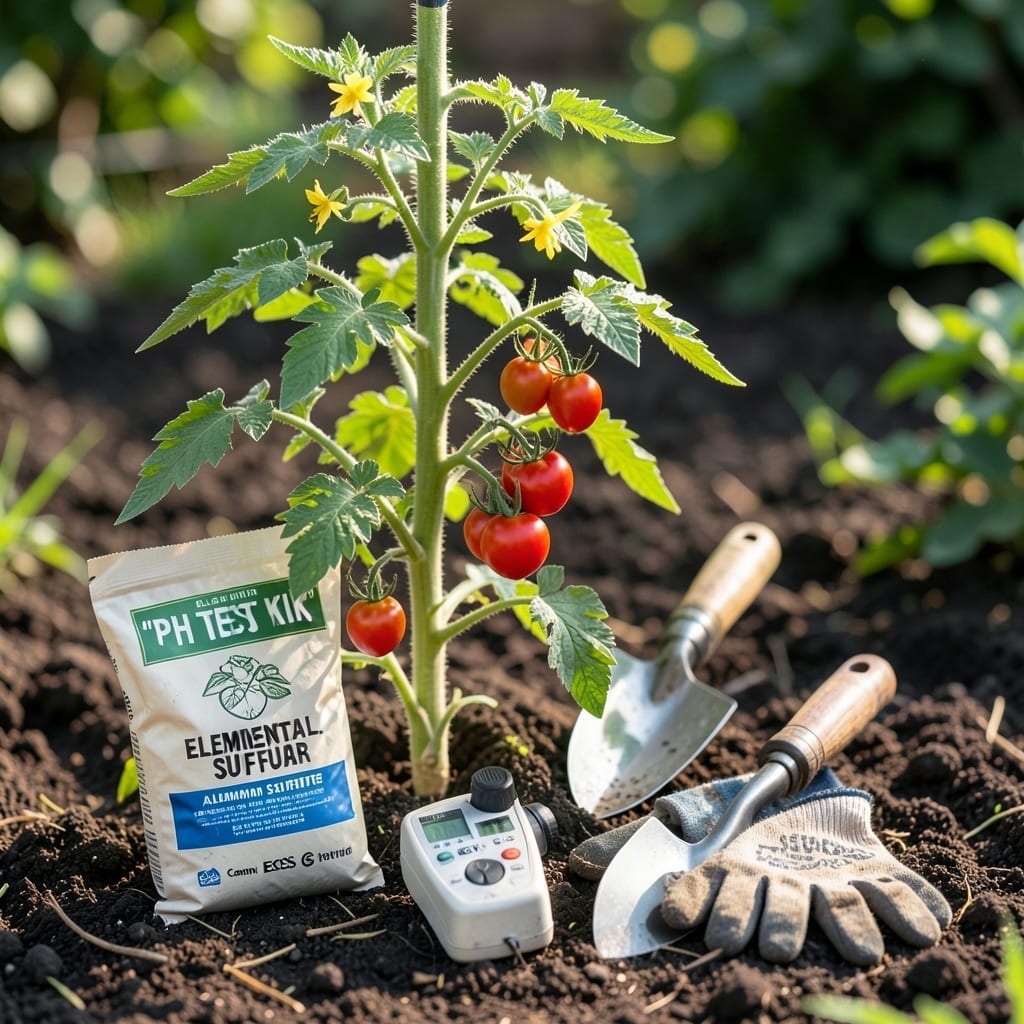
Struggling with lackluster 🍅 Tomato plants? The issue might be hiding in your soil. When the pH climbs too high, these popular garden stars can’t access the nutrients they need.
Fortunately, adjusting your soil isn’t as complicated as it sounds. With simple methods and a bit of patience, you can create the perfect growing environment.
I’ll walk you through the most effective techniques to get your soil back on track for thriving Tomato plants.
If your tomato plants look stunted or leaves turn yellow, high soil pH might be the culprit. Tomatoes prefer a slightly acidic pH between 6.0-6.8, and alkaline soil locks out essential nutrients like iron and phosphorus.
Fortunately, several natural amendments can safely lower pH. The key is choosing the right method for your soil type and applying it correctly to avoid over-acidifying. 🌱
| Method | Application Rate | Time to Work | Best For |
|---|---|---|---|
| Elemental Sulfur | 1 lb per 100 sq ft | 3-6 months | Long-term adjustment |
| Aluminum Sulfate | 5 lbs per 100 sq ft | 1-2 months | Quick results |
| Peat Moss | 2-3 inches mixed in | 2-4 weeks | Organic matter boost |
| Coffee Grounds | 1-2 cups per plant | 1-2 months | Mild, ongoing adjustment |
I recommend starting with elemental sulfur for most gardeners. It’s cost-effective and provides long-lasting results without the risk of over-application that comes with stronger chemicals like aluminum sulfate. Always wear gloves when handling.
For organic gardeners, peat moss and compost are excellent choices. They improve soil structure while gradually lowering pH. Mix 2-3 inches into the top 6 inches of soil before planting tomatoes.
Coffee grounds work well for small-scale adjustments. Sprinkle 1-2 cups around each tomato plant and lightly work into the soil. This method is gentle but requires regular reapplication throughout the growing season.
Remember that sandy soils respond faster to pH adjustments than clay soils. If your soil is heavy clay, you may need to apply amendments 2-3 times the recommended rate for noticeable changes.
Always test your soil pH before and after applying amendments. A pH test kit from your local garden center costs just a few dollars and provides accurate results in minutes. Retest every 4-6 weeks until you reach the desired range. ☀️
If you’re amending existing tomato beds, be careful not to disturb the roots. Instead, apply amendments to the soil surface and let rain or irrigation work them in gradually. For new plantings, mix amendments thoroughly into the soil.
Finally, maintain your soil’s pH by adding organic matter annually. A 2-inch layer of compost or well-rotted manure each spring helps prevent pH from creeping back up while improving overall soil health. 🌿
Before adjusting your soil, it’s essential to know your current pH level. Testing is simple and inexpensive with a home test kit from any garden center. I always test in multiple spots to account for variations across my garden.
A digital pH meter or chemical test kit will give you accurate results in minutes. For the most precise reading, collect soil samples from 4-6 inches deep where tomato roots actively grow. 🌱
Once you have your results, interpret them based on tomato preferences. A pH above 7.0 is alkaline, while below 6.0 is acidic. Tomatoes thrive in the 6.0-6.8 range, so aim for this sweet spot.
To calculate how much amendment to use, refer to the application rates from the previous section. For elemental sulfur, the general rule is 1 lb per 100 sq ft to lower pH by 1.0 unit in sandy soil.
Apply your chosen amendment evenly over the soil and work it in gently. For existing plants, avoid disturbing roots—instead, scratch the amendment into the surface and water thoroughly. For new beds, mix it in deeply.
After application, wait 1-2 weeks before retesting. pH changes gradually, especially in clay soils. I recommend keeping a garden journal to track your adjustments and results over time. 🌿