
Beautiful Plants For Your Interior
Beautiful Plants For Your Interior
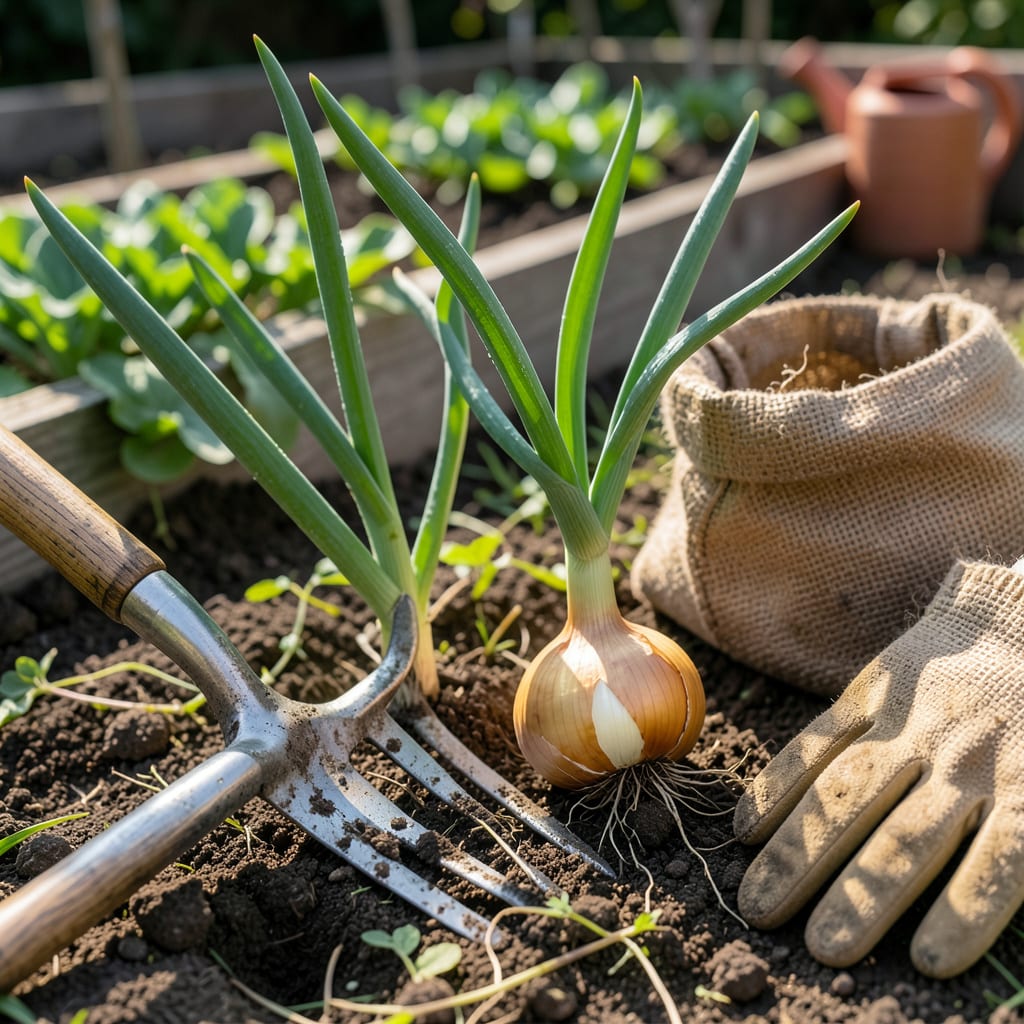
There’s nothing worse than pulling your 🧅 onions too soon—or waiting too long—only to end up with small, bitter bulbs that don’t store well. Timing is everything when it comes to harvesting, and those subtle signs your plants give off are easy to miss if you don’t know what to look for.
I’ve learned the hard way that perfect harvests come down to three key cues: leaf behavior, bulb size, and skin texture. Whether you’re growing sweet yellows or pungent reds, I’ll show you exactly how to read these signals so you never second-guess your timing again.


Not all 🧅 onions mature at the same time—your location plays a huge role. Short-day varieties thrive in Southern zones (like Texas or Florida) and form bulbs with just 10-12 hours of daylight, while long-day types need 14-16 hours up North. This daylight trigger is why timing varies so much!
If you’re growing in USDA Zones 7-11, your short-day onions (think ‘Texas Early White’ or ‘Granex’) will likely be ready in 90-110 days. But in cooler climates (Zones 1-6), long-day varieties like ‘Walla Walla’ or ‘Sweet Sandwich’ take 120-150 days to mature. Always check your seed packet for specifics!
| Feature | Short-Day Onions | Long-Day Onions |
|---|---|---|
| Best Zones | 7-11 | 1-6 |
| Daylight Needed | 10-12 hours | 14-16 hours |
| Days to Maturity | 90-110 | 120-150 |
| Example Varieties | Granex, Vidalia | Walla Walla, Sweet Sandwich |
| Harvest Window | Late spring-early summer | Mid-late summer |
Here’s the kicker: planting time affects harvest timing too. Short-day onions planted in fall (for overwintering) will mature earlier than spring-planted ones. Meanwhile, long-day onions need that summer solstice sunlight to bulk up, so planting too late can leave you with scallion-sized bulbs instead of full onions.
If you’re unsure which type you’re growing, watch the neck thickness. Short-day onions often have softer necks that collapse sooner, while long-day varieties hold their greens longer. When in doubt, gently brush away soil to check bulb size—2-3 inches wide is ideal for most storage varieties.
Pro tip: Day-neutral onions (like ‘Candy’ or ‘Red Amber’) are a great middle-ground option. They form bulbs with 12-14 hours of daylight, making them adaptable to most regions. These usually take 100-120 days and are my go-to for beginners!
Remember, weather fluctuations can speed up or delay maturity. A heatwave might rush bulb formation, while cool, cloudy spells can slow it down. Keep a garden journal to track your local harvest windows—after a few seasons, you’ll nail the timing like a pro! ☀️
Harvesting 🧅 onions at the wrong time doesn’t just affect size—it can ruin flavor, texture, and storage life. Pick too early, and you’ll get small, pungent bulbs that won’t keep. Wait too long, and you risk rot, splitting, or regrowth in storage. The sweet spot is all about timing!
I’ve seen gardeners lose entire crops because they missed the 48-hour window when onions are perfectly mature. That’s why understanding the consequences of mistimed harvests is just as important as knowing the ideal signs. Let me break down exactly what happens—and how to fix it.
If you’ve already picked too early, don’t panic! Small onions can still be used fresh in salads or pickled. For slightly underripe bulbs, try curing them longer (2-3 weeks) in a well-ventilated area to toughen the skins. I’ve saved many early harvests this way!
Late-harvested onions often have thick necks that won’t dry properly. The fix? Trim the tops to 1 inch and cure in a single layer with good airflow. While they won’t store as long, you can extend their life by freezing chopped onions for cooking later.
Here’s my golden rule: When in doubt, check the necks. If more than 50% of tops have fallen over and dried, it’s time—even if some bulbs seem small. Remember, onions stop growing once tops die back, so leaving them longer won’t help. Trust the plant’s signals over the calendar!
Weather can throw off your timing too. A sudden heatwave may force early maturity, while cool, wet spells can delay bulb formation. I keep a notebook to track my harvest dates each year—after 3 seasons, you’ll spot patterns that make timing foolproof! 🌱
You can gently bend the remaining green tops to speed up the process. This mimics natural dieback and signals the bulbs to mature. Wait 2-3 days after bending before harvesting to allow skins to toughen properly.
Avoid harvesting when soil is waterlogged. Wet onions won’t cure properly and may develop rot. Wait 3-5 days for the soil to dry, then brush off excess dirt before curing in a well-ventilated area.
Bolting onions send up a thick flower stalk from the center. This usually happens with temperature stress. Once you see a stalk forming, harvest immediately—bolted onions won’t store well and become bitter.
Stop watering 1 week before your planned harvest date. This helps the outer skins dry and tighten, which is crucial for proper curing. The slight stress also concentrates flavors in the bulbs.
Splitting usually means they’ve grown too large or experienced uneven moisture. Harvest immediately to prevent rot from entering through the cracks. These onions should be used fresh rather than stored long-term.
