
Beautiful Plants For Your Interior
Beautiful Plants For Your Interior
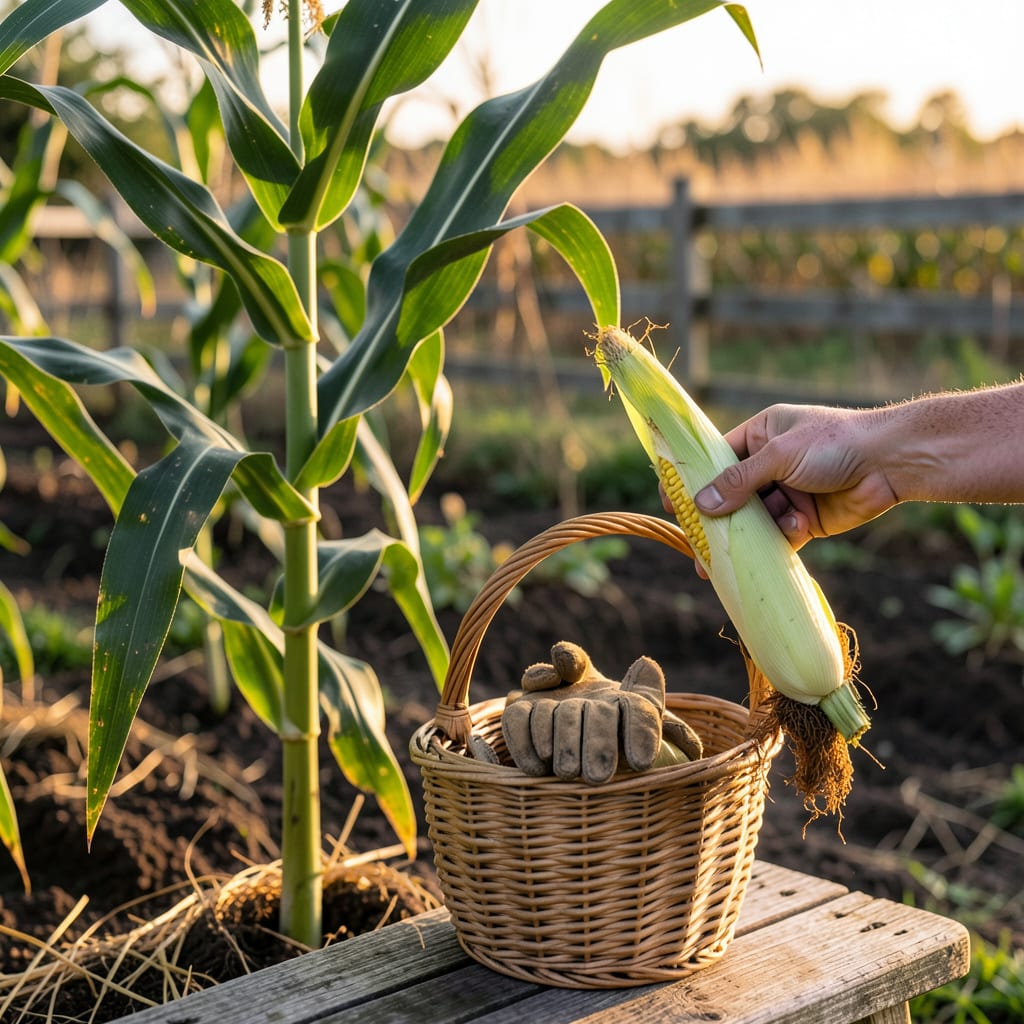
There’s nothing worse than biting into corn that’s past its prime—tough, starchy, and lacking that juicy sweetness. I’ve been there, staring at my garden wondering if today’s the day or if I should wait just a little longer.
After years of trial and error with 🌽 Corn, I’ve learned the exact signs to look for—no guesswork required. Let me show you how to pinpoint that perfect harvest window when your kernels are at their sweetest and most tender.


After planting my first corn patch, I quickly learned that timing is everything. Those beautiful golden ears won’t tell you they’re ready with words, but they do send clear signals if you know where to look. The difference between perfect sweetness and disappointing starchiness often comes down to just 2-3 days.
I’ve found that sweet corn varieties like ‘Peaches and Cream’ or ‘Silver Queen’ give the most obvious visual clues. The key is checking multiple indicators rather than relying on just one. Let me walk you through the five reliable signs I use every harvest season.
| Visual Sign | What to Look For | Stage Indicator |
|---|---|---|
| Silk color | Brown and completely dry | ✅ Ready to test |
| Husk appearance | Green but slightly dried at tip | 🟡 Nearly ripe |
| Ear position | Drops slightly from stalk | ✂️ Harvest time |
| Kernel fill | Rows completely filled out | 🌽 Peak ripeness |
| Tassel condition | Dark brown and papery | 🌱 Maturity signal |
The silk condition is my first checkpoint. When those wispy strands turn from golden to dark brown and feel completely dry, that’s nature’s signal to start testing. I gently pull back the husk just enough to see the silk base—this is where you’ll spot the true color change.
Next, I examine the husk texture. A ready ear will have a husk that’s still mostly green but shows slight drying at the tip. The husk should feel tightly wrapped around the ear—not loose or papery. This tightness indicates the kernels inside are fully plumped up.
The ear’s position on the stalk tells me a lot too. When corn is ready, the ear will naturally angle downward slightly, as if bowing to you. This happens because the weight of mature kernels makes the ear heavier. I’ve noticed this is especially pronounced in heirloom varieties.
For the kernel check, I look at the ear’s shape through the husk. Mature ears appear uniformly filled from base to tip, with no tapered or pointed ends. If you see a rounded, cylindrical shape, that’s a great sign. The kernels should press against the husk, creating that classic corn ear silhouette.
Finally, I check the tassel at the ear’s tip. When it’s completely dried to a crispy brown, that confirms the ear has reached full maturity. I’ve found that supersweet varieties often show this tassel drying a day or two before standard sweet corn, so adjust your expectations accordingly.
Remember that corn doesn’t ripen uniformly—even on the same stalk. I always check multiple ears from different plants. The middle of the patch typically matures first due to better sun exposure. Keep notes on which plants produce first; this helps with succession planting next season. 🌽
If you’re growing colored corn varieties like ‘Ruby Queen’ or ‘Black Aztec’, the visual cues remain the same—just watch for those silk and husk changes rather than kernel color. The thumb test we’ll cover next works perfectly for these unique varieties too.
While visual cues are helpful, the real secret to perfect corn lies in the finger test. I’ve found this tactile method gives the most accurate read on ripeness. Simply peel back the husk slightly and press a kernel with your thumbnail.
What you’re looking for is that milky white liquid—this is the sweet spot! Clear liquid means it’s not ready, while thick or doughy liquid indicates it’s past prime. This test works for all sweet corn varieties, from early to late season.
I always test 3-4 different ears across my corn patch since they don’t all ripen uniformly. The middle of the ear tends to mature first, so focus your testing there. Remember that corn sweetness declines rapidly after picking.
For supersweet varieties, the liquid might appear slightly thicker but should still be milky. These types often have a longer harvest window—about 5-7 days—compared to standard sweet corn’s 2-3 day peak.
Pro tip: Perform this test in the early morning when kernels are most plump. Avoid testing after heavy rain as excess moisture can give false readings. I keep a small notebook to track which ears I’ve tested.
If you’re growing heirloom corn, you might notice the liquid has a slightly different consistency. Don’t worry—just look for that creamy appearance rather than pure white. The thumb test works for all types!
Once you’ve confirmed ripeness, harvest immediately by twisting downward or using clean shears. Store unshucked ears in the fridge for 3-5 days maximum to preserve sweetness. 🌽
Timing your corn harvest perfectly depends largely on which variety you’re growing. I’ve learned that early-season corn like ‘Early Sunglow’ can be ready in as little as 60 days, while late-season varieties may need up to 100 days. This variation makes knowing your specific type crucial.
The sugar-enhanced varieties (like ‘Kandy Korn’) typically have a wider harvest window than standard sweet corn. I’ve noticed these hold their sweetness about 2-3 days longer after reaching maturity. Meanwhile, supersweet varieties (such as ‘Illini Xtra-Sweet’) often require more precise timing but stay sweeter longer after picking.
| Variety Type | Days to Maturity | Harvest Window | Best For |
|---|---|---|---|
| Early Season | 60-70 days | 2-3 days | Cool climates |
| Mid-Season | 70-85 days | 3-5 days | Most regions |
| Late Season | 85-100 days | 4-7 days | Warm climates |
| Supersweet | 75-90 days | 5-7 days | Longer storage |
In my northern garden, I stick to early varieties that mature in 65-75 days. The shorter growing season means I need to plant as soon as soil reaches 60°F. Southern gardeners can experiment with late-season types that develop deeper flavor profiles.
I’ve found that heirloom varieties often have more variable harvest times. ‘Country Gentleman’ (a shoepeg type) might show ready signs at 90 days but benefit from an extra week for full flavor development. Always perform the thumb test we discussed earlier to confirm.
For succession planting, I stagger varieties by maturity dates. Planting early, mid, and late types every 2 weeks extends my harvest season to 6-8 weeks. This approach ensures fresh corn throughout summer without overwhelming gluts.
Remember that soil temperature affects growth rates. Cool springs may delay maturity by 5-7 days, while hot summers can speed it up. I keep a garden journal noting first silk appearance and harvest dates to refine my timing each year. 🌽
Picking too soon results in underdeveloped kernels that taste watery and lack sweetness. The starch content will be low, making the corn less satisfying. Always check for milky liquid when pressed to confirm ripeness.
Start daily checks once silks begin browning, typically 20 days after silk appearance. Sweet corn matures quickly—missing just 2-3 days can mean the difference between perfect and starchy kernels. Morning checks yield the most accurate results.
No, corn stops ripening immediately after harvest. Unlike tomatoes, it doesn’t improve off the stalk. For best flavor, harvest in the morning and cook or refrigerate within 6 hours. Sweetness declines rapidly at room temperature.
Ears at the stalk’s top often mature 1-2 days earlier due to better sunlight exposure. Planting depth and soil fertility also affect timing. Always test multiple ears from different plants for consistent results.
Avoid harvesting during or immediately after rain. Excess moisture makes kernels appear watery when tested, leading to false readings. Wait at least 4-6 hours after rainfall for accurate ripeness checks. The thumb test works best with dry husks.
