
Beautiful Plants For Your Interior
Beautiful Plants For Your Interior
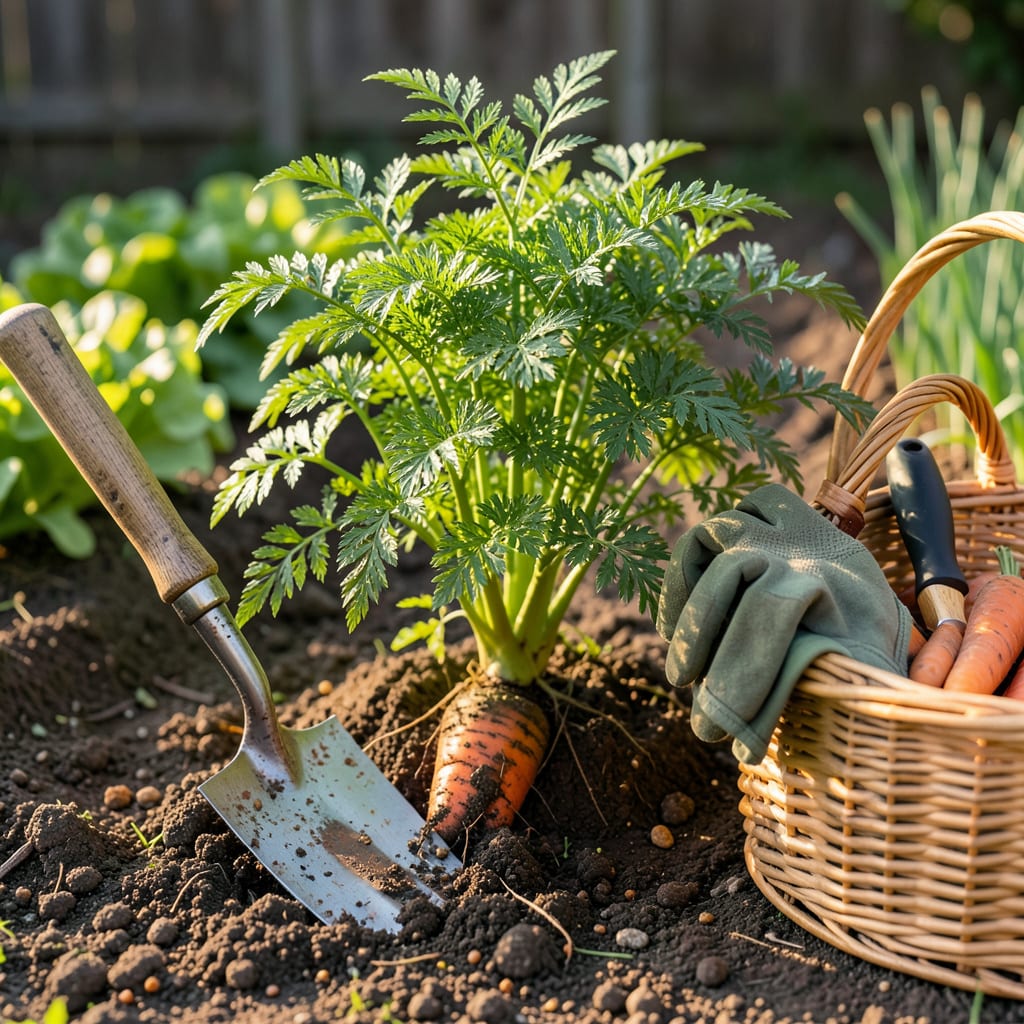
There’s nothing quite like pulling a perfect carrot from the ground—crisp, sweet, and just the right size. But timing that harvest? That’s where many gardeners get stuck. Pull too soon, and you’ll miss out on that deep, earthy flavor. Wait too long, and you might end up with a tough, woody root.
I’ve been there, standing in my garden, staring at the green tops, wondering if my 🥕 carrots are ready. The good news? There are simple, foolproof signs to look for—no guesswork needed. Let me show you exactly how to spot the ideal moment to harvest, so every carrot you pick is at its peak.


Knowing exactly when to harvest your 🥕 carrots can feel like solving a mystery. But your plants actually give you clear visual clues—if you know where to look. The secret is checking both the above-ground foliage and the hidden root crown for telltale signs of maturity.
I always start by examining the shoulder diameter—that’s the part of the carrot just below the soil line. A mature carrot typically measures ½ to ¾ inch wide at this point. If you’re growing baby carrots, aim for ¼-inch diameter. Size isn’t everything, though; color and texture matter just as much!
One of my favorite tricks is the “sunset check”. Late in the day, when the soil is slightly damp, I’ll carefully brush away the dirt around a few carrot shoulders. If they’re the right size and color, I’ll harvest them the next morning. This method prevents disturbing the roots during peak sunlight hours.
Pay attention to weather patterns too. If a heatwave is forecasted, I’ll harvest a bit earlier—carrots can become bitter in extreme heat. Conversely, a light frost can sweeten carrots by converting starches to sugars. I’ve left my ‘Danvers’ variety in the ground until after the first frost for extra sweetness!
If you’re growing rainbow carrots (purple, yellow, or white), the color rules change slightly. Purple carrots should have a rich, deep hue, while white varieties will turn creamy. Yellow carrots often mature a bit faster, so check them at the earlier end of their maturity window.
Don’t forget to consider your soil type. In clay-heavy soil, carrots may take longer to size up, while sandy loam speeds growth. I’ve noticed my carrots in raised beds mature about 5 days faster than those in my in-ground plot—likely due to better drainage and warmth.
For container-grown carrots, harvest time might come sooner. Limited space restricts root growth, so I check my pots at 50 days instead of 60. Look for roots pressing against the container sides—that’s your cue! Just be gentle when pulling to avoid breaking the taproot.
Finally, trust your taste buds. If you’re unsure, pull one carrot and sample it. A perfectly ripe carrot will be crisp, juicy, and sweet with no bitter aftertaste. If it’s still bland or starchy, give the rest of the crop 3-5 more days before testing again. Happy harvesting! 🥕
Not all carrots are created equal—some varieties are ready in as little as 60 days, while others need up to 85 days to reach their prime. The key to perfect timing? Knowing your specific variety’s maturity window and adjusting for your local climate. Even within the same garden, ‘Nantes’ and ‘Danvers’ won’t ripen on the same schedule.
I’ve found that cooler climates often extend the harvest window by 5-10 days, while warm regions can speed it up. If you planted a mix of varieties (like I do!), keep a gardening journal with sowing dates. That way, you’ll know exactly when to start checking for readiness. Trust me, this small step saves a lot of guesswork later!
If you’re growing heirloom varieties, expect even more variation. For example, my ‘Purple Haze’ carrots took 80 days last summer, while the packet said 70. Soil temperature plays a huge role—carrots grow slower in cool spring soil but may bolt if planted too late in warm zones.
Don’t forget about succession planting! I sow a new batch every 3 weeks from early spring to late summer. This staggers harvests so I’m not overwhelmed with carrots all at once. For fall crops, count backward from your first frost date and add 10-14 days for slower growth.
When in doubt, pull a “test carrot” from each variety. If it’s sweet and crisp, the rest are likely ready. If it’s bitter or pithy, give them 3-5 more days before checking again. Remember, carrots can stay in the ground for a while after maturing—just don’t let them get overgrown and fibrous!
For storage varieties like ‘Danvers’, I often leave them in the ground until after the first light frost. The cold converts some of their starches to sugar, making them even sweeter! Just be sure to harvest before the ground freezes, or they’ll turn mushy when thawed.
Ever wished you could peek at your 🥕 carrots without disturbing them? The finger test is my go-to method for checking readiness while keeping plants intact. This simple technique saves me from pulling immature carrots and lets me monitor growth over time.
Start by gently brushing away soil from the carrot shoulder—the top of the root where it meets the stem. Use your index and thumb to measure the diameter. A mature carrot should feel ½ to ¾ inch wide, about the thickness of a marker.
For the most accurate test, perform this check when soil is slightly damp—either in early morning or after watering. Dry soil can make roots feel smaller than they are!
Next, apply gentle pressure to the exposed shoulder. A ready carrot will feel solid but slightly yielding, like a ripe avocado. If it feels rock-hard, it needs more time. If it gives too easily, it might be overmature and woody.
For long varieties like ‘Imperator’, I’ll also check the root length by tracing the soil line. The visible portion should be at least 2-3 inches from shoulder to where it disappears underground. Shorter varieties like ‘Paris Market’ only need 1-2 inches of visible root.
This method works especially well for succession planting schedules. By testing different plants each week, you can stagger your harvests perfectly. I’ve found that container-grown carrots often need checking 5-7 days earlier than their in-ground counterparts due to restricted root space. 🥕
Picking too soon means missing out on sweetness and crunch. Immature carrots often taste bland or starchy and lack the deep orange color. They’ll also be smaller than ½ inch in diameter, with underdeveloped foliage.
Yes, but there’s a trade-off. Overmature carrots become woody and tough, especially in warm weather. However, a light frost can actually sweeten them by converting starches to sugar. Just harvest before the ground freezes!
Use the finger test: Gently brush soil from the carrot shoulder and measure the diameter. A ready carrot feels ½ to ¾ inch wide and slightly firm. Avoid tugging—just assess the exposed portion.
No! ‘Paris Market’ may be ready in 60 days, while ‘Danvers’ needs up to 75 days. Always check your seed packet and adjust for your climate. Cooler temps slow growth; heat speeds it up.
Early morning is ideal when soil is cool and moist. This keeps carrots crisp and prevents wilting. Avoid midday heat, which can make roots limp. If harvesting in the evening, water lightly beforehand.
