
Beautiful Plants For Your Interior
Beautiful Plants For Your Interior
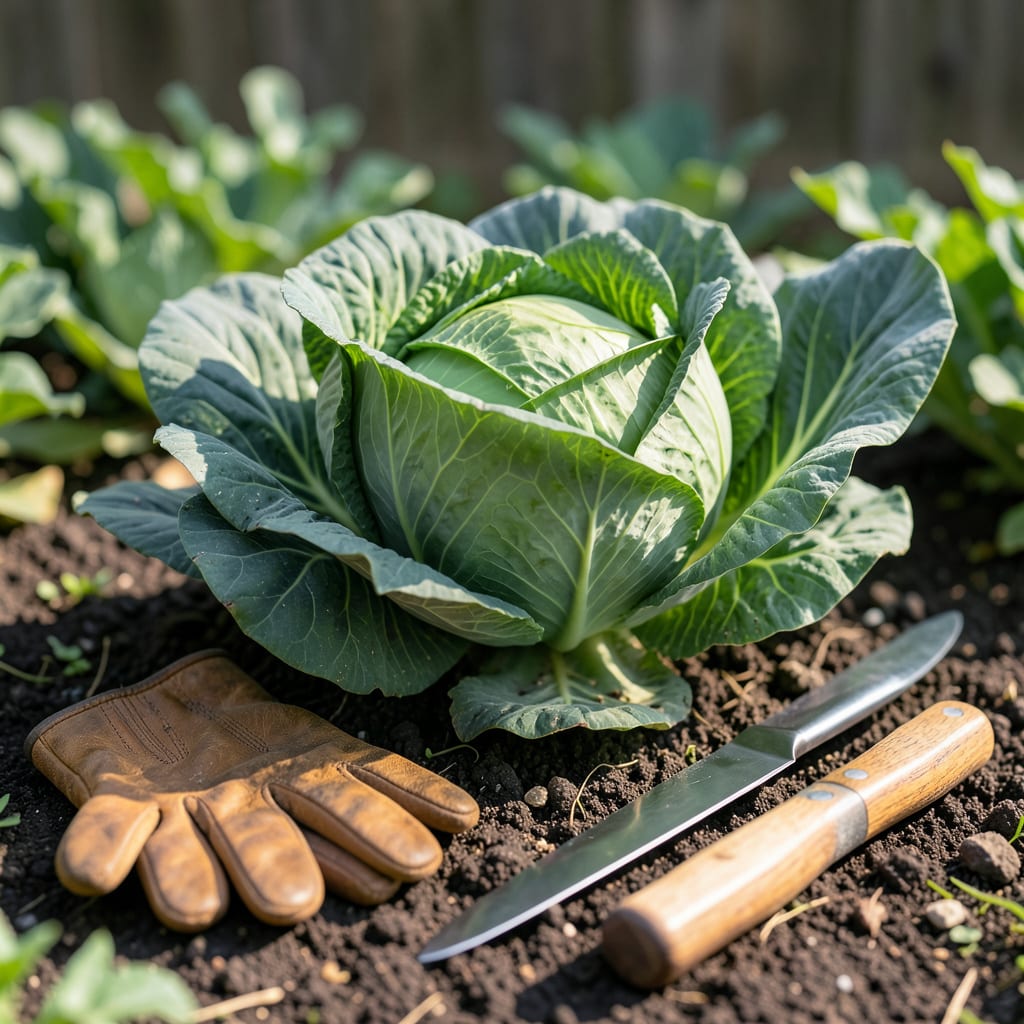
There’s nothing more satisfying than growing your own 🥬 cabbage, but knowing the perfect moment to pick can feel like guesswork. I’ve been there, staring at my plants wondering if today’s the day.
Discover the easier way to tell when your cabbage is ready with these simple visual and physical signs. You’ll never second-guess your harvest timing again.


I always get excited when my cabbage plants start forming those familiar round heads. The first sign I look for is firmness—a mature head should feel solid and dense when gently squeezed, not soft or spongy.
Another clear indicator is size. Most varieties reach 4-12 inches in diameter when ready, though this varies by type. I check the outer leaves too—they should be vibrant and crisp, not wilted or yellowing.
I pay close attention to the head’s weight—a ready cabbage feels heavy for its size. If it feels light, it likely needs more time. I also watch for splitting leaves, which often means the head is fully developed and pushing outward.
The color should be consistent across the head. For green cabbage, this means a deep, uniform green. Red cabbage should have a rich, even purple-red hue. Any uneven coloring might mean it’s not quite ready.
I’ve learned that early morning is the best time to check, as the heads are most firm after a cool night. If the head feels slightly soft in the afternoon heat, I’ll wait and check again the next morning.
One mistake I made early on was waiting for the head to get as large as possible. But overmature cabbage can split or become tough. I now harvest when the head reaches its variety’s mature size, even if it could grow larger.
For Savoy cabbage, the crinkled leaves should look tightly packed. The head might not be as hard as green cabbage, but it should still feel dense when pressed.
The stem thickness at the base can also indicate readiness. A mature cabbage typically has a thick, sturdy stem about 1-2 inches wide where it meets the head.
I also consider the days to maturity for my specific variety. While this varies, most cabbages are ready between 70-100 days after transplanting. I keep track of my planting date to help estimate.
Remember, weather affects maturity. Cool temperatures can slow growth, while warm weather may speed it up. I always combine the visual signs with my planting timeline for the most accurate harvest decision.
When in doubt, I do the squeeze test—if the head feels solid and doesn’t give much under pressure, it’s likely ready. If it feels soft or springs back, I give it a few more days in the garden.
Testing your cabbage maturity is simpler than you think. I always start with the squeeze test—gently press the head with your palms. A firm, dense feel means it’s ready, while a soft or spongy texture needs more time.
Another method I swear by is checking the head density. If the leaves feel tightly packed and the head doesn’t spring back when pressed, it’s a good sign. I also look at the stem thickness—a mature cabbage has a sturdy base about 1-2 inches wide.
I once made the mistake of over-squeezing my cabbage heads, which left bruises. Now, I use a light touch and check multiple heads to compare. If one feels ready, I test a few others to confirm consistency across the patch.
The time of day matters too. I always test in the early morning when heads are most firm. Afternoon heat can make them feel softer, even if they’re ready. A cool morning gives the most accurate results.
For Savoy cabbage, the test is slightly different. Since the leaves are crinkled, I look for a dense, compact head rather than rock-hard firmness. The leaves should still feel crisp and tightly packed.
If you’re still unsure, try the lift test. Gently tilt the head—if it feels heavy and the stem seems sturdy, it’s likely ready. A light head or wobbly stem means it needs more time in the garden.
Remember, variety matters. Green cabbage tends to be firmer, while red or Savoy may feel slightly different. Always refer to your seed packet for specific maturity signs.
I’ve found that harvest timing varies significantly between cabbage varieties. Green cabbage typically matures in 70-80 days, while red cabbage often needs 80-90 days to reach peak condition.
Savoy cabbage can take 85-100 days, with its crinkled leaves needing extra time to develop their characteristic texture. I always check my seed packets for the exact days to maturity for the specific variety I’m growing.
I pay close attention to seasonal changes too. In cooler climates, cabbage may take longer to mature, while warmer regions can speed up the process. I adjust my expectations based on the current weather patterns.
For spring-planted cabbage, I usually see heads ready by early summer. Fall-planted cabbage often matures in late autumn, just before the first frost. I’ve learned to watch the weather forecast closely as harvest time approaches.
I also consider the planting date. If I started seeds indoors 6-8 weeks before the last frost, I can expect to harvest about 70-100 days after transplanting. This timeline helps me anticipate when to start checking for readiness.
Remember, these are just guidelines. The best indicator is always the visual and physical signs we discussed earlier. I combine the variety timeline with the squeeze test for the most accurate harvest decision.
Harvesting too soon results in loose, underdeveloped heads with poor texture. The leaves will feel soft, and the head won’t have reached its full size or density.
Yes, overmature heads often split open or develop a bitter taste. Once fully ripe, check daily to prevent cracking, especially after heavy rain.
Cool temperatures slow growth, while heat speeds it up. Morning is ideal for testing firmness, as afternoon warmth can falsely soften heads.
Savoy forms a dense, compact head with tightly packed, crinkled leaves. It may feel slightly less firm than green cabbage but should still be solid.
