
Beautiful Plants For Your Interior
Beautiful Plants For Your Interior
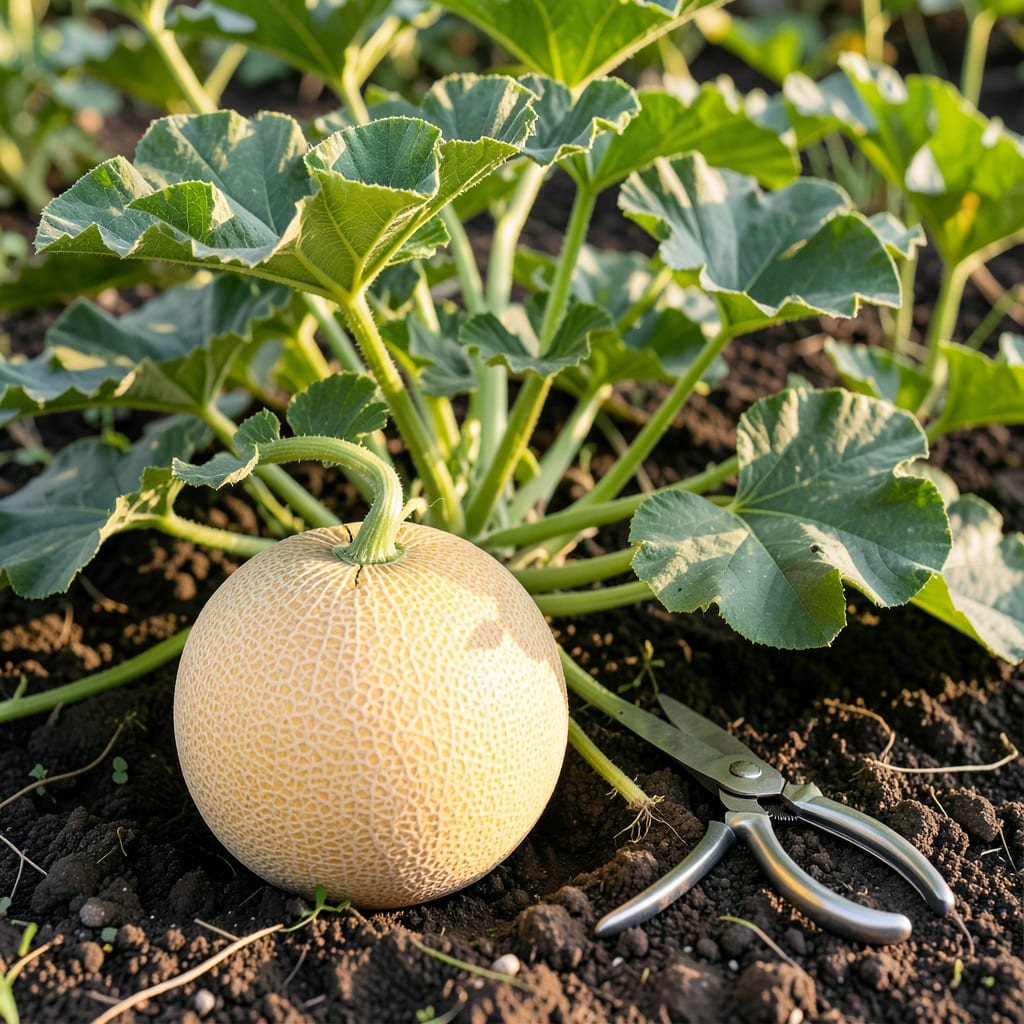
Nothing beats the taste of a perfectly ripe 🍈 Cantaloupe fresh from your garden, but knowing when to pick it can feel like guesswork. The difference between underripe and ideal often comes down to subtle cues.
I’ll show you the most reliable signs to watch for, from stem separation to scent. With these tips, you’ll never question your Cantaloupe harvest timing again.


Timing your cantaloupe harvest perfectly means watching for visual cues rather than just size. The most reliable indicator is the stem slip method, where the stem detaches easily from the vine.
You’ll also notice the rind color changes from green to a beige or tan hue beneath the netting. These signs are far more accurate than simply measuring diameter or weight. Netting development becomes more pronounced as well. 🌿
| Sign | Details |
| Full Slip | Stem detaches completely with gentle pressure |
| Half Slip | Stem partially separates – harvest within 2-3 days |
| Color Change | Rind turns beige/tan under netting |
| Netting | Surface develops raised corky webbing |
| Scent | Sweet melon aroma at stem end |
The “full slip” indicates peak ripeness, while a “half slip” means it’s nearly ready. I check my plants daily once I see the first color change, as cantaloupes can go from perfect to overripe quickly in hot weather.
Another visual clue is the netting pattern. A ripe cantaloupe will have a well-defined, raised webbing on its rind. This texture develops as the fruit matures and the sugars concentrate inside.
Don’t rely on size alone, as variety and growing conditions affect this. A Hale’s Best might be smaller than a Ambrosia when ripe. Instead, combine multiple indicators for the most accurate assessment. 🌱
I’ve found that morning harvesting works best. The fruit is firmer after a cool night, making it easier to handle without bruising. Plus, the sugar content is at its peak after the plant has rested overnight.
The stem end often gives the first hint. As the cantaloupe ripens, the area where the stem attaches will begin to crack slightly. This is nature’s way of preparing the fruit to separate from the vine. ☀️
Remember that weather conditions can speed up or slow down ripening. Hot, dry periods may require checking your melons twice daily, while cooler, cloudy weather might extend the ripening window by several days.
For the most accurate results, I recommend using at least three of these indicators together. The combination of stem slip, color change, and sweet scent gives me confidence that my cantaloupes are at their flavor peak.
Beyond visual cues, your sense of smell is one of the best tools for determining cantaloupe ripeness. A sweet, musky aroma at the stem end indicates the fruit is ready to pick. This scent becomes stronger as the sugar content increases inside.
I always take a deep sniff near the stem attachment point. If you detect that characteristic cantaloupe fragrance, it’s a good sign your melon is at its peak. If there’s no smell, it likely needs more time on the vine. 🌿
For the most accurate test, cup the cantaloupe in your hands and smell the stem end. A strong, sweet aroma means it’s ready to harvest. Avoid pressing the rind, as this can damage the fruit.
The tap test is another helpful method. Gently tap the cantaloupe with your knuckles and listen for a hollow sound. An unripe melon will produce a dull thud, while a ripe one sounds hollow due to the air space inside.
I find this works best with larger cantaloupes, as their size makes the sound difference more noticeable. For smaller varieties, I rely more heavily on the scent test and visual cues we discussed earlier.
Weather conditions can affect these sensory tests. On hot, dry days, the scent might be stronger, while on cool, humid mornings, you might need to warm the fruit in your hands first to detect the aroma. ☀️
A common mistake is harvesting too early based on sound alone. Remember that the hollow sound should be combined with other indicators like color change and stem slip for the most accurate assessment.
I’ve noticed that overripe cantaloupes lose their hollow sound and may produce a flat or muffled tone when tapped. This is your cue that the fruit has passed its prime and should be harvested immediately to prevent splitting. 🌱
Once you’ve picked your ripe cantaloupe, proper handling ensures it stays fresh and flavorful. I always start by gently brushing off any garden dirt with a soft cloth, taking care not to damage the delicate rind. 🌿
For storage, keep your cantaloupes at room temperature for 2-3 days if they need to ripen further. Once fully ripe, move them to the refrigerator where they’ll stay fresh for up to 5 days.
Avoid washing your cantaloupes until just before eating, as excess moisture can promote mold growth. I also recommend storing them stem-side down to prevent moisture loss through the former attachment point.
If you notice any soft spots or an off smell, it’s best to use the fruit immediately. These are signs of overripeness that will only worsen with time. For slightly underripe melons, placing them in a paper bag with a banana can help speed up ripening. ☀️
Remember that homegrown cantaloupes often have a shorter shelf life than store-bought ones. This is because they haven’t been treated with the same preservatives. I find that cutting my cantaloupes just before serving gives the best flavor and texture.
A ripe cantaloupe has a stem that detaches easily with gentle pressure, called a full slip. If it’s partially separated, that’s a half slip—harvest within 2-3 days. A firmly attached stem means it needs more time.
Yes, but only if you see other signs like beige/tan rind under the netting and a sweet scent at the stem end. These combined indicators often mean it’s ready even without full stem slip.
At room temperature, a ripe cantaloupe lasts 2-3 days. Once cut, refrigerate and use within 5 days. Store whole melons stem-side down to retain moisture.
No scent usually means it’s not ripe yet. Check the stem—if it’s still green and firmly attached, give it more time. Hot weather can speed up ripening, so monitor daily once color begins to change.
