
Beautiful Plants For Your Interior
Beautiful Plants For Your Interior
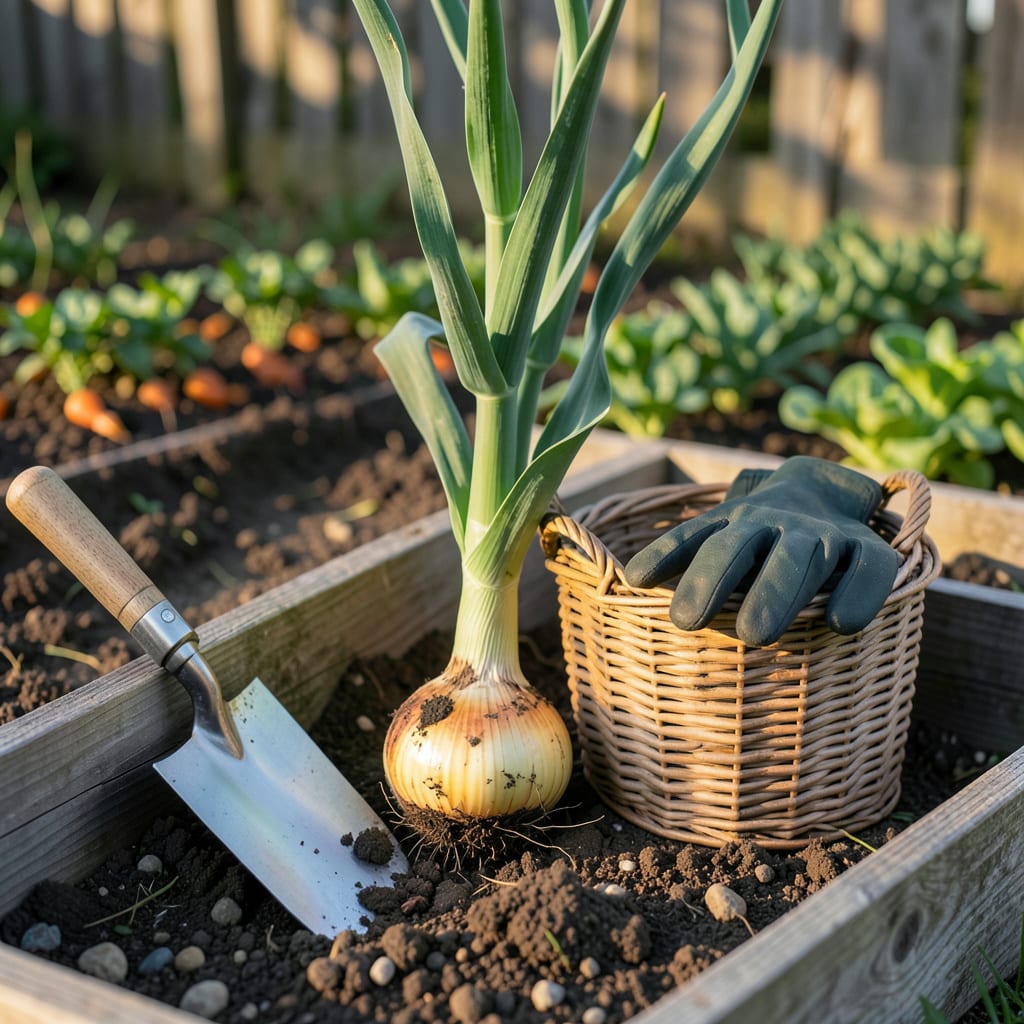
There’s nothing worse than pulling up your onions only to find they’re not ready—or worse, past their prime. After months of tending your crop, knowing the exact moment to harvest makes all the difference.
I’ve learned the hard way that timing is everything with 🧅 onions. The good news? Your plants will actually tell you when they’re ready—if you know what to look for. Let’s break down the foolproof signs so you never second-guess your harvest again.


After months of patiently tending your 🧅 onion crop, the final step—harvesting—can feel like a guessing game. But here’s the secret: your onions will visually announce when they’re ready. The key is knowing what to look for above and below the soil.
Unlike some veggies that hide their readiness, onions give clear signals through their tops, necks, and bulbs. Whether you’re growing red, white, or sweet varieties, these five signs apply across the board. Let’s break them down so you can harvest with confidence.
The green leaves turn yellow or brown and collapse at the neck—this is the #1 signal for bulb onions. Green onions skip this step!
Feel just above the bulb: a ready onion has a thin, papery neck. If it’s still thick and juicy, wait 1-2 weeks and recheck.
Sweet onions (like Vidalias) grow 3-4” wide; storage onions are smaller (2-3”). Gently brush soil away to check without uprooting.
Run your fingers over the bulb: dry, rustling skins mean it’s ready. If the skin feels moist or sticky, it needs more time in the ground.
Watch for 1-2 weeks with no new shoots. If the plant is still pushing up fresh greens, the bulb is still sizing up underground.
Here’s my pro tip: Test one onion first. If the bulb’s skins are tight and the neck snaps easily when bent, the rest are likely ready. For green onions, ignore the flopping rule—harvest when tops are 8-12” tall and bulbs are slender.
Timing varies slightly by climate, but these signs are universal. In hotter zones (like the South), onions may mature 2-3 weeks faster than in cooler regions. When in doubt, check the neck—it’s the most reliable indicator across all varieties.
I’ve found that morning harvesting works best. The soil is cooler, and the onions are less prone to bruising. Use a fork or trowel to gently loosen the soil around the bulb before pulling. Avoid yanking—this can damage the roots and reduce storage life.
If you’re growing onion sets (those tiny bulbs planted in spring), they’ll often mature 10-14 days earlier than seed-grown onions. Keep an eye on them starting around day 70 after planting. Seed-grown varieties typically need the full 90-120 days.
One mistake I see often? Waiting for 100% dry tops. By then, your onions might be overmature. Aim for 60-70% yellowing—that’s the sweet spot for most varieties. And remember: storage onions (like yellow or red) can handle a slightly later harvest, but sweet onions taste best picked promptly.
After harvesting, let your onions cure in a dry, shaded spot for 1-2 weeks. This toughens their skins for storage. Spread them out in a single layer—never pile them! Once the necks are fully dry and the outer skins rustle like paper, they’re ready for your pantry. 🪴
Not all onions mature at the same time—your variety and daylight exposure play huge roles. Short-day onions (like Vidalia or Texas Early White) thrive in southern climates and mature faster with 10-12 hours of daylight. Meanwhile, long-day varieties (Walla Walla, Yellow Sweet Spanish) need 14-16 hours of sun.
If you’re growing red onions or sweet onions, expect a 90-110 day timeline. But green onions (scallions) can be ready in just 60-70 days. Always check your seed packet for specifics—it’s your best harvest guide! 🌱
| Onion Type | Days to Maturity | Ideal Climate | Best for Storage? |
|---|---|---|---|
| Short-Day (Vidalia, Red Creole) | 90-110 days | Mild winters, southern U.S. | Moderate (3-6 months) |
| Long-Day (Walla Walla, Yellow Sweet) | 100-120 days | Cool summers, northern U.S. | Excellent (6-12 months) |
| Intermediate-Day (Candy, Super Star) | 95-115 days | Mid-latitude regions | Good (4-8 months) |
| Green Onions (Scallions) | 60-70 days | Any climate | No (eat fresh) |
Here’s a pro tip: Count backward from your average first frost date. Long-day onions need full summer sun, so plant them early. Short-day types can handle warmer winters and are perfect for fall planting in southern zones. Always adjust based on your local growing season.
I’ve found that sweet onions like Vidalia are trickier—they spoil faster but taste amazing fresh. If storage is your goal, stick with Yellow or Red storage onions. They’ll keep for months if cured properly. Check the neck thickness too; thinner necks mean better storage potential. 🌿
Don’t forget about daylight sensitivity. If you’re in Zone 6 or cooler, long-day onions are your best bet. But in Zone 7+, short-day varieties will thrive. When in doubt, ask your local cooperative extension for hyper-local advice—they’re a goldmine for timing tips!
Finally, watch the weather forecast as harvest nears. A week of rain can delay curing, while extreme heat might speed up maturity. I once lost a batch of Walla Wallas to unexpected monsoons—learn from my mistake and plan ahead! ☀️
Timing your onion harvest isn’t just about patience—it’s about protecting your hard work. I’ve seen gardeners lose entire crops because they pulled onions at the wrong stage. The consequences go beyond just size; they affect flavor, storage life, and even disease resistance.
Pick too early, and you’ll end up with small, thin-skinned bulbs that spoil within weeks. Wait too long, and your onions may split, rot in the ground, or even resprout—turning what should be a crisp, sweet harvest into a mushy disappointment. Let’s break down the risks so you can avoid these pitfalls.
Fix it: Use early-picked onions fresh; they won’t store.
Fix it: Cure immediately in high heat (90°F) to dry outer layers fast.
If you’ve already picked early, don’t panic. Those small onions are perfect for immediate use in salads or grilling—they’ll have a milder taste but won’t keep long. For late-harvested onions, prioritize rapid curing to salvage what you can. Spread them in a single layer under direct sun for 24–48 hours.
The sweet spot for storage onions (like yellow or red varieties) is when 60–80% of the tops have collapsed. Green onions, however, are the exception—harvest them young while the stems are tender and before bulbs form. Remember: Walla Walla and Vidalia types need extra curing time due to their high water content.
Pro tip: If rain is forecasted near your harvest window, pull onions 1–2 days early to prevent soil-borne rot. Lay them in a covered, airy space (like a garage) to finish drying. A little foresight here can double their storage life from 2 months to 4+ months!
Most bulb onions take 90-120 days from seed to harvest, though it varies by type. Green onions are ready in 60-70 days, while storage onions like yellow or red varieties often need the full 100-120 days. Always check your seed packet for exact timing.
It’s best to wait until 60-80% of the tops have yellowed and fallen over. If you pull them while mostly green, the bulbs will be underdeveloped with thin skins that don’t store well. These early onions work fine for fresh use but won’t last long in storage.
Green onions (scallions) are harvested young, when stems are tender and bulbs are small or nonexistent. Bulb onions need full maturity—look for dry necks and papery skins. Scallions regrow if cut 1-2 inches above the base, while bulb onions are pulled entirely.
Lay harvested onions in a single layer in a dry, shaded, and well-ventilated area for 1-2 weeks. Ideal conditions are 75-90°F with low humidity. The necks should tighten, and outer skins will become crisp. Avoid washing—just brush off excess dirt.
Over-mature onions risk splitting, resprouting, or developing soft centers. In wet conditions, they may rot. If left past prime, harvest immediately and cure aggressively in direct sun for 24-48 hours to salvage storage life.
