
Beautiful Plants For Your Interior
Beautiful Plants For Your Interior
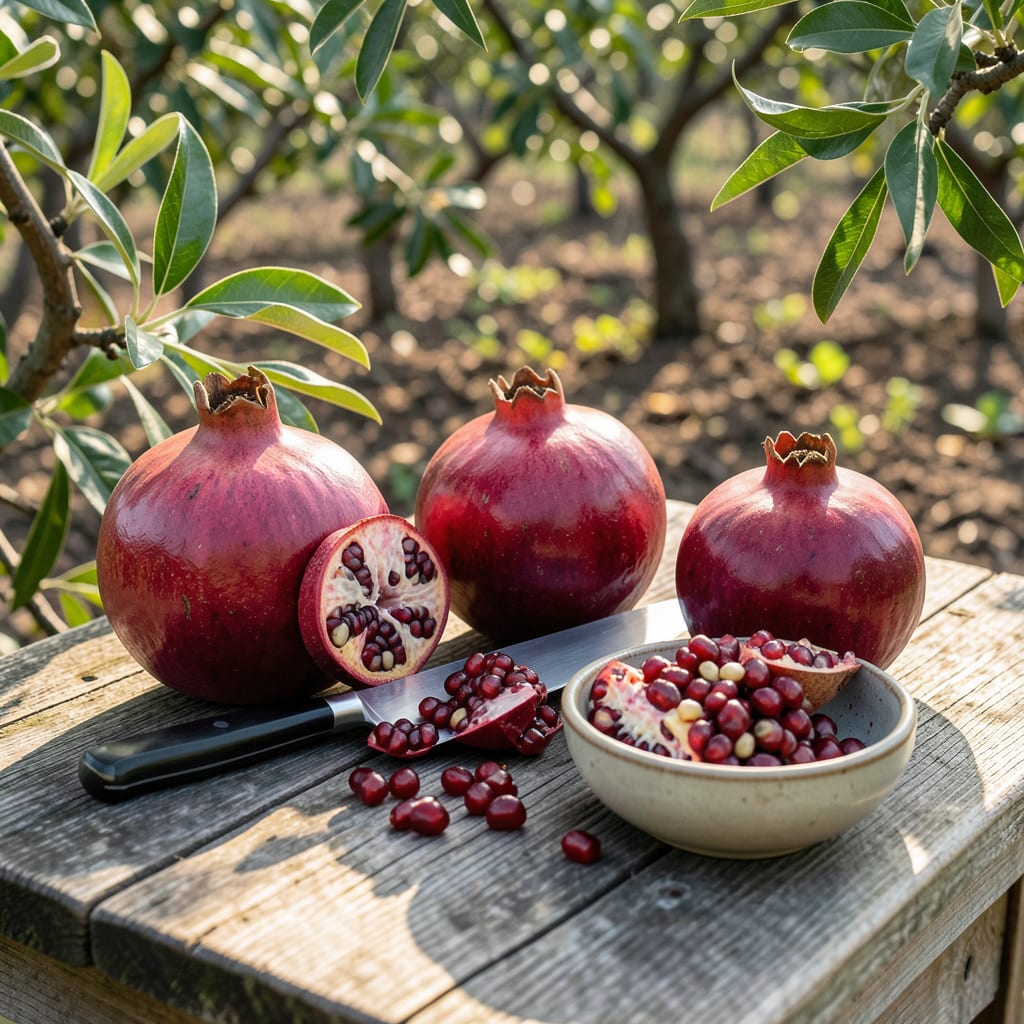
Tired of the messy struggle when trying to get those ruby-red arils out of your 🍇 Pomegranate? You’re not alone—this fruit’s tough exterior hides a treasure that’s worth the effort.
I’ll show you the easiest way to extract those seeds without the usual chaos. With just a few simple tools and my proven method, you’ll be enjoying fresh pomegranate goodness in no time.


Harvesting pomegranate seeds cleanly starts with choosing ripe fruit. Look for a deep red or purple color and a leathery skin texture. The fruit should feel heavy for its size, indicating juicy arils inside.
A sharp knife and a large bowl are your best friends for this task. I recommend working over a water-filled bowl to minimize splatter and make seed separation easier. This method keeps your workspace clean.
Cut the pomegranate in half horizontally using a sharp knife. Be careful not to pierce the arils inside.
Hold each half cut-side down over a bowl of water. Tap the rind firmly with a spoon to release the seeds.
Watch as the arils sink to the bottom while the white pith floats to the top for easy removal.
Scoop out the clean seeds with a slotted spoon and pat them dry with a paper towel.
The water method is my go-to because it reduces mess significantly. The seeds naturally separate from the pith, which floats away. This technique works especially well for large batches of pomegranates.
For those who prefer a dry method, you can gently pry out arils with your fingers. However, this approach can be time-consuming and may stain your hands. I find it less efficient than the water method.
Once separated, store your pomegranate seeds in an airtight container in the refrigerator. They’ll stay fresh for up to 5 days. For longer storage, consider freezing them on a tray before transferring to a freezer bag.
If you’re harvesting seeds for propagation, choose the plumpest arils from the healthiest fruits. The seeds inside these will have the best germination rates when planted in well-draining soil.
With these simple techniques, you’ll master pomegranate seed harvesting in no time. The key is patience and using the right method for your needs ✂️
Having the right tools makes all the difference when harvesting pomegranate seeds. I’ve found that a few simple items can turn a frustrating task into a quick, satisfying process. The key is using tools that help separate the arils from the pith efficiently.
You don’t need fancy equipment—just practical items you likely already have in your garden shed or kitchen. The goal is to minimize mess while maximizing seed yield. Here’s what I recommend for the cleanest extraction.
| Tool | Purpose |
|---|---|
| Sharp Knife | Cleanly cut fruit in half |
| Large Bowl | Holds water for seed separation |
| Wooden Spoon | Gently tap rind to release arils |
| Slotted Spoon | Scoop out clean seeds easily |
| Paper Towels | Pat seeds dry after rinsing |
A sharp knife is essential for cutting through the tough pomegranate rind without crushing the arils. I prefer a chef’s knife for precision, but any serrated knife will work in a pinch. Dull blades can slip and cause accidents.
The bowl of water is my secret weapon. It catches the arils while allowing the white pith to float away. This method reduces staining on countertops and keeps the seeds intact. I use a large mixing bowl for stability.
Avoid using metal spoons for tapping—they can bruise the arils. Instead, opt for a wooden spoon to gently loosen the seeds. For drying, paper towels absorb moisture quickly without sticking to the arils.
With these basic tools, you’ll harvest pomegranate seeds like a pro. The process becomes faster and cleaner with each attempt, and you’ll wonder why you ever dreaded it before ✂️
Even with the best techniques, small errors can turn pomegranate harvesting into a frustrating experience. I’ve seen gardeners waste perfectly good fruit by rushing the process or using the wrong tools. The good news? Most mistakes are easily preventable with a little know-how.
One of the biggest issues is cutting the fruit incorrectly. A jagged or uneven slice can crush the arils and make extraction difficult. Always use a sharp knife and cut horizontally for the cleanest separation.
⚠️ Avoid These Pomegranate Pitfalls
Cutting too deeply can pierce seeds and release bitter juices. Always use a gentle tapping motion with a wooden spoon to free arils from the rind.
Another common mistake is skipping the water method. Trying to remove seeds dry often leads to stained hands and a messy workspace. The water helps separate the arils from the pith naturally, saving you time and effort.
I’ve also seen people use metal utensils to tap the rind, which can bruise the seeds. Stick to wooden spoons for a gentler approach. And never squeeze the fruit too hard—this can burst the arils and make them unusable.
Finally, don’t rush the drying process. Pat the seeds gently with a paper towel to avoid crushing them. With these tips, you’ll avoid the most common mistakes and enjoy a smooth, efficient harvest every time ✂️
Use the water method: cut the fruit in half and tap the rind over a bowl of water. The arils sink while the pith floats away.
No, unripe pomegranates have underdeveloped seeds with less juice. Wait until the fruit is deep red and feels heavy for its size.
Store cleaned seeds in an airtight container in the fridge for up to 5 days. For longer storage, freeze them on a tray first.
Bitterness often comes from piercing the arils during extraction. Use a gentle tapping motion with a wooden spoon to avoid this.
