
Beautiful Plants For Your Interior
Beautiful Plants For Your Interior
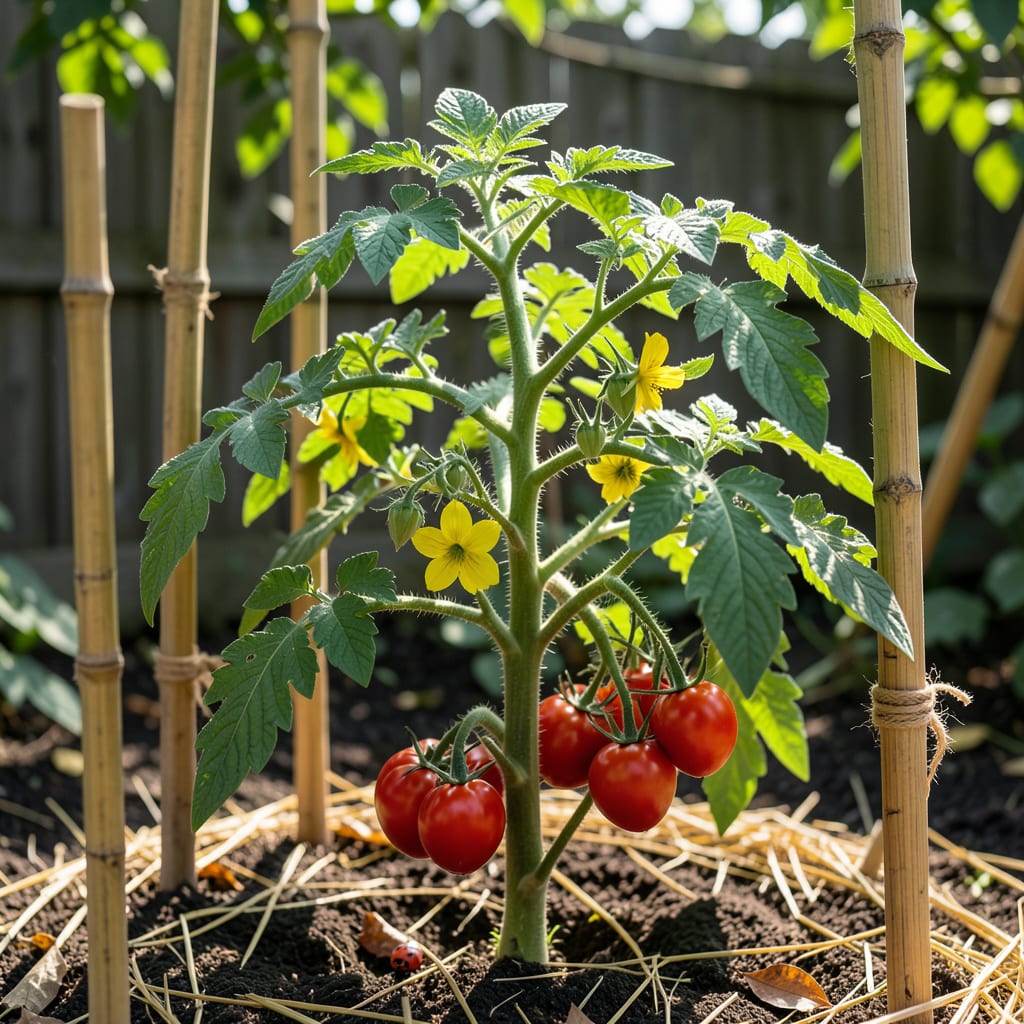
Ever watched your neighbor’s tomato plants stretch toward the sky while yours stay stubby and overwhelmed? The difference isn’t magic—it’s two simple techniques most gardeners overlook until it’s too late.
This season, I’ll show you how to turn those bushy 🍅 plants into towering producers with the right staking and pruning tricks. No green thumb required—just follow these proven steps for tomatoes that grow taller, stronger, and packed with fruit before summer’s end.


If you want towering tomato plants that reach 6-12 feet tall, staking is non-negotiable. Without proper support, even the strongest indeterminate varieties will sprawl, waste energy, and produce fewer fruits. I’ve seen unstaked plants collapse under their own weight—don’t let that happen to yours! 🌱
The key is choosing the right support system early. Bamboo stakes, metal cages, or trellises all work, but each has pros and cons. For example, bamboo stakes are budget-friendly but require frequent tying, while heavy-duty cages offer hands-off support but take up more space. ☀️
One mistake I see often? Using flimsy stakes that bend under the weight of fruit-laden vines. If you’re growing beefsteak tomatoes or heirloom varieties, invest in 1-inch-thick bamboo or metal rebar stakes. For cherry tomatoes, a 5-6 ft stake usually suffices. 🪴
Another pro tip: Bury stakes 12-18 inches deep to anchor them against wind. I once lost a 8-foot ‘Brandywine’ plant to a summer storm because the stake wasn’t secured deeply enough. Learn from my mistake—stability is everything when aiming for height! 🌬️
If you’re using tomato cages, opt for heavy-duty conical cages (at least 5 feet tall) rather than flimsy wire ones. Cages are low-maintenance but limit height compared to stakes. For maximum vertical growth, combine stakes + cages: place the cage around the plant and add a stake inside for extra support. ✂️
For trellising, use a strong netting or string system (like the Florida weave) to train vines upward. Space trellis posts every 4 feet and weave twine between them as plants grow. This method works wonders for indeterminate cherry tomatoes, which can reach 10+ feet in a season! 🌿
Don’t forget about spiral supports—these coil-like stakes let you twist vines upward as they grow. They’re ideal for smaller spaces but may not support heavy fruit loads like beefsteaks. Pair them with additional ties for extra security during fruit set. 💧
Finally, monitor plant weight as tomatoes mature. I once had a ‘Sungold’ vine snap under the weight of 50+ cherry tomatoes. If branches sag, add horizontal supports (like a crossbar between stakes) to distribute the load. Your goal is to keep the main stem vertical—that’s where the height comes from! 🌻
Remember, tall tomatoes need consistent care. Check ties weekly, prune suckers, and water deeply at the base (never overhead). With the right support and attention, your plants could hit ceiling height—or even taller—by summer’s end! 🌱
Pruning isn’t just about aesthetics—it’s the secret weapon for growing tall, fruit-packed tomato plants. When you remove unnecessary growth, your plant channels energy into upward expansion and fruit production instead of wasting it on extra leaves. I’ve seen pruned plants outgrow unpruned ones by 3-4 feet in a single season! ✂️
The key is knowing what to prune and when to do it. Focus on suckers (those small shoots between the main stem and branches) and lower leaves that touch the soil. For indeterminate varieties, regular pruning can mean the difference between a 5-foot bush and a 10-foot tower of tomatoes. 🌱
For beginners, I recommend the Missouri pruning method: remove all suckers below the first flower cluster, then let 1-2 suckers above it grow into secondary stems. This creates a strong Y-shaped structure that supports both height and fruit production. It’s simpler than heavy pruning but still delivers impressive results. 🌿
If you’re growing determinate tomatoes (bush types), go easy on pruning—these plants have a fixed size and produce fruit on side shoots. Focus instead on removing yellowing leaves and maintaining airflow. For indeterminate varieties, aggressive pruning is your friend: I’ve had ‘Sungold’ vines reach 12 feet using this approach! ☀️
Here’s a pro tip: After pruning, apply a light fertilizer (like fish emulsion or compost tea) to help plants recover. I also sprinkle crushed eggshells around the base for calcium—this prevents blossom end rot while supporting new growth. The combination of pruning and proper nutrition can add 2-3 feet to your plant’s height over the season. 💧
Remember that pruning isn’t one-and-done. Make it part of your weekly garden routine, always checking for new suckers and removing them before they steal energy from your main stem. With consistent care, you’ll be amazed how quickly your tomatoes grow upward—some of my ‘Brandywine’ plants have reached the top of 8-foot stakes by mid-summer! 🪴
Not all tomato plants are created equal when it comes to height. If you’re dreaming of sky-high vines, you’ll want to focus on indeterminate varieties—these keep growing until frost kills them. I’ve grown ‘Sungold’ vines that reached 10 feet in a single season! The secret starts with picking the right variety. 🌱
While determinate tomatoes (like ‘Roma’ or ‘Bush Early Girl’) top out at 3-4 feet, indeterminate types can climb 6-12 feet or more with proper care. But even the best variety won’t thrive without the right growing conditions. Let’s look at the top performers and how to help them reach their full potential. ☀️
| Variety | Height Potential | Fruit Type | Days to Harvest | Growth Tip |
|---|---|---|---|---|
| ‘Sungold’ | 8-10 ft | Cherry (orange) | 55-65 days | Needs weekly pruning to maintain airflow |
| ‘Brandywine’ | 6-9 ft | Beefsteak (pink) | 80-100 days | Requires heavy-duty stakes for fruit weight |
| ‘Cherry Cascade’ | 10-12 ft | Cherry (red) | 60-70 days | Ideal for trellis systems and containers |
| ‘Sweet Million’ | 7-9 ft | Cherry (red) | 60-65 days | Produces hundreds of fruits per plant |
| ‘Black Krim’ | 6-8 ft | Beefsteak (purple) | 70-80 days | Needs consistent watering to prevent cracking |
To maximize height, start with rich, well-draining soil amended with compost. I mix in aged manure and bone meal at planting time for a nutrient boost. Remember, tall plants are heavy feeders! Use a low-nitrogen, high-phosphorus fertilizer (like 5-10-10) every 3-4 weeks during the growing season. 💧
Watering plays a crucial role in stem elongation. Deep watering (1-2 inches per week) encourages roots to grow downward, which stabilizes tall plants. I use a soaker hose to deliver water directly to roots while keeping foliage dry. Avoid overhead watering—it promotes disease and weakens stems. Morning watering is best to reduce evaporation. 🌿
For an extra growth boost, try Epsom salt (1 tablespoon per gallon of water) every 2-3 weeks. The magnesium helps prevent yellowing leaves and supports strong stem development. I’ve seen plants grow 20% taller with this simple addition! Just don’t overdo it—too much magnesium can interfere with calcium uptake. ✂️
Finally, don’t forget about sunlight—these tall varieties need 8+ hours daily. If your garden gets afternoon shade, consider reflective mulch to bounce extra light onto lower leaves. With the right variety and care, you could be harvesting from eye-level plants by midsummer! 🌻
Indeterminate varieties keep growing until frost, often reaching 6-12 feet with proper support. Determinate types stop growing at 3-4 feet and focus on fruit production. For tall plants, always choose indeterminate varieties like ‘Sungold’ or ‘Brandywine’.
Check plants weekly and remove suckers when they’re 2-3 inches long. Focus on lower leaves touching the soil and any growth below the first fruit cluster. Morning pruning in cool conditions helps plants recover faster.
Bamboo poles, old broom handles, or even thick branches work well. Just ensure they’re at least 6 feet tall and 1 inch thick to support mature plants. Avoid flimsy materials that bend under fruit weight.
Waiting too long to stake or prune is the most common error. Plants should be staked at transplanting and pruned when they reach 1-2 feet tall. Delaying these steps wastes energy on horizontal growth instead of upward expansion.
Bury stakes 12-18 inches deep and space them 12-18 inches from the stem. Use soft ties every 12 inches up the stem, leaving 1-2 inches of slack for growth. For extra stability, add a crossbar between stakes at the top.
