
Beautiful Plants For Your Interior
Beautiful Plants For Your Interior
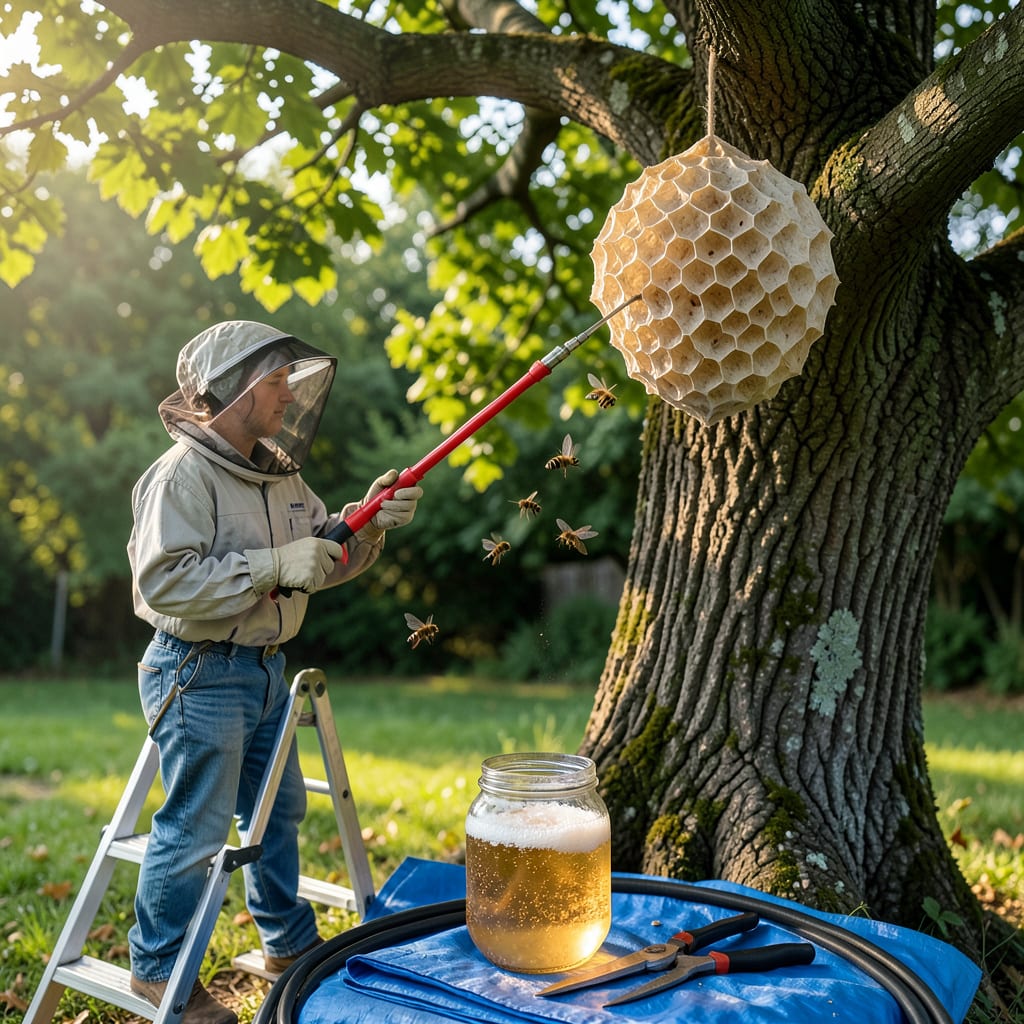
Nothing ruins a peaceful garden moment like discovering a wasp nest in your favorite tree. I’ve been there—standing frozen under an apple tree, watching paper wasps swarm near the branches where I planned to harvest fruit. The good news? You can remove them safely without harming your tree or the ecosystem.
The key is timing and method. Early morning or dusk is best, when wasps are less active. I’ve had success with non-lethal traps and natural deterrents like peppermint oil, but some situations call for professional help—especially with large nests or aggressive species. Let’s tackle this without turning your yard into a war zone.
📚 In This Guide
This method protects both your trees and beneficial pollinators while effectively addressing the problem.
Before taking action, determine whether you’re dealing with aggressive yellowjackets or more docile paper wasps. Yellowjackets build underground or in dense foliage, while paper wasps create open, umbrella-shaped nests hanging from branches. Stand at a safe distance and observe their flight patterns at dusk when they’re less active.
Locate the exact nest position in the tree. Paper wasp nests often hang from single stalks, while hornet nests may be enclosed in a football-shaped paper shell. Never shine a flashlight directly at the nest—this can trigger defensive behavior. Instead, mark the location with a ribbon tied to a nearby branch during daylight hours.
The optimal time for removal is either at dawn or dusk when wasps are least active. Temperatures below 50°F make them sluggish, reducing aggression. For nests within reach, prepare a solution of 2 tablespoons dish soap per quart of water in a pump sprayer. The soap breaks down their exoskeletons without lingering environmental harm.
For higher nests, use a pole-mounted wasp spray designed for 15-20 foot reach. Always wear protective clothing including a long-sleeved shirt, pants, gloves, and a veil. Test your equipment beforehand—nothing’s worse than discovering your sprayer clogs mid-application. Position your escape route before beginning treatment.
Approach the nest slowly from the side, not directly beneath it. Spray the soap solution or insecticide in a steady, sweeping motion to thoroughly coat the nest entrance and surface. Paper wasp nests should collapse within 10-15 minutes as the solution penetrates. For enclosed nests, you may need to wait 24 hours before removal to ensure all wasps are eliminated.
Once inactive, use a long pole or broom to knock the nest into a sealed plastic bag. Avoid dropping it to the ground where surviving wasps might emerge. Double-bag the nest and dispose of it in an outdoor trash container. Check the area daily for 3-5 days for signs of rebuilding activity—wasps may attempt to reconstruct in the same location.
Inspect your trees weekly during spring and summer for new nest construction. Wasps prefer protected areas, so trim back dense foliage that creates hidden pockets. Consider hanging fake wasp nests—available at garden centers—as a deterrent. These mimic established colonies, causing scouting wasps to seek less competitive locations.
For fruit trees, harvest ripe fruit promptly and clean up fallen produce. The sugars attract foraging wasps looking for food sources. A simple trap made from a soda bottle with sweet liquid can intercept scouts before they establish nests. Reapply preventive measures every 2-3 weeks during peak wasp season from late spring through early fall.
These practical insights will help you handle the removal process more effectively while keeping yourself and your yard safe.
Timing Strategy: The 50°F temperature threshold mentioned in Step 2 is crucial because wasps become significantly less active below this point. I’ve found that early morning treatments (just after sunrise) work best when temperatures are naturally cooler. If you’re working in warmer months, consider using a garden hose to lightly mist the area around the nest for a few minutes before treatment—this can help lower the local temperature slightly and make the wasps more sluggish.
Solution Application Technique: When applying the 2 tablespoons dish soap per quart of water solution in Step 3, use a continuous, overlapping spray pattern rather than quick bursts. The goal is to thoroughly saturate the nest entrance first, then work outward. I recommend starting from the bottom and working upward—this prevents wasps from escaping downward toward you. For paper wasp nests, you’ll typically see results within that 10-15 minute window as the solution breaks down their delicate nest structure.
Safety Preparation: Before beginning treatment, do a full equipment check as mentioned in Step 2. I learned the hard way that sprayers can clog with soap residue—always test yours with plain water first. For the protective clothing, make sure your veil is securely fastened and there are no gaps between gloves and sleeves. Consider wearing light-colored clothing, as wasps are more likely to investigate dark colors which they perceive as threats.
Post-Removal Vigilance: The 3-5 day monitoring period in Step 3 isn’t just a suggestion—it’s critical. Wasps leave behind pheromone trails that can attract others to rebuild. During this time, I recommend setting up a simple monitoring station: tie a bright ribbon to a branch near the removal site and check it daily from a safe distance with binoculars. This lets you spot any rebuilding activity without getting too close.
Early morning or late evening is ideal—wasps are less active when it’s cooler. Avoid midday when they’re most aggressive. Pro tip: Check for low light conditions to minimize disturbance and reduce the risk of stings.
Yes! A simple DIY trap (like a soda bottle with sweet liquid) can work for small infestations. However, traps may not eliminate the nest entirely. For large colonies, combine traps with approved sprays or professional help.
Not if done carefully! Avoid harsh chemicals that can damage bark or leaves. Opt for soapy water sprays or mechanical removal (like knocking down nests at night). Always inspect the tree afterward for stress signs (e.g., wilting).
Wasps can start rebuilding within 24–48 hours if the queen survives. To prevent this, remove all nest remnants and apply a residual insecticide (like dust formulations) to deter return.
If the problem persists, call a pest control expert—some species (like yellow jackets) are stubborn!
