
Beautiful Plants For Your Interior
Beautiful Plants For Your Interior
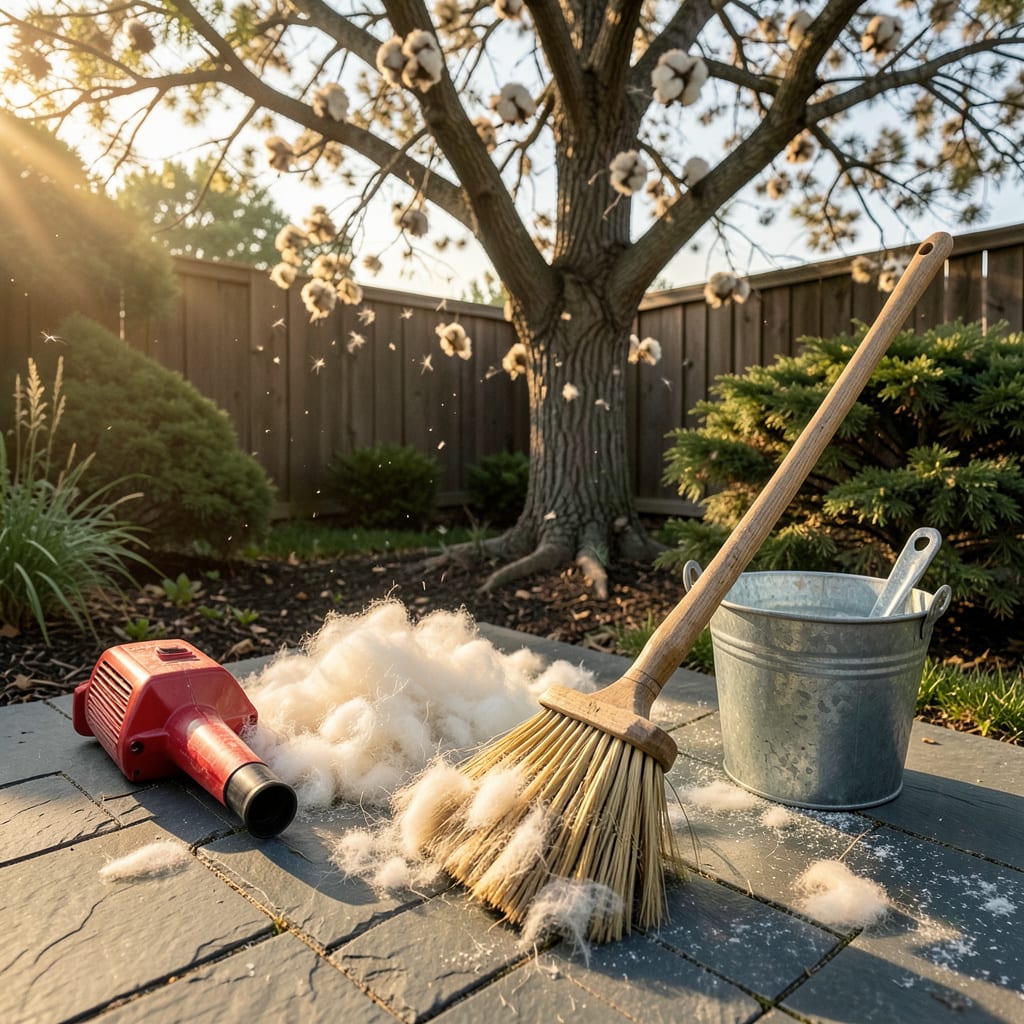
That cottonwood fluff covering your yard like snow in June? I get it—it’s more than just a mess. It clogs gutters, sticks to everything, and turns outdoor spaces into a fuzzy nightmare. After years of battling this seasonal nuisance, I’ve landed on fast, effective methods that actually work without harming your trees or the environment.
The solution isn’t complicated: timing and technique make all the difference. You’ll clear the fluff in under an hour with basic tools, then learn how to reduce next year’s invasion by 80% with simple tree care adjustments. No chemicals, no guesswork—just practical fixes that keep your yard usable when cottonwood season hits.
📚 In This Guide
When cottonwood trees release their fluffy seeds, this method clears them fast without leaving a trace behind.
Act immediately when you first notice the fluff accumulating—this is when it’s lightest and easiest to manage. Cottonwood fluff becomes exponentially harder to remove once it gets wet or mats down. I check my yard daily during peak season (typically late spring to early summer) to catch new accumulations before they spread.
Work on a dry, wind-free day. Even a light breeze will scatter the fluff as you try to collect it, making the job take twice as long. Early morning or late evening often provides the calmest conditions for this task.
A leaf blower on its lowest setting works best for dry fluff on hard surfaces like driveways and patios. Hold the blower at a 45-degree angle and work in small sections, directing the fluff toward a central pile. For grassy areas, a push broom with stiff bristles lifts the fluff without damaging turf—sweep it into manageable clumps before disposal.
Real talk: A shop vacuum with a fine-particle filter bag is worth its weight in gold for stubborn accumulations. The suction power captures fluff that clings to fences, outdoor furniture, or deck railings. Empty the bag frequently—cottonwood fluff compacts quickly and can clog filters if left too long.
Never leave collected fluff in open piles or trash cans. The slightest gust will send it airborne again, undoing all your work. I double-bag the material in heavy-duty contractor bags, tying them securely at the top. For large quantities, dampen the fluff slightly with a spray bottle before bagging—this adds just enough weight to prevent escape.
Check local regulations before disposal. Some municipalities classify cottonwood fluff as yard waste and require specific collection methods. If composting, bury it deeply in your pile (at least 12 inches down) to prevent it from blowing away during turning. The fluff breaks down surprisingly fast once contained.
While you can’t stop cottonwood trees from producing fluff, you can reduce its impact. Install fine-mesh screens (no larger than 1/8-inch openings) over gutters, porch enclosures, and ventilation intakes before fluff season begins. These catch the fibers before they accumulate in hard-to-reach areas.
For long-term control, consider replacing female cottonwood trees (the fluff producers) with male cultivars or alternative shade trees. If removal isn’t an option, a professional arborist can apply growth regulators to temporarily reduce seed production—though this requires annual applications and isn’t 100% effective. The most practical solution remains vigilant, immediate removal during the 2-3 week peak shedding period.
These practical insights will help you tackle cottonwood fluff more efficiently and avoid the pitfalls I’ve encountered over years of dealing with this seasonal nuisance.
Timing is Everything: The window for easy removal is shockingly narrow. As mentioned in Step 1, that late spring to early summer period demands daily vigilance. I’ve found that waiting even 24 hours can mean the difference between a 30-minute cleanup and a 3-hour ordeal once the fluff mats down. Set calendar reminders when you first spot those telltale white tufts floating in the air—this is your signal to begin daily yard checks.
Tool Technique Refinement: The 45-degree angle mentioned in Step 2 for your leaf blower isn’t arbitrary—it creates the perfect balance between lift and direction. I discovered through trial and error that holding the blower too vertically scatters the fluff, while too horizontal just pushes it along the ground. For grassy areas, work in overlapping rows with your push broom, like mowing a lawn, to ensure you’re not missing pockets of fluff between passes.
Disposal Strategy Upgrade: The double-bagging method in Step 3 works, but here’s what transformed my process: use contract-grade bags (the thick black ones from hardware stores) and add a second knot at the top. For particularly windy days, I place the filled bags in a wheeled trash can immediately—even a tied bag can split if it blows against sharp edges. The 12-inch compost burial depth isn’t just for containment; it actually accelerates decomposition by creating the right moisture and microbial environment.
Preventative Measure Optimization: Those 1/8-inch mesh screens in Step 4 work wonders, but installation timing matters. I install mine in early May—before the fluff starts but after any winter damage to existing screens. For gutters, consider adding a second layer of screening at the downspout entrance; this is where I’ve found the most stubborn accumulations occur. The 2-3 week peak shedding period varies slightly by climate, so keep a journal for 2-3 years to pinpoint your exact local timeline.
Cottonwood fluff typically appears in late spring to early summer (May–July, depending on your region). The peak lasts 2–4 weeks, but wind and rain can extend or shorten the season. Check local tree blooming reports for precise timing in your area.
Use a leaf blower (set to high) to gather fluff into piles, then scoop with a tarp or shop vac. For stubborn fluff, lightly mist your lawn with water first—it weighs it down for easier collection. Avoid raking dry fluff; it just scatters!
No, it’s mostly a nuisance! While thick layers can block sunlight or trap moisture (potentially smothering grass), it won’t kill plants. Rake or blow it off regularly to prevent matting. Bonus: It’s biodegradable—compost it if it’s chemical-free!
Yes! Plant female cottonwood trees (they produce less fluff) or install windbreaks (fences, shrubs) to redirect seeds. Spraying trees with water during blooming can also weigh down fluff before it spreads. Avoid pesticides—they won’t stop fluff.
Fluff is lightweight and clingy, so wind or foot traffic can redistribute it. Try these fixes:
