
Beautiful Plants For Your Interior
Beautiful Plants For Your Interior
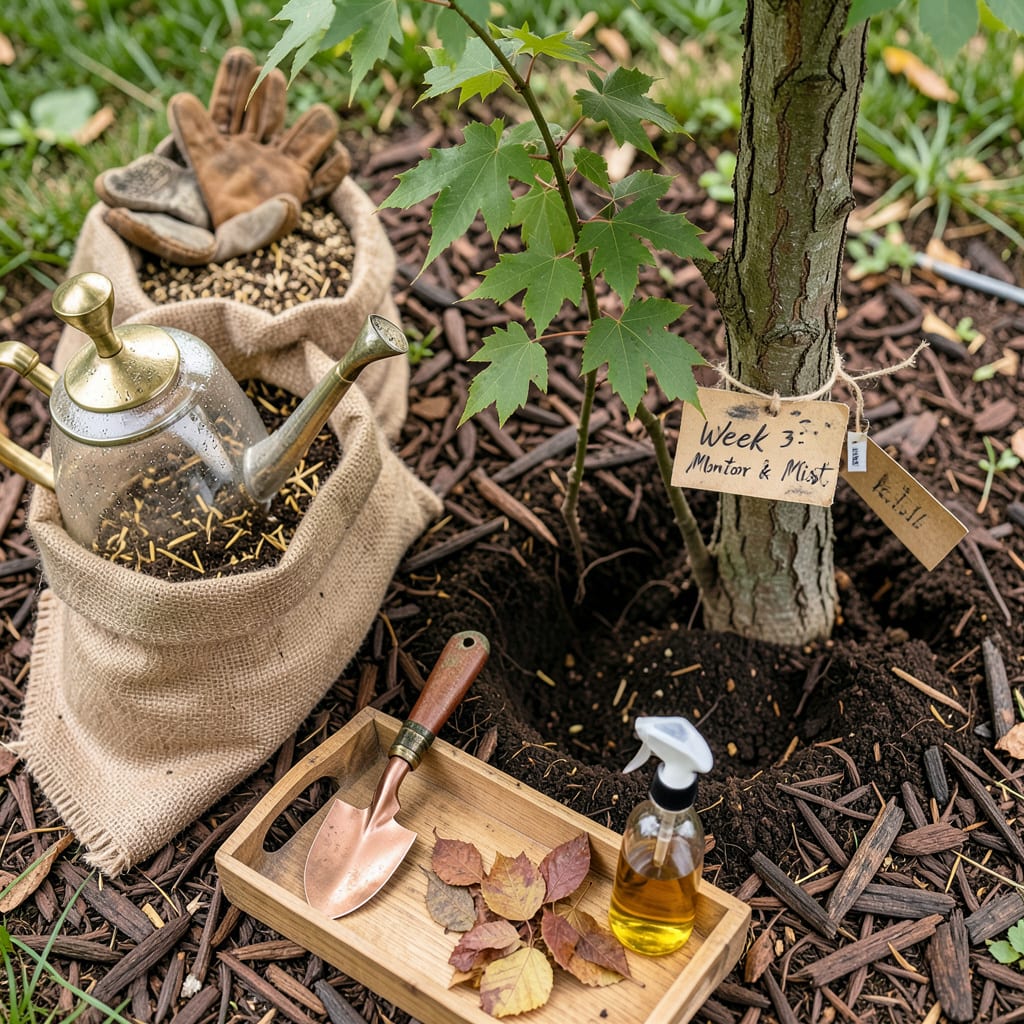
That sinking feeling when your newly planted tree’s leaves start wilting? I’ve been there—watching a healthy sapling suddenly droop after transplanting. The good news is transplant shock isn’t a death sentence. It’s your tree’s temporary stress response to its new home, and with the right care, most bounce back stronger than before.
The first 72 hours are critical. What your tree needs now isn’t complicated: consistent moisture at the roots, protection from harsh sun, and a little patience. I’ve revived dozens of shocked trees using simple techniques that work for everything from fruit trees to ornamentals. The leaves will perk up—you just need to give the roots what they’re silently screaming for.
📚 In This Guide
These are the exact methods I use to nurse trees back to health when they’re struggling after a move.
First, examine the tree’s canopy carefully. Mild transplant shock shows as slightly wilted leaves that recover overnight, while severe cases display brown, crispy foliage that remains brittle. Check the stem—if it’s still flexible and green when you scratch the bark, the tree is alive and can recover.
Look for new growth at the branch tips. Even a single green bud indicates the tree is still photosynthesizing. I always photograph the tree from three angles on day one to track progress. This visual record helps me notice subtle improvements that might otherwise go unnoticed.
Using clean, sharp bypass pruners, remove only the completely brown, dead leaves and branches. Never cut into green wood—this creates unnecessary wounds. Focus on thinning the canopy by 20-30% to reduce water demand while leaving enough foliage for photosynthesis.
Make cuts at a 45-degree angle just above a healthy bud or lateral branch. I sterilize my pruners with rubbing alcohol between cuts to prevent disease transmission. Avoid heavy pruning during hot afternoons—early morning is ideal when plant tissues are most hydrated.
Water the tree using a slow-drip method for 30-45 minutes, allowing moisture to penetrate 12-18 inches deep. I place a soaker hose in a spiral pattern starting 6 inches from the trunk and extending to the drip line. This encourages roots to grow outward where they’ll find more nutrients.
Check soil moisture by digging a small hole 6 inches deep near the root zone. The soil should feel moist but not saturated. For clay soils, I add a 2-inch layer of mulch (keeping it 3 inches away from the trunk) to regulate moisture without suffocating roots.
Mix a solution of 1 tablespoon of seaweed extract per gallon of water and apply as a foliar spray early in the morning. The cytokines in seaweed help stimulate root growth and reduce stress hormones. I repeat this application every 7-10 days for the first month post-transplant.
For severely stressed trees, I add 1 teaspoon of vitamin B1 to the watering can—this helps rebuild damaged root systems. Avoid high-nitrogen fertilizers during recovery, as they force top growth before roots can support it. The goal is to restore balance between root and shoot development.
Erect a temporary shade structure using 50% shade cloth positioned 2-3 feet above the canopy. This reduces transpiration while allowing dappled sunlight. I secure the cloth to stakes driven into the ground, ensuring it won’t touch the foliage and potentially spread disease.
In windy areas, I install a burlap windbreak on the prevailing wind side, leaving the other sides open for air circulation. Monitor the tree daily—remove the protection gradually over 2-3 weeks as new growth appears, indicating the tree is establishing itself.
These practical insights will help you avoid common pitfalls and maximize your tree’s recovery chances.
Assessment Accuracy: In Step 1, don’t rely solely on leaf appearance when evaluating shock severity. I’ve found that the stem scratch test (checking for green tissue beneath the bark) is far more reliable. Even trees with 80% brown foliage can recover if their stems remain green and flexible. Take photos from multiple angles as suggested—this visual timeline helps track subtle daily improvements that are easy to miss with casual observation.
Pruning Precision: When executing Step 2, remember that the 20-30% canopy reduction isn’t arbitrary. This specific range maintains the critical balance between reducing water demand and preserving enough foliage for photosynthesis. I make my cuts at exactly 45 degrees to prevent water pooling on the wound surface, which can lead to fungal infections. Always sterilize pruners between cuts—this simple step prevents disease transmission that could compound the tree’s stress.
Watering Wisdom: The 30-45 minute deep watering in Step 3 isn’t just about duration—it’s about depth. I use a simple chopstick test: after watering, push a wooden chopstick into the soil near the root zone. It should slide in easily to 12-18 inches and come out with moist (not dripping) soil particles. For the spiral hose placement, start exactly 6 inches from the trunk—this mimics natural rainfall patterns and encourages outward root growth where nutrients are more abundant.
Treatment Timing: For the seaweed extract application in Step 4, the early morning timing is crucial. I’ve noticed that foliar applications before 9 AM allow maximum absorption before daytime heat causes evaporation. When mixing the solution, use lukewarm water—this helps the extract dissolve completely and prevents any potential shock to the leaves from cold water. The 7-10 day interval accounts for the natural cycle of cytokine activity in the plant’s recovery process.
Most trees recover from mild shock within 2–4 weeks, but severe cases (especially for large or sensitive species) may take a full growing season or longer. Evergreens often bounce back slower than deciduous trees. Speed recovery by following proper aftercare—consistent watering and mulching are key!
Yes, but it’s preventable! Severe shock (e.g., root damage, extreme drought, or poor planting) can kill a tree if untreated. Signs of irreversible decline include brittle, brown branches with no green layers under the bark. Act fast with hydration and stress-reducing techniques to improve survival odds.
Aim for early spring (before buds swell) or fall (6+ weeks before frost). Avoid summer’s heat stress! Deciduous trees tolerate spring moves best, while evergreens prefer early fall. Check your USDA zone for exact timing—cool, cloudy days reduce stress.
No! Fertilizer can burn stressed roots. Wait until you see new growth (3–6 months post-transplant). Instead, focus on deep watering and mulch. If soil is poor, a light compost top-dressing (not direct root contact) can help after recovery begins.
Check for these shock signs:
