
Beautiful Plants For Your Interior
Beautiful Plants For Your Interior
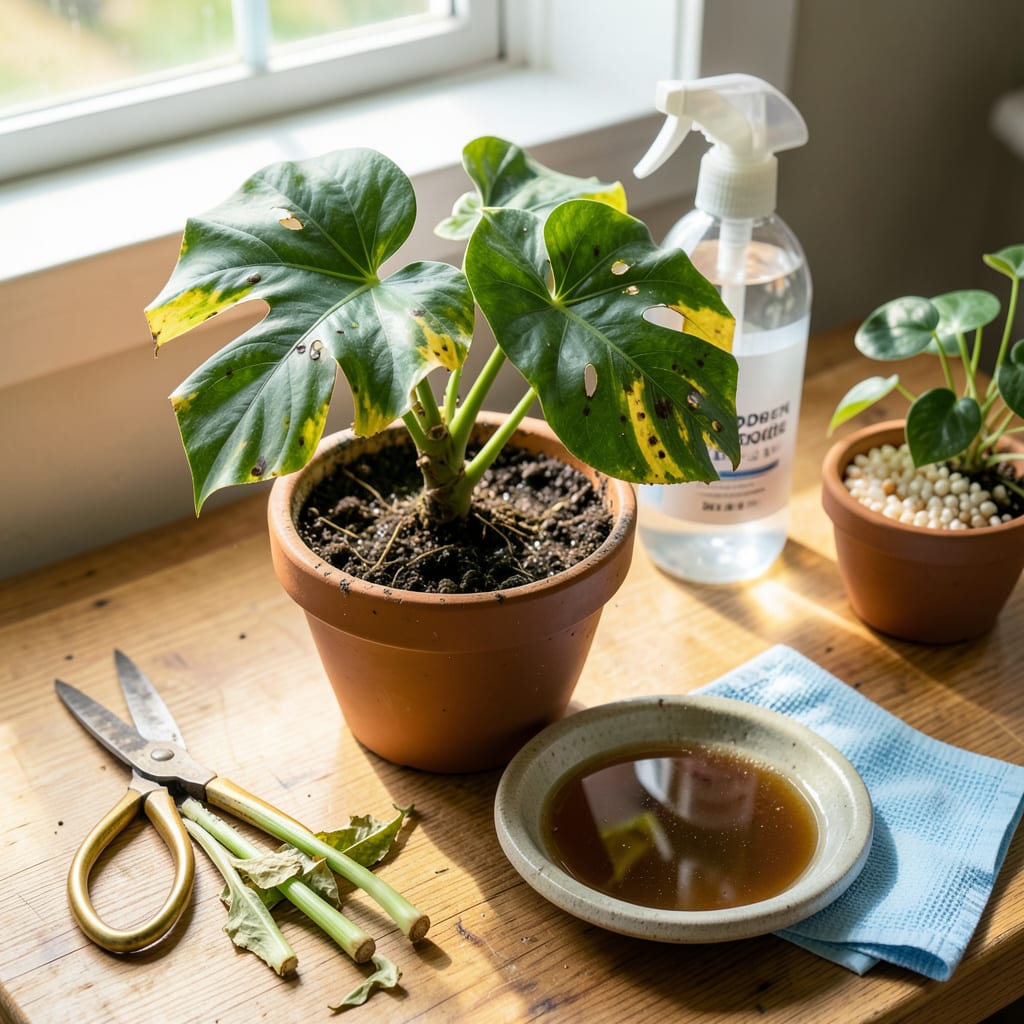
That sinking feeling when you realize you’ve loved your plant to death? I’ve been there—yellow leaves, soggy soil, and a drooping stem that looks beyond hope. The good news is most overwatered plants can bounce back if you act fast. The key is recognizing the warning signs before root rot sets in.
Three simple steps can turn things around: stop watering immediately, check the roots for damage, and give the plant a fresh start with better drainage. I’ve saved everything from ferns to fiddle-leaf figs this way. You’ll see improvement within days, not weeks—just follow the rescue plan step by step.
📚 In This Guide
Don’t panic—your plant can recover with these immediate steps. Let’s revive those sad, soggy leaves together.
First, stop all watering immediately. I know it’s tempting to keep caring for your plant, but more water will only make things worse. Lift the pot to feel its weight—if it feels heavy, that’s a clear sign of waterlogged soil. Gently remove any standing water from the saucer or decorative outer pot.
Look closely at the leaves and stems. Yellowing leaves, mushy stems, or a foul odor from the soil all indicate serious overwatering. If the soil surface has green mold or white fungus, that’s another red flag. Don’t worry if just the lower leaves are affected—this is normal and the plant can still recover.
Move your plant to a brighter location with good airflow, but avoid direct hot sun which could stress it further. If the pot lacks drainage holes, transfer the plant immediately to one that does. I use a skewer or chopstick to gently poke ½-inch deep holes in the soil to help oxygen reach the roots.
If the soil is extremely soggy, carefully tilt the pot to let excess water drain out. You can also place a dry towel or paper towels under the pot to wick away moisture. For severe cases, I’ve had success removing the plant from its pot, wrapping the root ball in newspaper for 24 hours, then repotting in fresh, dry soil.
Wait until the top 1-2 inches of soil feel dry before watering again. This might take 1-2 weeks depending on your plant type and environment. I use the finger test—stick your finger in the soil up to your second knuckle. If it feels damp, wait another day.
When you do water, give the plant a thorough drink until water runs out the drainage holes, then empty the saucer. Most houseplants prefer this “soak and dry” method over frequent light watering. Consider using a moisture meter if you’ve struggled with overwatering before—it takes the guesswork out of knowing when your plant actually needs water.
Trim any black, mushy roots or leaves with clean scissors—they won’t recover and could spread rot. Watch for new growth over the next 2-3 weeks. Healthy recovery signs include firm stems and new leaves emerging. If the plant continues to decline, check for root rot by gently removing it from the pot and inspecting the roots.
During recovery, hold off on fertilizing as this can stress the plant further. I’ve found that most plants bounce back completely within 4-6 weeks if caught early. Be patient—your plant is working hard to heal its roots. The leaves that were damaged might not fully recover, but new growth will be healthy if you’ve fixed the watering issue.
These practical insights will help you avoid common pitfalls and give your plant the best chance at a full recovery.
Assessment Accuracy: In Step 1, don’t just look at the leaves—check the soil’s weight and smell. I’ve found that many people miss the subtle signs of overwatering like a slightly sour odor or soil that sticks to your fingers. A heavy pot that doesn’t drain when tilted is the most reliable indicator you’ve overdone the watering. Trust the weight test more than visual cues alone.
Drainage Intervention: When implementing Step 2’s drainage improvements, be aggressive with soggy soil. I use a combination of methods: first tilting the pot at a 45-degree angle for 5 minutes to let water pool and drain, then placing paper towels under the pot and changing them every 30 minutes until they stay dry. For the newspaper wrap method mentioned in the instructions, use unprinted newsprint or paper towels—ink can be toxic to plants.
Watering Discipline: The 1-2 week waiting period in Step 3 is crucial but often misunderstood. Many people panic when they see wilting during this time, but remember: thirsty plants perk up within hours of watering, while overwatered plants stay limp. I recommend marking your calendar for 7 days and committing to not water until then, regardless of how the plant looks. The finger test is your best guide—wait until that top 2 inches feels as dry as a well-baked cookie.
Recovery Monitoring: During the 2-3 week observation period in Step 4, focus on new growth rather than existing leaves. I check for tiny new leaves at the plant’s base or along the stem—these are your best recovery indicators. Don’t be discouraged if older leaves continue to yellow or drop; the plant is redirecting energy to healthy new growth. Use this time to inspect the undersides of leaves for pests, which often attack stressed plants.
Recovery time varies by plant type! Succulents may bounce back in 1-2 weeks, while tropical plants could take 2-4 weeks. If roots were trimmed, expect slower growth initially. Patience is key—keep soil lightly moist (not soggy) and provide indirect light to speed healing.
Don’t give up yet! If some healthy roots remain (firm, white/light tan), prune the mushy black/brown ones, repot in fresh soil, and reduce watering. Severely rotted plants (no healthy roots) are harder to save—but you can propagate healthy stems/cuttings as a last resort.
Avoid hairdryers or ovens—slow drying is safer!
A diluted solution (1 part 3% H₂O₂ to 4 parts water) can help by adding oxygen and fighting root rot. Water the plant with this mix once, then let the soil dry out. Don’t overdo it—use only for severe cases, as it can stress plants if misused.
Try these foolproof tricks:
