
Beautiful Plants For Your Interior
Beautiful Plants For Your Interior
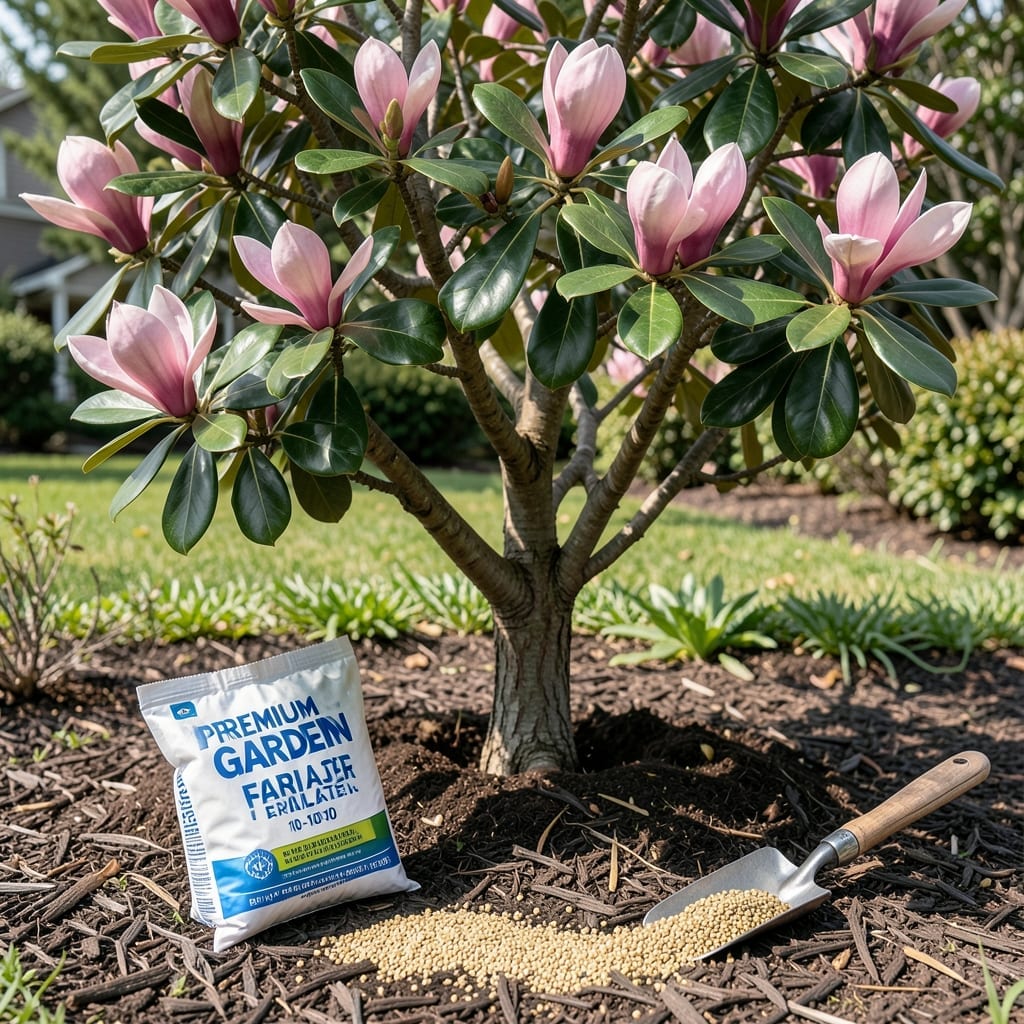
There’s nothing quite like watching a 🌳 Magnolia burst into bloom, its fragrant flowers transforming your yard into a spring paradise. But those stunning displays don’t happen by accident.
I’ve learned that feeding these trees properly makes all the difference between lackluster leaves and a vibrant floral show. The right approach at the right time can unlock your Magnolia’s full potential.
Discover how simple timing and nutrient choices can create the most breathtaking blooms you’ve ever seen from your tree.
Choosing the right fertilizer for your magnolias can feel overwhelming with so many options. I’ve tested various types and found that the NPK ratio is the most critical factor for these trees. Magnolias thrive on a balanced formula like 10-10-10 or 5-10-10.
A high-phosphorus fertilizer, such as 7-9-5, can encourage more abundant blooms. Organic options like compost or bone meal also work wonders for soil health. Always check the label to ensure it’s suitable for acid-loving plants like magnolias.
| Fertilizer Type | NPK Ratio | Best For |
|---|---|---|
| Balanced Synthetic | 10-10-10 | Overall growth |
| High Phosphorus | 7-9-5 | Bloom enhancement |
| Organic Compost | Variable | Soil health |
| Bone Meal | 3-15-0 | Root development |
I always recommend slow-release fertilizers for magnolias because they provide steady nourishment over time. This prevents the risk of nutrient burn that can occur with quick-release products. Apply it early in the season to support new growth.
For young magnolias, a liquid fertilizer can be beneficial as it’s easily absorbed. However, mature trees often do better with granular options worked into the soil.
If your magnolia’s leaves are yellowing, it might indicate a nitrogen deficiency. In this case, a fertilizer with a higher first number, like 12-4-8, can help restore vibrancy to the foliage.
On the other hand, purple-tinged leaves often signal a phosphorus shortage. Switching to a bloom booster with higher middle numbers should correct this issue and promote more flowers next season.
Always test your soil before fertilizing. Magnolias prefer slightly acidic soil with a pH between 5.5 and 6.5. If your soil is too alkaline, amend it with sulfur or use an acidifying fertilizer.
Finally, avoid fertilizing in late summer or fall, as this can stimulate new growth that won’t harden off before winter. Stick to feeding your magnolias only during active growth periods for the best results 🌳
Timing your magnolia fertilization is just as important as choosing the right product. I’ve found that feeding at the wrong time can do more harm than good, even with the best fertilizer. These trees have specific needs throughout the year.
Early spring is when I start my fertilizing routine, just as the buds begin to swell. This first feeding gives the tree the energy it needs for new growth and flower production.
After the blooming period, I give my magnolias a second feeding to help them recover. This is when I switch to a high-phosphorus formula to encourage stronger blooms next year. It’s like giving the tree a vitamin boost for future flowers.
In early summer, a light application of slow-release fertilizer keeps the growth steady. I’ve noticed that overdoing it in summer can lead to excessive leafy growth at the expense of flowers. Less is often more with magnolias.
As fall approaches, I completely stop fertilizing. Any new growth stimulated by late feedings won’t have time to harden off before winter, making the tree more vulnerable to cold damage. It’s better to let the tree prepare naturally for dormancy.
For gardeners in warmer climates, you might need to adjust this schedule slightly. If your magnolias bloom earlier, start fertilizing earlier too. Always watch your tree’s cues rather than just the calendar.