
Beautiful Plants For Your Interior
Beautiful Plants For Your Interior
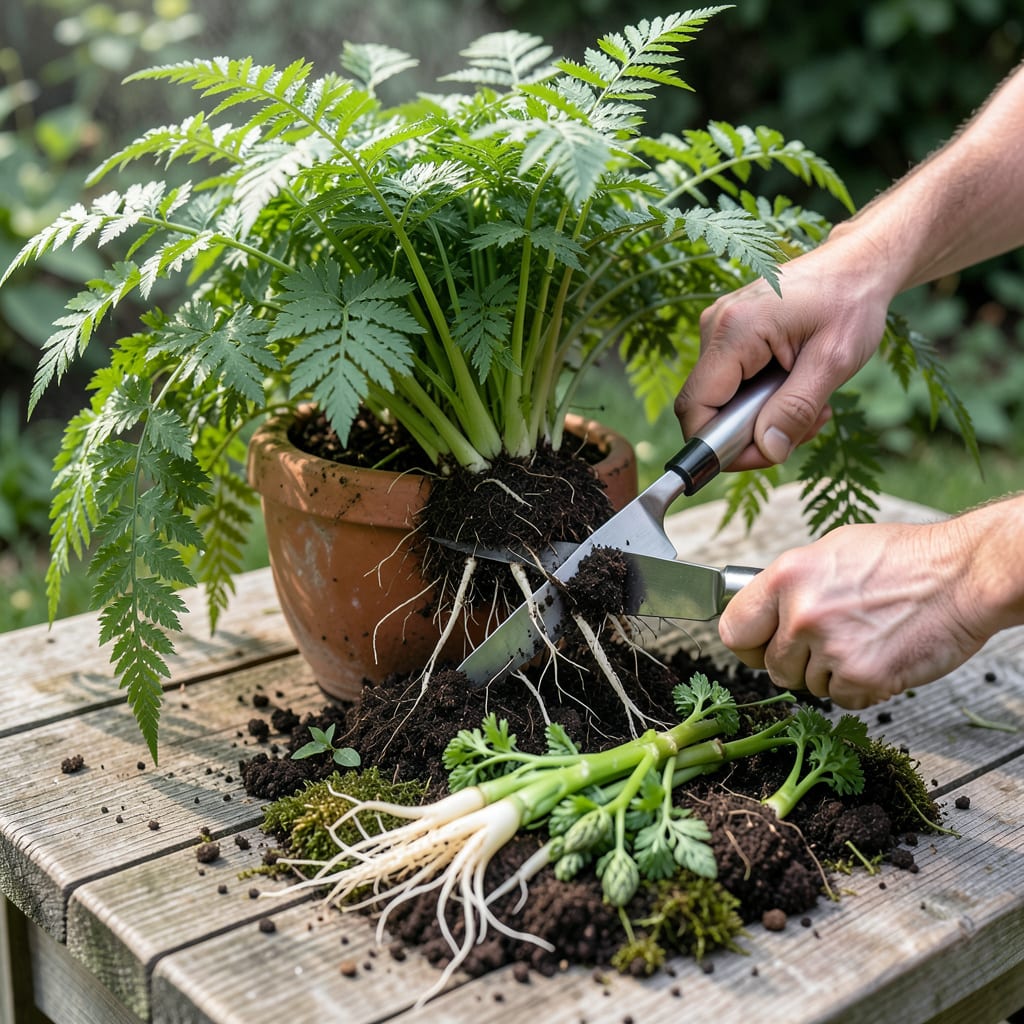
Asparagus fern division rejuvenates overgrown plants and multiplies your collection. I’ve revived tired clumps this way, turning one leggy specimen into three thriving plants in a single afternoon.
Do this in early spring before new growth starts. The process is straightforward with sharp tools and a bit of patience, and you’ll see fresh fronds emerging within 2-3 weeks of replanting.
📚 In This Guide
Here’s the method I rely on for healthy divisions and vigorous new plants.
Divide asparagus fern in early spring just as new growth begins to emerge. This timing gives divisions the entire growing season to establish roots before winter dormancy. Select a mature, healthy plant that’s at least 3-4 years old—younger specimens may not have developed enough crowns to survive division.
Look for a plant with multiple dense clumps of foliage emerging from the soil. The ideal candidate will have several distinct sections where you can see natural separations in the root ball. Avoid dividing during summer heat or fall when the plant is stressed or preparing for dormancy.
Begin by watering the plant thoroughly 24 hours before division to reduce transplant shock. Use a sharp spade to dig in a wide circle around the plant, at least 6-8 inches from the outer foliage. Asparagus fern roots spread wider than you might expect.
Lift the entire root ball from the soil, keeping as much of the root system intact as possible. You’ll feel the resistance as you work the spade underneath—this is normal. Shake off excess soil gently to expose the crown and root structure, but don’t wash the roots as this removes beneficial mycorrhizal fungi.
Identify natural divisions in the root ball where crowns have formed distinct clusters. Each healthy division should have at least 3-5 thick storage roots and several emerging fronds. Use clean, sharp pruners or a knife to cut between these sections.
Make clean cuts that sever connecting roots while preserving as much of each division’s root system as possible. Discard any sections that appear diseased, mushy, or with blackened roots. Healthy storage roots should be firm and white or light tan in color.
Plant each division in a prepared hole that’s twice as wide and just as deep as the root ball. Space divisions 18-24 inches apart to allow for future growth. The crown should sit at the same soil level as it was originally planted—burying it too deep can cause rot.
Backfill with native soil, water thoroughly to settle the soil around roots, and add a 2-3 inch layer of organic mulch to conserve moisture. Keep the soil consistently moist (but not waterlogged) for the first 4-6 weeks as new roots establish.
After division, protect new plantings from direct midday sun for the first 7-10 days to reduce stress. A temporary shade cloth or dappled shade from nearby trees works well. You’ll see new growth emerging from healthy divisions within 2-3 weeks.
Fertilize lightly with a balanced, water-soluble fertilizer at half strength after 3-4 weeks. Avoid high-nitrogen fertilizers immediately after division as they can promote leafy growth at the expense of root development. Your new plants will reach full size in 1-2 growing seasons.
Small details make the difference between thriving plants and struggling divisions.
Timing Secret: The 24-hour pre-watering in Step 2 is non-negotiable. It hydrates the root system, making excavation easier and reducing transplant shock. I learned this the hard way after losing several divisions to dry, compacted soil.
The Technique That Changed Everything: In Step 3, use clean pruners for each cut between crowns. This prevents disease transmission between divisions. I keep a spray bottle of 70% isopropyl alcohol handy to sterilize tools between cuts.
Planting Depth Tip: Follow Step 4’s guidance precisely—burying crowns too deep in the hole causes rot, while planting too shallow exposes roots. The original soil line on the crown is your perfect marker for depth.
What to Watch For: During Step 5’s 7-10 day shade period, monitor soil moisture daily. New divisions can’t tolerate drought stress, but waterlogged soil suffocates developing roots. Aim for consistently moist but well-draining conditions.
It’s best to divide in early spring or fall when the plant is dormant. Summer division can stress the fern due to heat, but if necessary, water deeply afterward and keep it in shade to help recovery.
Every 2-3 years is ideal. This prevents overcrowding and keeps the plant healthy. If you notice reduced growth or yellowing fronds, it’s a sign it’s time to divide.
A sharp, clean knife or garden shears works best. Sterilize the tool with rubbing alcohol before use to prevent disease. For thick roots, a pruning saw may help.
Wilting often means transplant shock. Ensure the divisions are well-watered and placed in indirect light. Trim back some fronds to reduce stress on the roots.
Yes, but it’s slower. Seeds take longer to germinate and grow compared to division. For quicker results, stick to dividing mature plants.
