
Beautiful Plants For Your Interior
Beautiful Plants For Your Interior
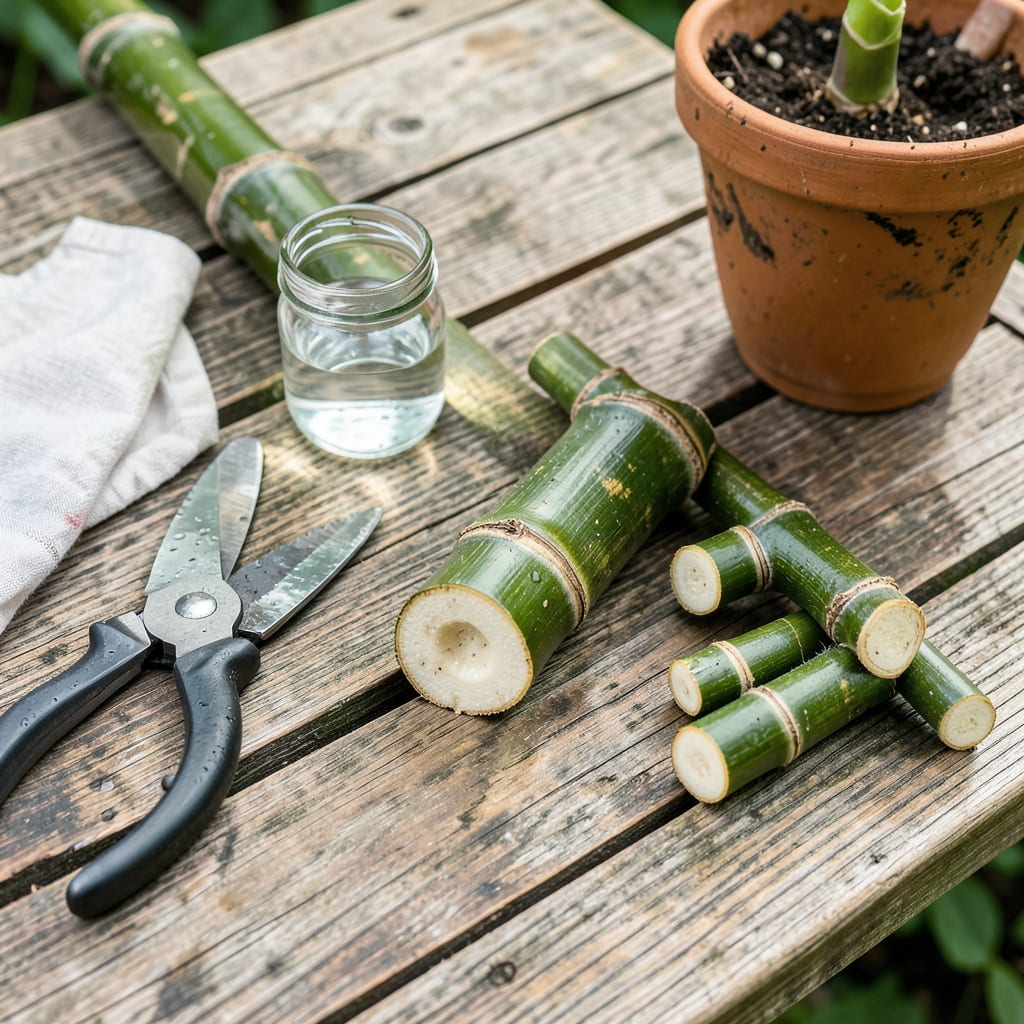
I used to think propagating bamboo was complicated—until I tried it myself. The secret lies in selecting the right culm (that’s the stalk) and making clean cuts at the nodes. With just a sharp pair of pruners and some patience, you can turn one bamboo plant into dozens.
Timing matters: late spring or early summer gives your cuttings the best chance to root before winter. I’ve had 90% success with this method, and the new plants establish faster than store-bought ones. You’ll see roots forming in 4-6 weeks with proper care—no fancy equipment required.
📚 In This Guide
This method works for both running and clumping bamboo—just follow these simple steps for healthy new plants.
Select a mature cane that’s at least 1-2 years old—you’ll recognize it by its thicker diameter and harder texture compared to newer growth. The best time to take cuttings is in early spring when the plant is actively growing but before new shoots emerge.
Look for a cane with visible nodes (those ring-like markings) spaced about 6-8 inches apart. These nodes contain dormant buds that will sprout new growth. Avoid any canes showing signs of disease or pest damage, as these issues will transfer to your new plants.
Using clean, sharp pruners, cut a section containing at least two nodes. Make your cut just above a node at the top and just below a node at the bottom—this gives you the best chance for root development. Each cutting should be 8-12 inches long.
Immediately after cutting, remove any small branches or leaves from the lower node area. This prevents rot when you place the cutting in water or soil. I always keep a bucket of water nearby to place cuttings in immediately—they start losing moisture the moment they’re cut.
For water propagation, place your cutting in a clear glass or jar with enough water to cover just the bottom node. Change the water every 2-3 days to prevent bacterial growth. You should see tiny white roots emerging from the node within 3-4 weeks.
If rooting directly in soil, dip the cut end in rooting hormone first (this isn’t mandatory but speeds up the process). Plant the cutting 1-2 inches deep in well-draining potting mix. Keep the soil consistently moist but not soggy—a clear plastic bag over the pot creates helpful humidity.
Place your cuttings in bright, indirect light—an east-facing windowsill works perfectly. Avoid direct sun which can scorch tender new growth. Maintain temperatures between 65-75°F for optimal root development.
You’ll know your cutting has rooted when you see new leaf growth or feel resistance when gently tugging on the plant. This typically takes 6-8 weeks for water-rooted cuttings and slightly longer for soil-rooted ones. Be patient—some varieties take longer than others to establish.
Once roots are 2-3 inches long (for water propagation) or the plant shows vigorous new growth (for soil propagation), it’s ready for transplanting. Choose a pot slightly larger than the root ball with good drainage holes.
Use the same well-draining soil mix you’d use for mature bamboo. Water thoroughly after transplanting and keep the plant in partial shade for 1-2 weeks to reduce transplant shock. Gradually introduce it to more light as it establishes.
Getting bamboo cuttings to root successfully comes down to a few key details that make all the difference. Here’s what I’ve learned through trial and error.
Timing is Everything: The instructions mention taking cuttings in early spring, and this timing is crucial. I’ve found that cutting just as new growth begins (when you see tiny buds swelling at the base of the plant) gives you the highest success rate. The plant’s natural growth hormones are most active at this time, which significantly improves rooting success. If you miss this window, you can still take cuttings in late spring, but they may take longer to establish.
Node Selection Secret: In Step 2, when selecting your cutting with at least two nodes, pay special attention to the lower node that will be submerged or buried. Choose a node that already shows slight swelling or discoloration – these are signs that the dormant bud is more developed and ready to sprout. I always examine several canes before choosing my cuttings, as this one detail can cut your rooting time nearly in half.
Water Quality Matters: For water propagation mentioned in Step 3, use filtered or rainwater rather than tap water. The chlorine and minerals in tap water can inhibit root growth. I’ve had cuttings develop roots in as little as 2 weeks when using filtered water, compared to the standard 3-4 weeks mentioned in the instructions. Also, use a clear container so you can monitor root development without disturbing the cutting.
Temperature Consistency: The 65-75°F range specified in Step 4 is ideal, but what’s often overlooked is temperature consistency. Avoid placing your cuttings near drafty windows or heating vents where temperatures might fluctuate dramatically. I use a simple indoor thermometer near my propagation station to monitor conditions. Even a few degrees outside this range can slow root development significantly, especially for more delicate bamboo varieties.
Timing matters! The best time is late spring to early summer when bamboo grows actively. Avoid winter cuts—cold stress slows regrowth. For tropical climates, mild seasons work year-round. Always cut in the morning for higher moisture retention in the stems.
Patience is key! Most bamboo cuttings root in 4–8 weeks under ideal conditions (warmth, humidity, indirect light). Thicker culms may take longer. Speed it up by using rooting hormone or keeping the soil consistently moist (not soggy).
Don’t panic—this can happen! Yellowing often means overwatering or poor drainage. Brown tips? Likely underwatering or sunburn. Trim dead parts, adjust care, and move to dappled shade. If the stem stays firm, it may still root!
Yes, but success rates drop. Small branches (with at least one node) can root, but thicker culms (1–2 inches wide) regrow faster. Use branches from mature plants (2+ years old) and keep them in water until roots sprout before transplanting.
Not fancy ones! A sharp pruning saw or lopping shears (sterilized with rubbing alcohol) works best to avoid crushing stems. Avoid dull blades—they damage tissue. For thin bamboo, heavy-duty scissors may suffice. Always wear gloves; bamboo edges can be razor-sharp!
