
Beautiful Plants For Your Interior
Beautiful Plants For Your Interior
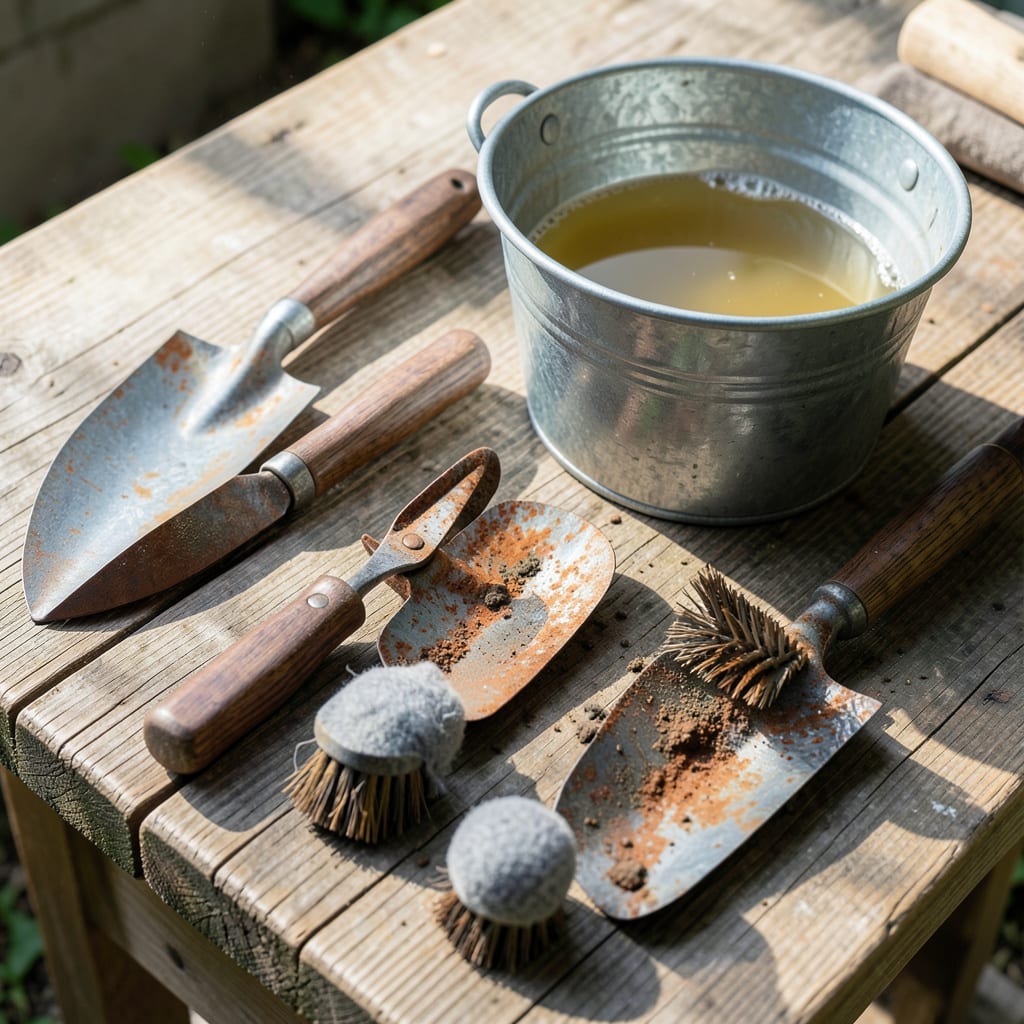
Rusty tools don’t mean the end of your gardening season. I’ve revived more old pruners and trowels than I can count with one simple household item.
This method takes 24 hours and requires just a container, some vinegar, and a little elbow grease. Your tools will look spotless and last for years to come with proper care.
📚 In This Guide
Here’s the method I rely on to restore tools to like-new condition without harsh chemicals.
Begin by scrubbing the tool with a wire brush or steel wool to remove surface rust and caked-on dirt. This step exposes the metal beneath, making the soak more effective. Pay extra attention to crevices, hinges, and blades where rust accumulates thickest.
You’ll see the difference immediately as flakes of rust fall away. Don’t worry about removing every last speck—this is just the preliminary step to prep the metal for deeper cleaning. Work in a well-ventilated area to avoid inhaling dust.
Fill a container large enough to submerge the tool with undiluted white vinegar. Place the tool inside, ensuring the rusted areas are fully immersed. For tools with wooden handles, suspend them so only the metal parts touch the vinegar—prolonged exposure can damage wood.
Let the tool soak for 12-24 hours. You’ll notice the vinegar turning a rusty orange color as the acid dissolves the oxidation. For heavily rusted tools, a 24-hour soak ensures complete penetration. Check periodically and remove the tool once the rust has loosened significantly.
After soaking, use the wire brush or steel wool again to scrub off the remaining rust. The vinegar will have weakened the oxidation, making this step far easier. Focus on stubborn spots, applying firm pressure to lift the last traces of rust.
Rinse the tool under warm running water to remove vinegar residue and loosened rust particles. Dry the tool completely with a clean cloth—any remaining moisture will cause new rust to form. Inspect the metal: it should appear clean and slightly dull, ready for the final step.
Apply a thin layer of mineral oil or WD-40 to the cleaned metal surfaces to create a protective barrier against future rust. Use a cloth to spread the oil evenly, covering all exposed metal. This step prevents moisture from reaching the surface and restarting the oxidation process.
Store tools in a dry, well-ventilated area. Hang them or place them on a rack to keep them off damp surfaces. For long-term storage, wrap tools in a cloth or place them in a container with silica gel packets to absorb excess moisture. Proper storage extends the life of your tools and keeps them ready for use.
These practical insights will help you get the most out of every step while avoiding common pitfalls.
Pre-Soak Prep: In Step 1, don’t rush the initial scrubbing. Taking an extra few minutes to thoroughly remove loose rust and dirt with your wire brush or steel wool makes the vinegar soak in Step 2 significantly more effective. The cleaner the surface, the better the acid can penetrate the remaining oxidation.
Soaking Time Strategy: For the 12-24 hour soak in Step 2, I recommend starting with the full 24 hours for severely rusted tools. The vinegar’s acidity needs this time to fully break down the oxidation. Check periodically after 12 hours—if the rust is loosening but not completely gone, give it the full 24 hours for spotless results.
Wooden Handle Care: If your tools have wooden handles, be meticulous in Step 2 about keeping them out of the vinegar. Prolonged exposure will damage the wood. I use a simple rubber band to suspend the tool so only the metal touches the solution, or lay a plastic bag over the handle to protect it.
Final Protection: In Step 4, don’t skimp on the mineral oil or WD-40 application. A thin, even layer is essential for creating that moisture barrier. I find that using a lint-free cloth and working in small circular motions ensures complete coverage without excess buildup.
Soak tools in white vinegar for 12–24 hours for light rust, or up to 48 hours for heavy buildup. Scrub with a steel wool or brush afterward for best results.
Yes! Make a paste with baking soda and water, apply to rusted areas, and let sit for 1–2 hours. It’s gentler but effective for minor rust.
Absolutely! Dry tools thoroughly with a towel, then apply a light coat of oil to prevent new rust from forming. Moisture is rust’s best friend!
If tools aren’t fully dried or stored in damp areas, rust can return. Always store them in a dry place and consider using silica gel packs.
Vinegar is safe for most steel tools but may damage aluminum or coated surfaces. Test a small area first if unsure.
