
Beautiful Plants For Your Interior
Beautiful Plants For Your Interior
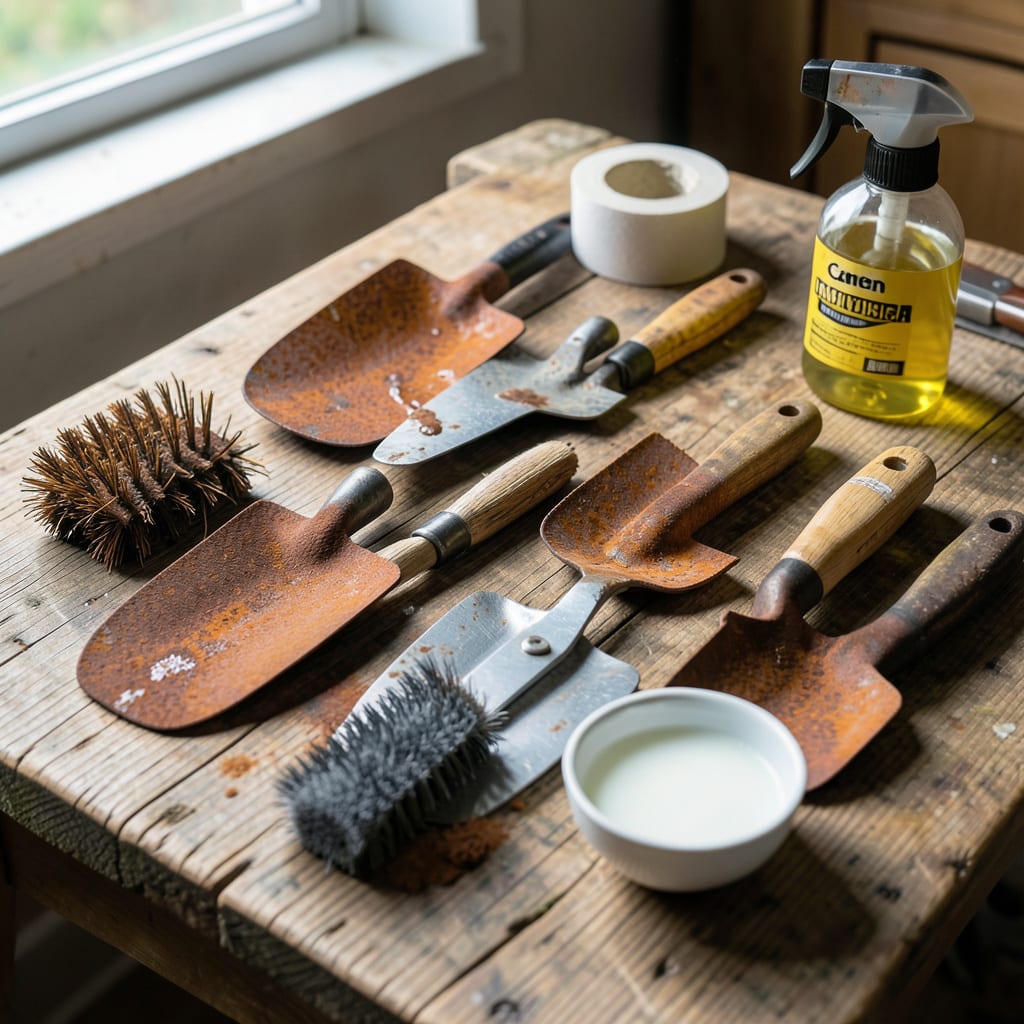
Rusty tools ruin more than just their looks. I’ve watched perfectly good shovels and pruners turn into useless hunks of metal because I ignored the first orange spots. Left untreated, rust spreads fast, eating through blades and weakening handles.
Here’s the thing—restoring them takes 20 minutes and a few household items. You’ll end up with tools that cut through soil like new, saving money and frustration. No fancy chemicals required.
📚 In This Guide
These natural methods restore your tools to like-new condition without harsh chemicals.
Examine each tool to determine the extent of the corrosion. Surface rust requires less aggressive treatment than deeply pitted metal. I always work on a drop cloth or newspaper to catch debris and protect surfaces from staining.
Set up in a well-ventilated area, ideally outdoors. Rust removal creates fine dust that can irritate lungs, so wear a dust mask if you’re sensitive. Have all your materials within reach to avoid interruptions once you start.
Begin with a wire brush or steel wool to scrub off flaking rust. Apply firm pressure and work in the direction of the metal grain to avoid creating new scratches. For intricate areas like pruner springs, use a toothbrush or small wire brush to reach crevices.
You’ll see the rust come off as reddish-brown dust. Continue until you expose bare metal or only stubborn patches remain. Don’t worry about removing every speck at this stage—chemical treatments will handle what’s left. Wipe the tool with a damp cloth to remove residue.
For remaining rust, use white vinegar or lemon juice as your primary agent. Soak smaller tools completely or apply the liquid directly to larger ones with a cloth or spray bottle. Let it work for 1-2 hours—you’ll notice the rust bubbling as it dissolves.
For particularly stubborn areas, make a paste with baking soda and water. Apply it to the rusted spots and let it sit for 15-20 minutes before scrubbing again. The mild abrasive action combined with the chemical reaction lifts rust without damaging the underlying metal.
After treatment, rinse tools with clean water to remove all traces of vinegar or lemon juice. These acids can continue to etch the metal if left on the surface. Dry immediately with a clean towel to prevent flash rusting—new rust can form within hours on damp metal.
For extra protection, wipe tools with a light machine oil or mineral oil after drying. This creates a barrier against moisture. Store tools in a dry place, ideally hanging or in a tool rack to allow air circulation and prevent future rust buildup.
After each use, clean tools with a dry brush to remove soil and plant residue. This simple step prevents moisture from being trapped against the metal. If tools get wet, dry them immediately—don’t leave them outside overnight.
Apply a thin coat of oil to the metal parts once a month during active gardening seasons. For long-term storage, coat tools more heavily with oil or wrap them in oiled cloth. Regular maintenance means you’ll rarely need intensive rust removal again.
These practical insights will help you get the best results with minimal effort.
Workspace Preparation: Confession: I skipped using a drop cloth for years and spent hours cleaning up rust dust from my garage floor. The fine particles from Step 2 spread farther than you expect, so always protect your surfaces with newspaper or a dedicated drop cloth to save yourself cleanup time later.
Mechanical Removal Technique: Here’s what nobody tells you—working against the metal grain in Step 2 creates micro-scratches that actually trap moisture and lead to faster re-rusting. Always scrub in the direction of the grain, and for tools with intricate parts, that small wire brush or toothbrush mentioned in the instructions is absolutely essential for reaching crevices.
The Time Factor: Don’t rush the soaking time in Step 3. The 1-2 hour window for vinegar or lemon juice isn’t arbitrary—it gives the acid time to fully break down the rust’s chemical bonds. If you pull tools out too soon, you’ll just be redoing the work. For the baking soda paste, the full 15-20 minutes is equally critical for stubborn spots.
Avoiding Flash Rust: The warning in Step 4 about drying immediately isn’t just good advice—it’s urgent. I’ve seen new rust form within 30 minutes on damp metal left out after treatment. That clean towel step is your last line of defense before applying protective oil.
Aim to clean and dry tools after each use to prevent rust. For existing rust, check tools every few months or before storing them for the season. Regular maintenance keeps them sharp and long-lasting!
Yes! Soak rusty tools in white vinegar for 1-2 hours, then scrub with a wire brush. Vinegar’s acetic acid breaks down rust naturally. Rinse and dry thoroughly afterward to prevent re-rusting.
For stubborn rust, use a mix of baking soda and water to form a paste, apply it to the tool, and scrub with steel wool. For tougher cases, a commercial rust remover or sandpaper can speed up the process.
After cleaning, apply a thin layer of oil (like mineral or motor oil) to the metal surfaces. Store tools in a dry place or hang them to avoid moisture buildup. Silica gel packets in toolboxes help too!
WD-40 can loosen rust and protect metal, but it’s not a deep cleaner. Spray it on, let it sit for 10-15 minutes, then scrub. For heavy rust, pair it with a wire brush for better results.
