
Beautiful Plants For Your Interior
Beautiful Plants For Your Interior
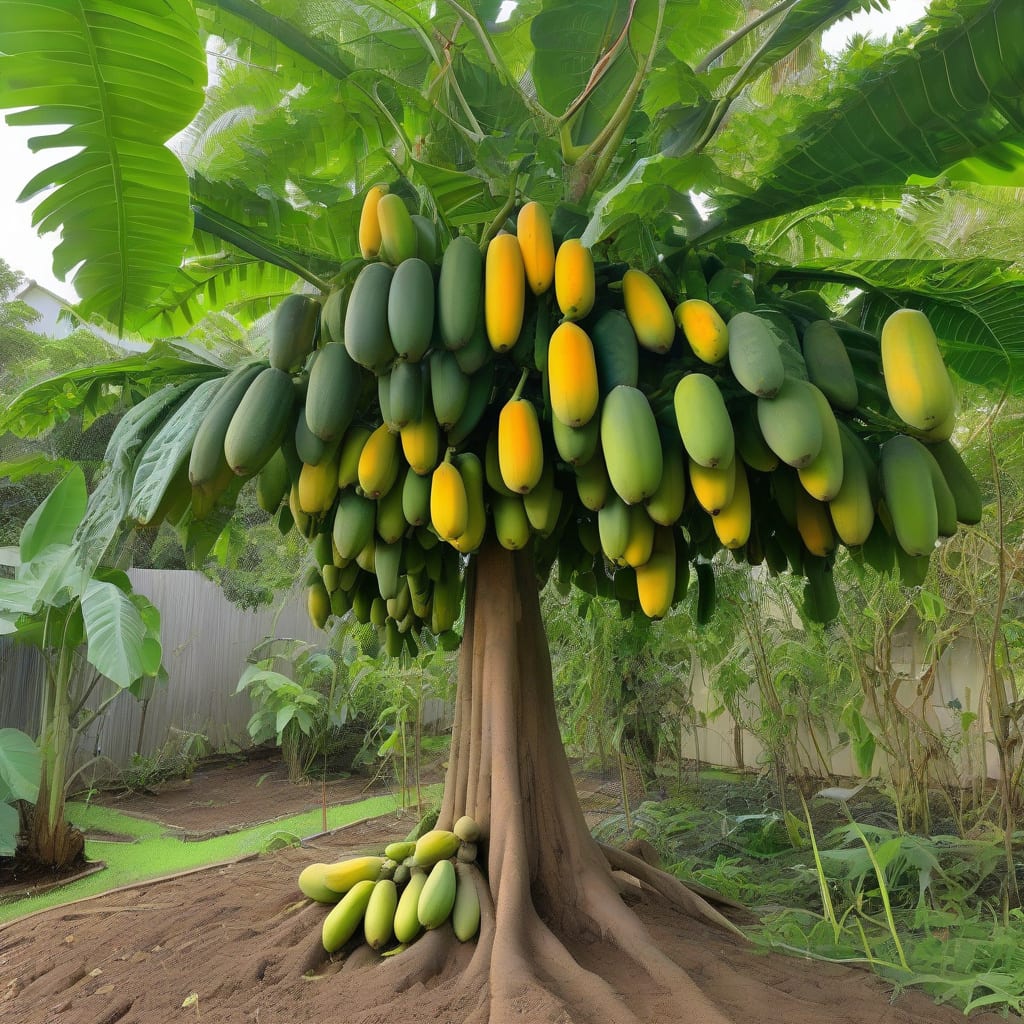
I’ve always been fascinated by the rapid growth of papaya trees 🌴. These tropical wonders can shoot up to impressive heights in ideal conditions. Growing in USDA Zone 10, papaya trees can become a striking feature in any garden.
Understanding how tall they can grow helps with garden planning and care. Let’s explore the factors that influence their height and how to manage them effectively for optimal growth and fruit production.


I’ve found that understanding the factors that influence papaya tree height is crucial for gardeners. The height of a papaya tree can vary significantly based on several key elements.
The primary factors that affect how tall a papaya tree can grow include climate, soil quality, variety selection, and proper care techniques. Each of these elements plays a critical role in determining the tree’s maximum height.
The climate plays a significant role in determining the height of a papaya tree. Papaya trees thrive in tropical and subtropical climates, where temperatures range between 64°F and 90°F (18°C to 32°C).
Soil quality is another crucial factor. Papaya trees prefer well-draining soil with a pH between 6.0 and 6.5. This soil condition promotes healthy root development, which is essential for the tree’s overall growth and height.
The variety of papaya also influences its potential height. Some dwarf varieties are bred to remain compact, while standard varieties can grow much taller.
Finally, proper care techniques, including regular watering, fertilization, and pruning, can significantly impact a papaya tree’s growth. Proper care ensures that the tree reaches its full height potential.
By understanding and managing these factors, gardeners can optimize the growing conditions for their papaya trees, helping them achieve their maximum height potential 🌱.
For more detailed information on growing papaya trees, including tips on soil preparation and fertilization schedules, gardeners can consult additional resources to enhance their knowledge and skills.
Growing papaya trees can be a rewarding experience, providing both beauty and bounty to gardens in suitable climates 🌴.
By focusing on the key factors that influence papaya tree height, gardeners can create an optimal growing environment that supports healthy growth and maximizes the tree’s potential height.
I’ve found that creating optimal growing conditions is essential for papaya trees to reach their maximum height potential. The right combination of temperature, watering, and fertilization practices can significantly impact their vertical growth 🌴.
To promote healthy growth, papaya trees require full sun and warm temperatures between 64°F and 90°F (18°C to 32°C). Temperatures outside this range can slow down growth or cause damage to the tree.
Maintain consistent moisture by watering deeply once or twice a week, depending on weather conditions. Avoid overwatering, which can lead to root rot.
Adequate watering is crucial for papaya trees. They require consistent moisture, especially when they’re producing fruit. Watering deeply once or twice a week is usually sufficient, but this may vary depending on weather conditions.
Fertilization is another key factor in promoting healthy growth. Using a balanced fertilizer (e.g., 10-10-10 NPK) every 4-6 weeks during the growing season can provide the necessary nutrients for optimal growth.
By maintaining these optimal growing conditions, gardeners can help their papaya trees achieve their maximum height potential and enjoy a bountiful harvest 🌟.
In my experience, monitoring the tree’s response to these conditions and adjusting care practices accordingly is vital for maximizing height growth.
For more specific guidance on fertilization schedules and soil testing, additional resources are available to help gardeners fine-tune their care strategies.
By combining optimal growing conditions with proper care techniques, gardeners can create an ideal environment for their papaya trees to thrive and reach their full height potential.
I’ve found that managing the height of papaya trees is crucial for optimizing fruit production and making harvesting easier. Proper height management can significantly impact the overall yield and quality of the fruit.
To effectively manage papaya tree height, gardeners can employ several strategies, including pruning techniques and height management strategies. These methods help maintain the tree at a desirable height while promoting healthy growth and fruiting.
Remove lower branches to maintain a clean trunk and promote air circulation, reducing disease risk.
Selectively remove excess branches to allow sunlight to penetrate and promote fruiting.
For taller varieties, topping the tree at a desired height can encourage branching and more fruiting sites.
By implementing these pruning techniques and height management strategies, gardeners can maintain their papaya trees at a manageable height while enhancing fruit production and overall tree health 🌴.
Regular monitoring and adjustment of these techniques are necessary to ensure the tree remains healthy and productive. Proper height management not only simplifies harvesting but also contributes to the overall well-being of the tree 🌟.
For more detailed guidance on pruning and height management, additional resources are available to help gardeners refine their techniques and achieve the best results for their papaya trees.
