
Beautiful Plants For Your Interior
Beautiful Plants For Your Interior
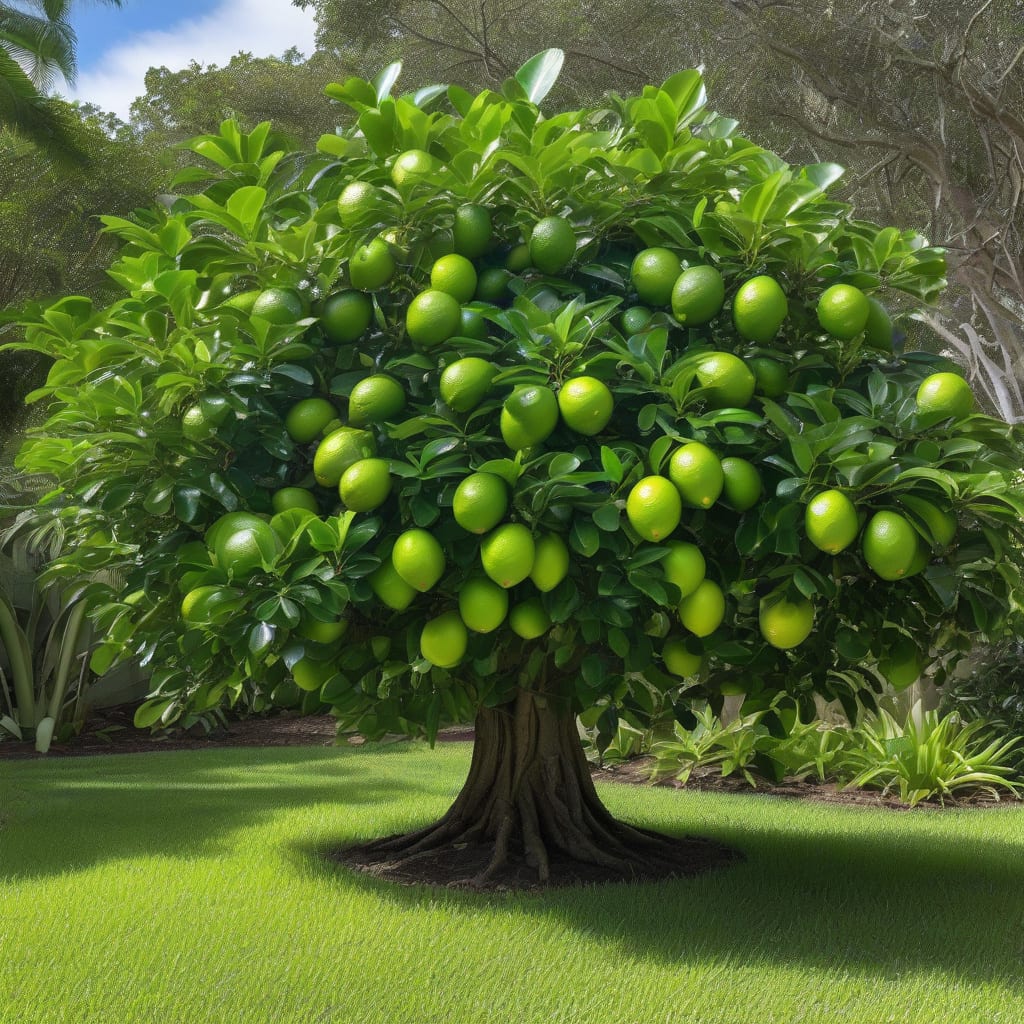
When growing a Key Lime Tree 🌳, understanding its potential height is crucial for proper garden planning. These trees typically grow between 10-20 feet tall, making them suitable for both container gardening and small orchards in USDA zone 9b.
Factors such as variety, pruning practices, and growing conditions can significantly influence the tree’s ultimate height. By learning how to manage these factors, you can keep your tree at a desired size while maintaining its fruit production capabilities.

Key lime trees are known for their compact size and abundant fruit production, making them a popular choice for home gardeners and commercial growers alike. The height of a key lime tree can vary significantly based on several factors, including the specific variety, growing conditions, and pruning practices.
On average, a key lime tree can grow between 10 to 20 feet tall. However, some dwarf varieties can be maintained at a much smaller size, typically between 8 to 12 feet, making them ideal for container gardening or small spaces.
The growth pattern of a key lime tree is influenced by its variety. Dwarf varieties are bred to be more compact, typically growing between 8 to 12 feet tall. Standard key lime trees can grow taller, reaching heights of 15 to 20 feet if not pruned.
Understanding these growth patterns is crucial for managing your key lime tree effectively. Whether you’re growing in a container or in the ground, knowing how tall your tree can grow helps you plan your garden space and maintenance routine accordingly 🌳.
Several factors can influence the height of a key lime tree. Growing conditions such as soil quality, sunlight, and watering practices play a significant role. Trees grown in ideal conditions with plenty of sunlight and well-draining soil tend to grow more vigorously. Conversely, less favorable conditions can stunt growth.
Pruning is another critical factor that affects the height of a key lime tree. Regular pruning not only helps maintain a desired size but also promotes healthier growth and fruit production. By selectively removing branches, you can control the tree’s height and shape, making it more manageable for harvesting.
Container-grown key lime trees typically remain smaller than those planted in the ground due to the restriction on root growth. However, with proper care and regular pruning, container-grown trees can still produce a significant amount of fruit relative to their size.
In summary, the height of a key lime tree can vary widely based on its variety, growing conditions, and the care it receives. By understanding these factors and employing appropriate gardening practices, you can manage your key lime tree’s height effectively, ensuring it remains a productive and enjoyable part of your garden 🌳.
For those new to growing key lime trees, it’s essential to start with a healthy tree from a reputable nursery. Look for trees with vibrant leaves and no signs of disease or pests. Proper care from the beginning will set your tree up for success and help it reach its full potential height.
As you continue to care for your key lime tree, remember that patience is key. It may take a few years for your tree to reach its mature height, but with consistent care, it will reward you with delicious fruit for years to come.
In conclusion, managing the height of a key lime tree involves understanding its growth patterns and employing effective gardening practices. By doing so, you can enjoy a bountiful harvest from your tree, regardless of its size 🌳.
When it comes to managing the height of a key lime tree, proper pruning techniques are essential for maintaining a desired size while maximizing fruit production. Regular pruning not only controls the tree’s height but also promotes healthier growth and increases fruit yield 🌳.
To effectively manage your key lime tree’s height, start by assessing its current structure. Identify any branches that are growing beyond your desired height or are damaged/diseased. Use clean, sharp pruning tools to make precise cuts, and always prune during the tree’s dormant season to minimize stress 🌳.
Regular maintenance pruning is crucial for keeping your key lime tree at a manageable size. This involves removing any suckers that grow from the base of the tree and water sprouts that grow vertically from branches. By doing so, you direct the tree’s energy towards fruiting and maintaining a healthy structure 🌱.
In addition to pruning, training your key lime tree can help achieve the desired height and shape. This can involve staking young trees to establish a straight trunk or using espalier techniques to train branches along a support. For container-grown trees, training is particularly important to maintain a compact, balanced form 🌿.
It’s also important to consider the tree’s growth rate when managing its height. Key lime trees typically grow 1-2 feet per year under optimal conditions. By understanding this growth rate, you can plan your pruning schedule accordingly to maintain the desired height without stressing the tree 🌱.
For those growing key lime trees in containers, regular root pruning may be necessary to control the tree’s overall size. This involves carefully removing the tree from its container, trimming the roots, and repotting it in fresh soil. This technique helps maintain a compact root system, which in turn helps control the tree’s height 🌿.
By combining these pruning and training techniques, you can effectively manage the height of your key lime tree, ensuring it remains a productive and attractive part of your garden or landscape. Regular care and attention will reward you with bountiful harvests of delicious key limes for years to come 🌳.
When considering how tall a key lime tree will grow, it’s essential to understand the differences between dwarf and standard varieties. These two types of key lime trees vary significantly in their growth habits and mature sizes, making them suitable for different growing conditions and spaces 🌳.
Dwarf key lime trees are bred for their compact growth habit, typically reaching heights of 8 to 12 feet. This makes them particularly well-suited for container gardening or small garden spaces. Their smaller size also makes maintenance and harvesting easier, as the fruit is more accessible 🌿.
In contrast, standard key lime trees can grow significantly taller, reaching heights of 15 to 20 feet if not pruned. While they can be more productive than dwarf varieties, their larger size requires more space and maintenance. Standard trees are better suited for larger gardens or orchards where their full size can be accommodated 🌳.
The choice between a dwarf and standard key lime tree depends on your specific gardening needs and constraints. For those with limited space or who prefer container gardening, dwarf varieties offer a practical solution. For larger spaces, standard varieties can provide a more bountiful harvest 🌻.
Regardless of the variety you choose, understanding the potential height of your key lime tree is crucial for effective garden planning and management. By selecting the right variety for your space and employing proper care techniques, you can enjoy a thriving and productive key lime tree for years to come 🌱.
