
Beautiful Plants For Your Interior
Beautiful Plants For Your Interior
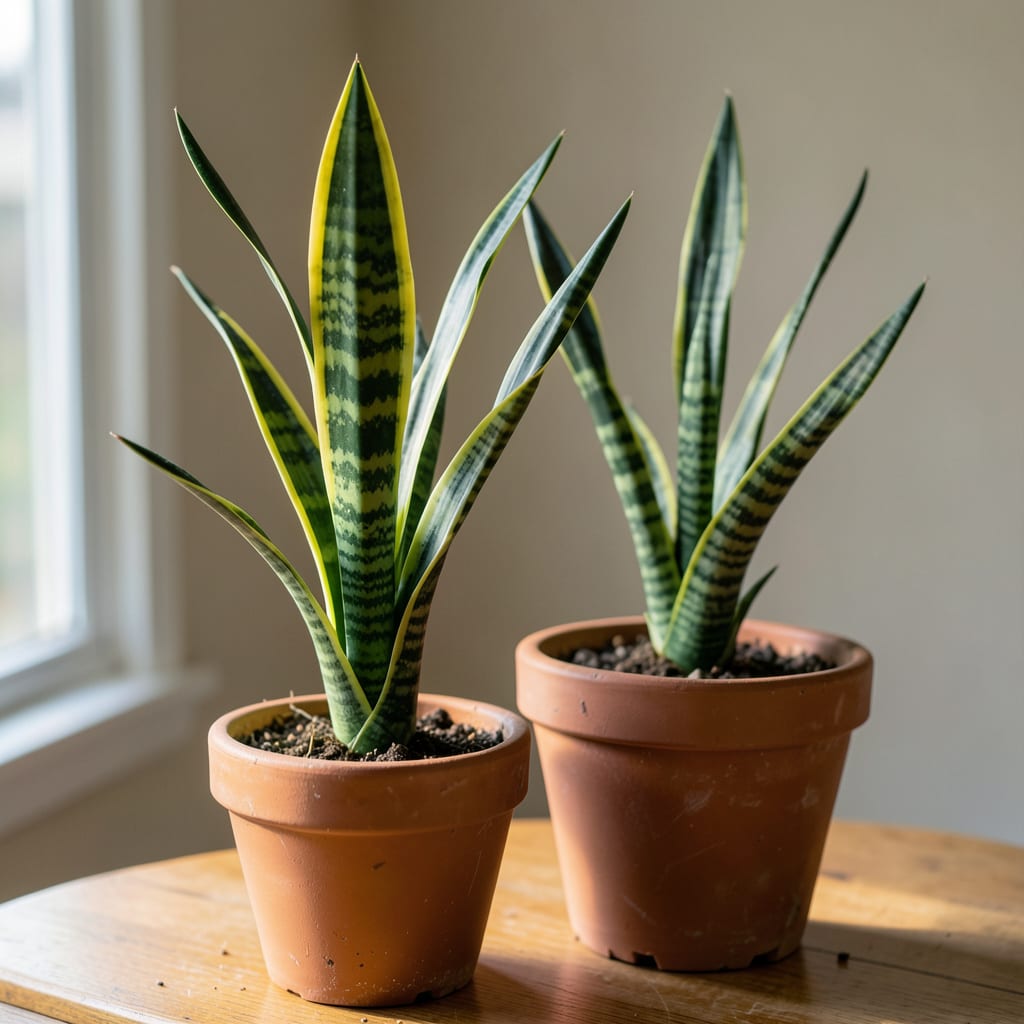
I’ve always been fascinated by how tall snake plants 🪴 can grow indoors. These low-maintenance plants can add a striking vertical element to any room, but their growth is influenced by several factors.
Understanding the maximum height of snake plants in indoor conditions helps with space planning and care. Let’s explore what affects their growth and how to encourage them to reach their full potential.
I’ve found that several key factors influence how tall snake plants can grow indoors. The amount of light is crucial, as snake plants can thrive in various lighting conditions, from low to bright indirect light. However, the intensity and duration of light exposure directly impact their growth rate and maximum height 🌞.
Another critical factor is watering. Snake plants are known for their drought tolerance, but consistent moisture levels can promote healthier growth. Overwatering, on the other hand, can lead to root rot and stunt the plant’s growth. The pot size also plays a significant role, as a larger pot can accommodate more extensive root growth, potentially leading to a taller plant 🌿.
The variety of snake plant is another important consideration. Different cultivars have varying growth habits and maximum heights. For example, some compact varieties naturally remain smaller, while others can grow quite tall 📏.
Understanding these factors helps in creating optimal conditions for snake plants to reach their full potential height indoors. By adjusting these elements, you can encourage healthier and potentially taller growth 🌱.
Lighting conditions significantly affect snake plant growth. While they can tolerate low light, brighter indirect light generally promotes taller and healthier plants. However, direct sunlight should be avoided as it can cause leaf scorch 🔥.
Watering practices also impact growth. Snake plants prefer to dry out between waterings, so overwatering can be detrimental. A balanced watering schedule ensures the plant receives enough moisture without risking root rot 💧.
The size of the pot can restrict or enable root growth, which in turn affects the plant’s overall height. A pot that is too small may limit the plant’s potential height, while a larger pot can provide the necessary room for roots to expand 🌿.
Fertilization is another factor to consider. While snake plants don’t require frequent fertilization, occasional feeding during the growing season can support their growth. It’s essential to use a balanced fertilizer and follow the recommended application rates 📦.
Different snake plant varieties have unique growth characteristics. Some varieties are naturally more compact, while others can grow quite tall. Understanding the specific needs and growth habits of your snake plant variety is key to optimizing its height 🌻.
By considering these factors and adjusting your care routine accordingly, you can create an environment that supports the optimal growth of your snake plants, helping them reach their maximum potential height indoors 📈.
In summary, the height of snake plants indoors is influenced by a combination of factors including lighting, watering, pot size, fertilization, and variety. By understanding and managing these factors, you can encourage your snake plants to grow healthier and potentially taller 🌿.
I’ve observed that different snake plant varieties can grow to varying heights when cultivated indoors. The maximum height of these plants largely depends on their specific cultivar and the conditions they’re grown in 🌿.
Some popular varieties and their typical indoor heights include: Laurentii, Cylindrica, and Moonshine. Understanding these differences helps in selecting the right variety for your space 📏.
The Laurentii variety is known for its striking yellow edges and can grow up to 3 feet tall indoors. Its upright leaves make it a popular choice for decorative pots 🌟.
Cylindrica is another variety that can reach heights of 2 to 4 feet. Its cylindrical leaves add a unique texture to indoor spaces 🌿.
Moonshine snake plants are recognized by their silvery-gray leaves and typically grow to be around 2 to 3 feet tall. They are a great choice for those looking for a more subtle color variation ✨.
When choosing a snake plant, considering the maximum height of the variety can help you plan your indoor space effectively. Proper care and conditions can support these plants in reaching their full potential height 📈.
To encourage your snake plant to grow taller indoors, it’s essential to provide the right conditions. Lighting is a critical factor – while snake plants can tolerate low light, they grow taller in bright indirect light. Placing them near an east or west-facing window can provide the ideal light conditions 🌞.
Rotate your snake plant regularly to ensure even growth and prevent leaning towards the light source 🔄.
Watering is another crucial aspect. Snake plants prefer to dry out between waterings, so it’s essential to avoid overwatering. Check the soil moisture by inserting your finger into the soil up to the first knuckle – if it feels dry, it’s time to water 💧.
Fertilization can also support taller growth. Feed your snake plant with a balanced fertilizer during the growing season (spring and summer). Dilute the fertilizer to half the recommended strength to avoid burning the roots 📦.
Pruning is a simple technique to encourage your snake plant to grow taller. Remove any dead or damaged leaves to maintain the plant’s appearance and direct its energy towards healthy growth ✂️.
By following these tips and providing your snake plant with the right conditions, you can encourage it to reach its full potential height indoors.
In summary, maximizing snake plant height indoors requires attention to lighting, watering, fertilization, and pruning. By optimizing these factors, you can support healthy growth and enjoy a taller, more vibrant snake plant in your indoor space 🌿.
Snake plants typically grow between 2-4 feet tall indoors, depending on the variety and growing conditions. Proper care can help them reach their maximum potential height .
Water your snake plant every 2-3 weeks, allowing the soil to dry out between waterings. Overwatering can lead to root rot and stunt growth .
Yes, fertilizing your snake plant during the growing season (spring and summer) with a balanced fertilizer can support taller growth. Dilute the fertilizer to half the recommended strength to avoid burning the roots .
Pruning can encourage healthier growth and potentially taller plants. Remove any dead or damaged leaves to maintain the plant’s appearance and direct its energy towards healthy growth .

