
Beautiful Plants For Your Interior
Beautiful Plants For Your Interior
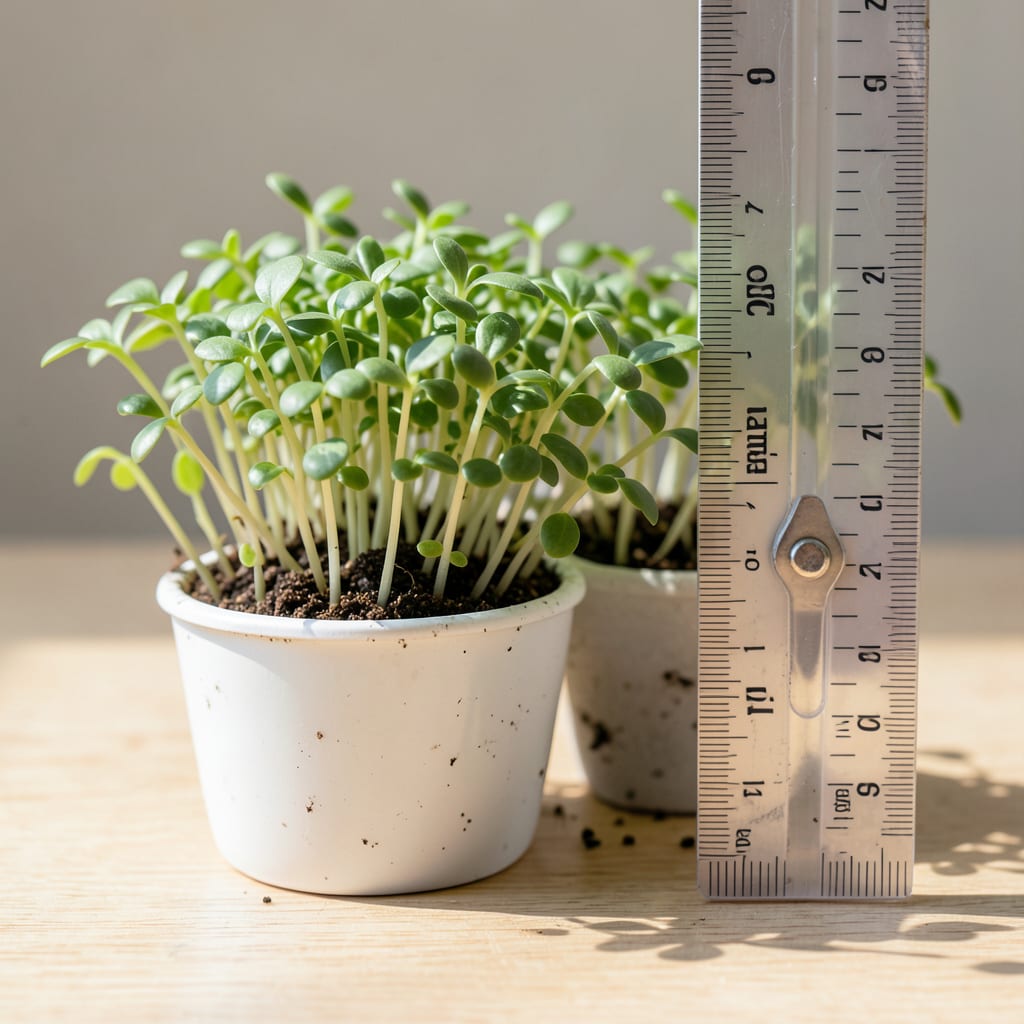
I’ve always been fascinated by 🌱 microgreens and their rapid growth. Growing these young vegetables is both exciting and challenging – especially when it comes to understanding their height potential.
Microgreens typically grow between 1-3 inches tall, with some varieties reaching up to 4 inches under optimal conditions in USDA Zone 6 during spring. Let’s explore the factors that influence their growth and how to optimize them.


I’ve found that microgreens come in a variety of heights, ranging from 0.5 inches to 4 inches tall. The height depends on the specific variety, growing conditions, and harvesting time. Some microgreens, like radish and pea shoots, can grow quite tall, while others, like basil and lettuce, tend to be shorter.
The height of microgreens is an important consideration for growers, as it affects their appearance, texture, and flavor. Understanding the typical height range of different microgreens varieties can help you choose the right ones for your needs. 🌱
The height of microgreens can vary significantly depending on the variety. For example, pea shoots can grow up to 4 inches tall, while lettuce microgreens typically top out at around 1.5 inches. Understanding these differences is key to successful microgreens cultivation.
Some microgreens, like radish and arugula, have a more upright growth habit, while others, like basil and cilantro, tend to be more compact. This variation in growth habit affects not only the height but also the overall appearance of the microgreens.
When growing microgreens, it’s essential to consider the specific needs of each variety. Factors like lighting, temperature, and watering can all impact the final height of the microgreens. By optimizing these conditions, you can encourage healthy growth and achieve the desired height.
In general, microgreens are harvested when they reach a height of 1-3 inches. Harvesting at the right time ensures that the microgreens are at their peak flavor and texture. Some growers prefer to harvest their microgreens when they’re still quite young, while others wait until they’re a bit more mature.
The growth rate of microgreens can also vary depending on the variety. Some microgreens, like radish, can be ready to harvest in as little as 7-10 days, while others, like pea shoots, may take 14-21 days to reach maturity.
To achieve the best results, it’s crucial to provide microgreens with the right growing conditions. This includes using a good quality growing medium, maintaining consistent moisture, and providing adequate light. By following these guidelines, you can enjoy a bountiful harvest of delicious and nutritious microgreens.
Microgreens are not only a great addition to salads and other dishes, but they’re also packed with nutrients. Many varieties are rich in vitamins and minerals, making them a great way to add some extra nutrition to your diet.
In conclusion, the height of microgreens can vary significantly depending on the variety and growing conditions. By understanding the typical height range of different microgreens varieties and optimizing growing conditions, you can achieve the best results and enjoy a successful harvest. 🌿
I’ve found that several factors can influence the final height of microgreens. These include growing conditions, seed density, and harvesting time. Understanding these factors is crucial for achieving the desired height in your microgreens.
The height of microgreens can be affected by various environmental factors. For example, lighting plays a significant role in determining the height of microgreens. Most microgreens require adequate light to grow, but some varieties can tolerate low light conditions. Temperature is another critical factor, as microgreens generally thrive in temperate conditions between 65°F to 75°F (18°C to 24°C).
Microgreens can be harvested in as little as 7-10 days for some varieties like radish, while others like pea shoots may take 14-21 days to reach maturity.
Seed density is another important factor that can impact microgreens height. Sowing seeds too densely can lead to competition for resources, resulting in weaker and potentially shorter plants. On the other hand, sowing seeds at the right density can promote healthy growth and optimal height.
The harvesting time also plays a critical role in determining the final height of microgreens. Harvesting too early can result in microgreens that are too short, while harvesting too late can lead to overgrown plants. Most microgreens are harvested when they reach a height of 1-3 inches, which is typically within 7-21 days of sowing.
In addition to these factors, watering and humidity can also affect microgreens growth. Consistent moisture is essential for healthy growth, but overwatering can lead to root rot and other problems. Maintaining the right balance of moisture and humidity is crucial for achieving optimal height.
By understanding and controlling these factors, you can optimize the growth conditions for your microgreens and achieve the desired height. Whether you’re growing microgreens for culinary use or personal enjoyment, paying attention to these details can make a significant difference in the quality and appearance of your harvest.
It’s also worth noting that different microgreens varieties have different growth habits and requirements. For example, pea shoots tend to grow more vigorously than lettuce microgreens. Understanding the specific needs of each variety can help you tailor your growing conditions to achieve the best results.
In summary, the height of microgreens is influenced by a combination of factors including growing conditions, seed density, and harvesting time. By optimizing these factors, you can achieve healthy growth and the desired height in your microgreens. 🌿
I’ve found that several factors can influence the final height of microgreens. These include growing conditions, seed density, and harvesting time. Understanding these factors is crucial for achieving the desired height in your microgreens.
The height of microgreens can be affected by various environmental factors. For example, lighting plays a significant role in determining the height of microgreens. Most microgreens require adequate light to grow, but some varieties can tolerate low light conditions. Temperature is another critical factor, as microgreens generally thrive in temperate conditions between 65°F to 75°F (18°C to 24°C).
Microgreens can be harvested in as little as 7-10 days for some varieties like radish, while others like pea shoots may take 14-21 days to reach maturity.
Seed density is another important factor that can impact microgreens height. Sowing seeds too densely can lead to competition for resources, resulting in weaker and potentially shorter plants. On the other hand, sowing seeds at the right density can promote healthy growth and optimal height.
The harvesting time also plays a critical role in determining the final height of microgreens. Harvesting too early can result in microgreens that are too short, while harvesting too late can lead to overgrown plants. Most microgreens are harvested when they reach a height of 1-3 inches, which is typically within 7-21 days of sowing.
In addition to these factors, watering and humidity can also affect microgreens growth. Consistent moisture is essential for healthy growth, but overwatering can lead to root rot and other problems. Maintaining the right balance of moisture and humidity is crucial for achieving optimal height.
By understanding and controlling these factors, you can optimize the growth conditions for your microgreens and achieve the desired height. Whether you’re growing microgreens for culinary use or personal enjoyment, paying attention to these details can make a significant difference in the quality and appearance of your harvest.
It’s also worth noting that different microgreens varieties have different growth habits and requirements. For example, pea shoots tend to grow more vigorously than lettuce microgreens. Understanding the specific needs of each variety can help you tailor your growing conditions to achieve the best results.
In summary, the height of microgreens is influenced by a combination of factors including growing conditions, seed density, and harvesting time. By optimizing these factors, you can achieve healthy growth and the desired height in your microgreens. 🌿
Microgreens usually grow between 1-3 inches tall, with some varieties reaching up to 4 inches under optimal conditions. The height depends on factors like variety, growing conditions, and harvesting time. Proper care can help achieve desired heights.
Growing conditions significantly impact microgreens height. Factors like lighting, temperature, and watering play crucial roles. Most microgreens require adequate light and temperate conditions between 65°F to 75°F (18°C to 24°C) to grow well. Proper care helps achieve optimal height.
Microgreens are typically harvested when they reach 1-3 inches tall, usually within 7-21 days of sowing. Harvesting at the right time ensures peak flavor and texture. Some varieties like radish can be ready in as little as 7-10 days, while others like pea shoots may take longer.
Yes, you can influence microgreens height by adjusting factors like seed density, lighting, and harvesting time. Sowing seeds at the right density and providing optimal growing conditions can help achieve desired heights. Proper care is essential for healthy growth.
