
Beautiful Plants For Your Interior
Beautiful Plants For Your Interior
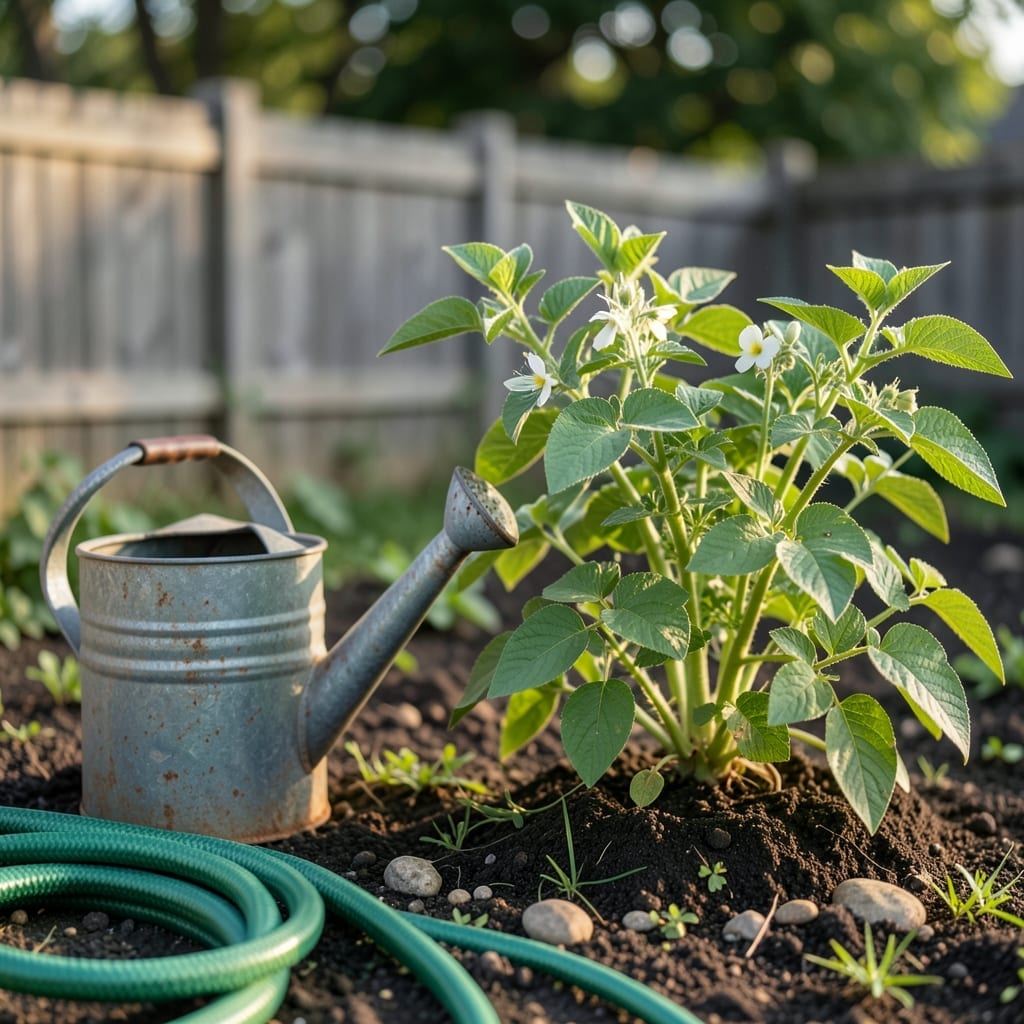
Watering potatoes correctly is the secret to a bountiful harvest, but too much or too little can ruin your crop. I’ve seen both scenarios play out in my own garden with the 🥔 plants.
Getting the schedule right means the difference between bigger yields and disappointing results. It’s not just about frequency – timing and consistency matter just as much.
Discover how to adjust your approach for different growth stages and conditions. With these tips, you’ll be well on your way to a successful potato season.
Getting the watering schedule right for potatoes can make or break your harvest. I’ve learned that each growth stage demands a slightly different approach to moisture.
From sprouting to tuber formation, potatoes need consistent but not excessive water. The key is maintaining even soil moisture without waterlogging the roots.
| Growth Stage | Watering Frequency | Soil Moisture Goal |
|---|---|---|
| Sprouting | Every 5-7 days | Moist but not soggy |
| Flowering | Every 3-5 days | Consistently moist |
| Tuber Formation | Every 7-10 days | Slightly drier near harvest |
During the sprouting stage, I keep the soil evenly moist to encourage strong root development. Watering every 5-7 days works well, but always check the top inch of soil first.
When potatoes enter the flowering stage, they need more frequent watering. I aim for every 3-5 days, especially in hot weather, to support tuber development.
The tuber formation stage is critical. I reduce watering to every 7-10 days to prevent splitting. The soil should be slightly drier as harvest approaches.
I always water in the early morning to allow foliage to dry during the day, reducing disease risk. A deep soak is better than light, frequent watering.
For sandy soils, I water more often since they drain quickly. In clay soils, I water less frequently but ensure good drainage to avoid waterlogging.
In hot climates, I may need to water daily to maintain moisture. In cooler climates, I stretch intervals to 10-14 days if the soil stays damp.
Using mulch helps retain moisture and keeps soil temperatures stable. I apply a 2-3 inch layer of straw or compost around the plants.
Remember, overwatering can be just as harmful as underwatering. Always check soil moisture before watering again. 💧
Even experienced gardeners can make critical watering errors with potatoes that hurt their harvest. I’ve seen these mistakes firsthand, and they’re easier to avoid than you might think.
From overwatering to ignoring the weather, small missteps can lead to stunted growth or diseased plants. The good news? Most are simple to fix once you recognize them.
The biggest mistake I see is overwatering during tuber formation. Potatoes need moisture, but soggy soil invites rot and disease. Stick to the schedule and always check the soil first.
Inconsistent watering is another common issue. If the soil dries out completely between waterings, potatoes can develop hollow centers or growth cracks. Aim for steady moisture levels.
Many gardeners forget to adjust for weather conditions. In heavy rain, I skip watering entirely. During droughts, I may need to water daily to keep soil from drying out completely.
Poor drainage can be a silent killer. If your soil holds water too long, consider amending it with compost or planting in raised beds. This is especially important in clay-heavy areas.
Finally, avoid late-season watering. Stop watering 1-2 weeks before harvest to let the tuber skins toughen up. This makes them easier to store and less prone to damage. 🌱