
Beautiful Plants For Your Interior
Beautiful Plants For Your Interior
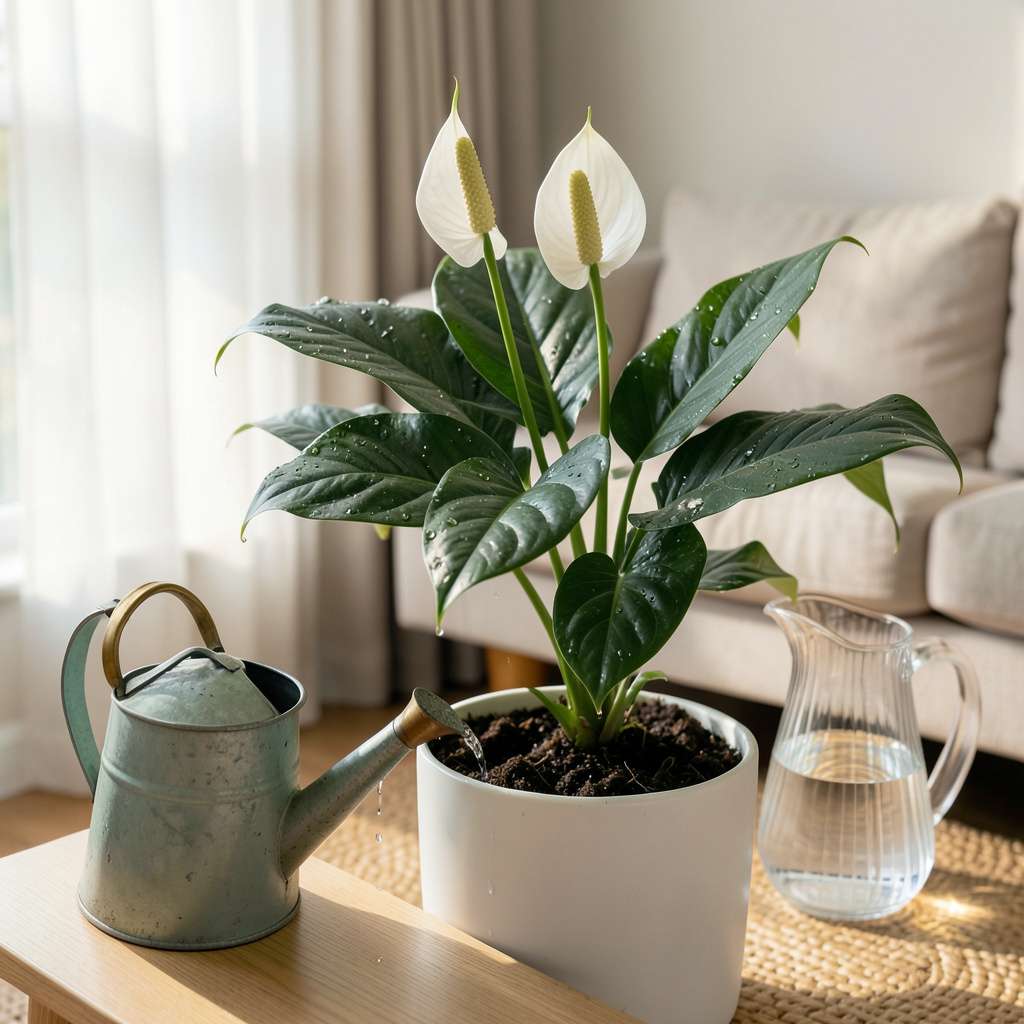
Water your peace lily every 7–10 days, checking when the top inch of soil feels dry. Drooping leaves signal thirst, while yellowing indicates overwatering. Adjust frequency based on humidity and light conditions.
I’ve learned through years of gardening that peace lilies communicate their needs better than most houseplants. 🌿 That slight droop isn’t just drama—it’s their way of saying “I need a drink!” What fascinates me is how their tropical origins make them sensitive to both drought and soggy soil. In my experience, these plants thrive when treated like Goldilocks: not too much, not too little, but just the right amount of moisture. The key is observing how quickly your specific environment dries out the soil, since a sunny windowsill will demand more frequent watering than a shady corner.
💡 In This Article
Peace lilies are tropical plants that thrive in consistently moist—but not soggy—conditions. Their water needs fluctuate dramatically based on environmental factors. The primary driver is transpiration rate: these plants “exhale” moisture through their leaves at different speeds depending on temperature, humidity, and light exposure.
In my garden journals, I’ve noted peace lilies in bright, warm rooms (75-85°F) may need water every 5-6 days, while those in cooler, shady spots (65-70°F) can go 12-14 days between drinks. 🌡️
The pot size and material create surprising differences too. A 6-inch plastic pot retains moisture 30-40% longer than the same size in unglazed terracotta, which wicks away water through its porous walls.
I once tested this by planting identical peace lilies in both containers—after 7 days, the terracotta plant’s soil was bone-dry 1.5 inches down, while the plastic pot stayed damp at 1 inch depth.
Soil composition matters equally: a mix with 30% perlite or orchid bark dries out faster than dense potting soil, requiring more frequent (but lighter) watering sessions. ✨
Seasonal changes demand the most dramatic adjustments. During winter when indoor humidity drops below 40%, I increase watering frequency by 25-30% to compensate for dry air pulling moisture from leaves. The opposite happens in summer—higher humidity means I can sometimes stretch intervals to 10-12 days.
Root health plays a hidden role too: a well-established peace lily with dense roots absorbs water more efficiently than a newly potted plant, which may show drooping even when soil seems adequately moist. 💧
Light intensity creates a feedback loop with water needs. Under grow lights or south-facing windows, peace lilies photosynthesize more actively, consuming water faster. I’ve measured this effect—plants in high light (1000+ foot-candles) deplete soil moisture twice as quickly as those in low light (200-400 foot-candles).
The leaves also develop thicker cuticles in bright conditions, which paradoxically reduces water loss through transpiration. This is why the “top inch dry” rule becomes more nuanced: in bright light, you might water when the top 1.5 inches are dry, while in shade, 0.5 inches is sufficient. 🌱
Here’s what most people overlook: the water quality itself affects absorption. Peace lilies are sensitive to chlorine and fluoride in tap water, which can damage root hairs responsible for moisture uptake. I switched to collected rainwater for my plants and noticed they maintained turgor pressure (leaf firmness) 2-3 days longer between waterings.
The pH matters too—these plants prefer slightly acidic water (6.0-6.5), as alkaline water can cause nutrient lockout that mimics underwatering symptoms. 💫
Container drainage reveals hidden problems. A pot with only one small drainage hole can create a “perched water table” where excess moisture pools at the bottom, keeping roots soggy while the top soil dries out. This tricks many gardeners into overwatering. My solution?
Use pots with at least 3 drainage holes and elevate them on pebbles to ensure complete drainage. The weight test helps too—a properly watered peace lily pot feels about 20% heavier than when dry. ⚡
Air movement plays an underappreciated role. A gentle ceiling fan or open window creates microclimates that accelerate evaporation from soil surfaces. I’ve placed identical peace lilies 3 feet apart—one near a vent and one in still air—and the vent-exposed plant needed water 3 days sooner.
This effect becomes more pronounced with larger leaves, as the increased surface area loses moisture faster. The takeaway? Group plants together to create a humid microclimate that reduces overall water needs by 15-20%. 🌿
Finally, the plant’s life stage changes everything. A flowering peace lily may require 40% more water than one in vegetative growth, as bloom production demands extra energy and hydration. I track this by noting when spathe (the white “flower”) formation begins—this is when I increase water slightly and add a diluted fertilizer.
Conversely, plants recovering from repotting need less water as damaged roots can’t absorb moisture efficiently. The recovery period typically lasts 2-3 weeks, during which I keep soil just barely moist. 💛
Check the soil by inserting your finger 1 inch deep—if it feels dry, it’s time to water. Peace lilies also “talk” through their leaves: slight drooping means thirst, while vibrant green leaves indicate perfect hydration. Avoid waiting until leaves curl dramatically, as this stresses the plant.
Yellow leaves typically signal overwatering, especially if paired with mushy stems. This happens when roots sit in soggy soil too long, leading to root rot. Check your pot’s drainage—ensure it has multiple holes and empty the saucer after 15 minutes to prevent waterlogging.
Tap water works but isn’t ideal due to chlorine and fluoride, which can cause brown leaf tips over time. For best results, use filtered or distilled water, or let tap water sit uncovered for 24 hours to allow chlorine to evaporate before using.
Low humidity (below 40%) increases water needs by 25-30%, as dry air pulls moisture from leaves faster. In winter, group plants together or use a pebble tray with water to boost humidity. Conversely, high humidity lets you stretch watering intervals by a few days.
Choose a pot with multiple drainage holes and a diameter 2 inches wider than the root ball. Terracotta dries faster (great for overwaterers), while plastic retains moisture longer. Always use well-draining soil—try 60% potting mix, 30% perlite, and 10% orchid bark for balance.
