
Beautiful Plants For Your Interior
Beautiful Plants For Your Interior
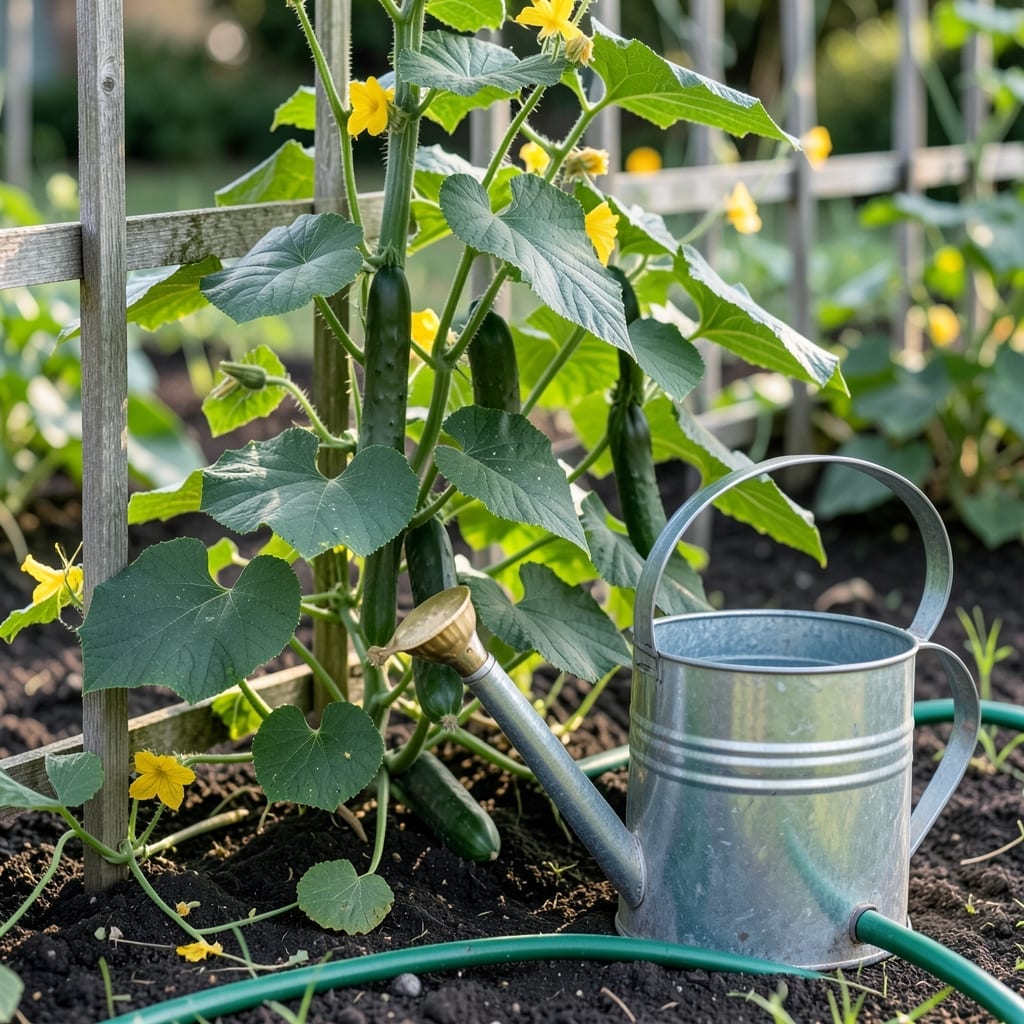
Overwatering or underwatering your 🥒 Cucumber plants can turn your dream of crisp, homegrown harvests into a wilted disappointment. The difference between thriving vines and struggling ones often comes down to timing.
I’ve learned that getting the watering schedule right is the key to achieving those juicy results we all want. Whether you’re a new gardener or have seasons of experience, this simple adjustment can make all the difference.
Discover how to give your Cucumbers exactly what they need, when they need it. Let’s set you up for success with a straightforward approach.
Getting the watering frequency right is crucial for healthy cucumber plants. These vines thrive on consistent moisture but hate soggy roots. I’ve found that balance is everything when growing cucumbers.
The ideal schedule changes with growth stages, weather conditions, and soil types. Young seedlings need different care than mature, fruiting plants. Let me break it down for you.
| Growth Stage | Water Frequency | Water Amount |
|---|---|---|
| Seedlings | Every 2-3 days | Keep soil moist |
| Flowering | Every 3-5 days | 1 inch per week |
| Fruiting | Every 2-3 days | 1-2 inches per week |
| Mature Plants | Every 5-7 days | 1-2 inches per week |
In hot climates, you may need to water daily, especially during peak summer. The soil should stay evenly moist but never waterlogged. A simple finger test helps: stick your finger 1 inch deep—if it’s dry, it’s time to water.
For sandy soils, water more frequently since they drain quickly. Clay soils hold moisture longer, so you can space out watering. I always recommend using mulch to retain moisture and reduce evaporation.
Overwatering signs include yellowing leaves and root rot. Underwatering shows as wilted leaves and dry soil. Adjust your schedule based on these cues.
If you’re growing in containers, check soil daily. Pots dry out faster than garden beds. I water my container cucumbers every 2-3 days in summer, ensuring the top inch of soil stays damp.
Early morning watering is best. It gives plants time to absorb moisture before the heat of the day. Avoid watering in the evening to prevent fungal diseases. 🌱
In cool weather, reduce frequency to once a week. Cucumbers in shaded areas also need less water. Always observe your plants—they’ll tell you what they need.
Consistency is key. Sudden changes in watering can stress plants, leading to bitter fruits or poor growth. Stick to a routine and adjust gradually as conditions change. 💧
The right watering method can make or break your cucumber harvest. I’ve tested various approaches and found that how you water matters as much as how often. Let’s explore the most effective techniques.
Drip irrigation is my top recommendation. It delivers water directly to the roots, reducing waste and preventing foliar diseases. This method keeps leaves dry, which is crucial for healthy cucumber plants.
Soaker hoses are another great option. They provide consistent moisture along the entire row, which is perfect for garden beds. I place mine about 6 inches from the plant stems for best results.
Mulching is a game-changer. A 2-3 inch layer of straw or wood chips helps retain moisture, keeps roots cool, and reduces weeds. I always mulch my cucumbers, especially in hot summer months.
If you must use a watering can, aim for the base of the plant. Avoid wetting the leaves to minimize disease risk. I also recommend using a watering wand for better control and reach.
In container gardening, ensure pots have drainage holes to prevent waterlogging. I water my potted cucumbers until I see water draining from the bottom, then wait until the top inch of soil is dry before watering again. 💧