
Beautiful Plants For Your Interior
Beautiful Plants For Your Interior
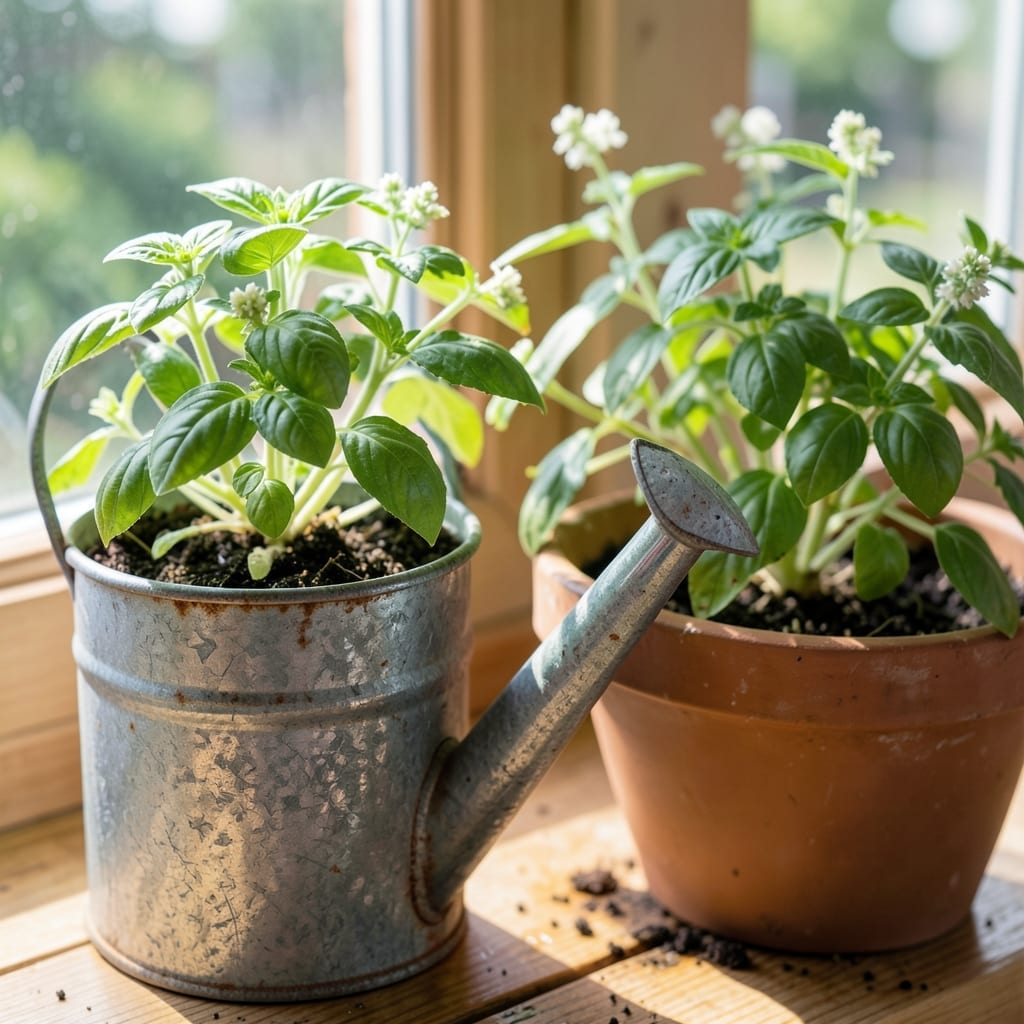
Overwatering or underwatering your 🌿 Basil can mean the difference between a thriving herb garden and a wilted disappointment. It’s a delicate balance that many gardeners struggle to get right.
Mastering the watering schedule ensures vibrant leaves, robust flavor, and a steady supply for your kitchen. Whether you’re growing Basil in pots or in the ground, the right approach is the key to success.
Discover how to keep your 🌿 Basil healthy and flourishing with these simple yet effective watering strategies. Let’s get started.
Getting the watering schedule right for your basil plants is crucial for healthy growth. The frequency depends on where and how you’re growing it. I’ve found that potted basil often needs more attention than in-ground plants.
Factors like climate, soil type, and sun exposure all play a role. In hot, dry conditions, you might need to water daily, while cooler climates may require less frequent watering.
| Condition | Watering Frequency |
|---|---|
| Potted Basil | Every 2-3 days |
| In-Ground Basil | Every 5-7 days |
| Hot Climate | Daily or every other day |
| Cool Climate | Every 4-5 days |
| Spring | Every 4-5 days |
| Summer | Every 2-3 days |
For potted basil, I recommend checking the soil daily. Stick your finger about an inch into the soil if it feels dry, it’s time to water. Container plants dry out faster because they have less soil to retain moisture.
In-ground basil has more soil to hold water, so you can typically water less often. However, during heat waves, even in-ground plants may need water every 2-3 days. Always check the soil first.
The best time to water is in the morning. This gives the plant time to absorb the water before the heat of the day. Avoid watering in the evening, as this can promote fungal diseases.
Your soil type matters too. Sandy soil drains quickly and may need more frequent watering. Clay soil holds moisture longer but can become waterlogged. Aim for well-draining loamy soil for best results.
Watch for signs of overwatering, like yellowing leaves or a mushy stem. Underwatered basil will have droopy leaves and dry, crispy edges. Adjust your schedule based on these visual cues.
If you’re growing basil indoors, consider the humidity levels. Lower humidity means you’ll need to water more often. I use a moisture meter to take the guesswork out of when to water my indoor herbs.
Remember, these are general guidelines. Your specific conditions may require adjustments. The key is to observe your plants and respond to their needs. 🌿
Proper watering technique is just as important as frequency for thriving basil plants. I always recommend watering at the base of the plant rather than overhead to prevent fungal issues and ensure the water reaches the roots where it’s needed most.
The best time to water is early morning, ideally before 10 AM. This allows the plant to absorb moisture before the heat of the day while reducing evaporation. Evening watering should be avoided as it can create a damp environment that encourages disease development.
Using the right tools makes a difference. A watering can with a narrow spout gives you better control, especially for potted basil. For larger plantings, a drip irrigation system can be an efficient way to deliver water directly to the roots.
Drainage is non-negotiable for basil. Whether in pots or garden beds, the soil must drain well. I always use containers with drainage holes and add a layer of gravel or perlite at the bottom to prevent water from pooling at the roots.
When watering, aim to moisten the soil to a depth of 6-8 inches. This encourages deep root growth, making your basil more drought-resistant. Shallow watering leads to weak root systems that are more susceptible to stress.
Finally, pay attention to your plants’ response. If the leaves start to turn yellow or develop brown spots, you might be overwatering. If they appear wilting or crispy, it’s likely a sign of underwatering. Adjust your technique based on these visual cues. 🌿