
Beautiful Plants For Your Interior
Beautiful Plants For Your Interior
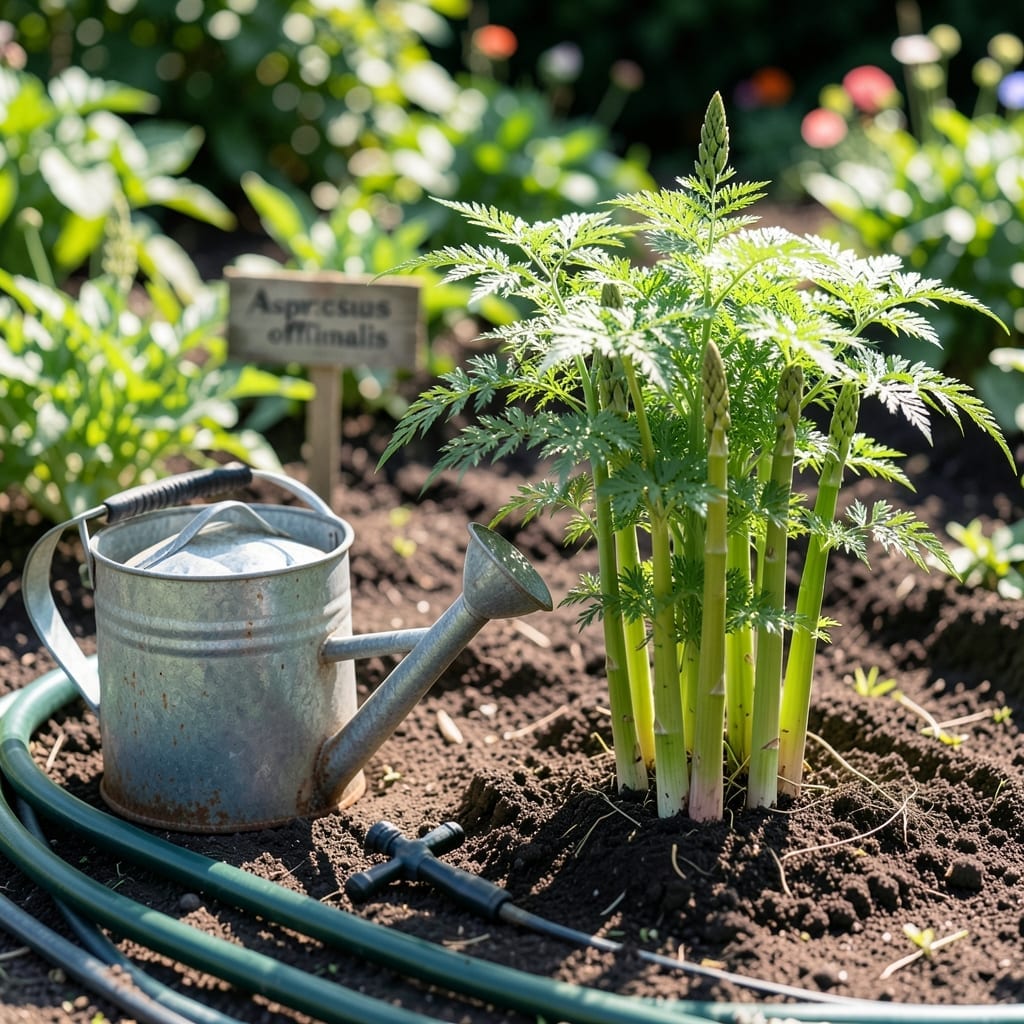
Mastering the art of watering Asparagus 🥬 can mean the difference between a lackluster harvest and a thriving, productive bed for years to come.
This hardy perennial requires consistent moisture, but overwatering can be just as damaging as drought. Getting it right ensures strong, healthy spears season after season.
Let me walk you through the key factors that determine the perfect watering schedule for your Asparagus plants.
Getting your asparagus watering schedule right is key to a productive harvest. This perennial thrives with consistent moisture, but its needs shift with the seasons.
In spring, focus on establishing strong roots. The soil should stay evenly moist but never soggy as new spears emerge. 🌱
| Season | Frequency | Amount | Notes |
|---|---|---|---|
| Spring | Weekly | 1-2 inches | Keep soil moist for spear emergence |
| Summer | 2-3x/Week | 1.5 inches | Increase during heat waves |
| Fall | Weekly | 1 inch | Reduce as growth slows |
| Winter | Bi-weekly | 0.5 inches | Only if rainfall is scarce |
During summer, your asparagus bed will need more frequent watering. Aim for 2-3 sessions per week, providing about 1.5 inches of water total.
This is when the fern-like foliage is actively photosynthesizing and storing energy for next year. Drought stress now can weaken the crowns long-term.
As fall approaches, taper off to weekly watering. The plant is preparing for dormancy, so 1 inch per week is usually sufficient unless you’re in a dry climate.
In winter, asparagus needs very little water. I only water every 2 weeks if we haven’t had rain, giving just 0.5 inches to prevent root desiccation.
Remember, these are general guidelines. Your specific needs may vary based on soil type and local rainfall. Sandy soils drain faster and may need more frequent watering.
Always check the soil moisture 2-3 inches down. If it’s dry at that depth, it’s time to water. This simple test prevents both overwatering and underwatering. 💧
For newly planted crowns, I recommend daily watering for the first week, then gradually reducing to the seasonal schedule as roots establish.
Recognizing the signs of improper watering can save your asparagus crop. Both overwatering and underwatering stress the plant, but they show different symptoms you can spot early. 🌱
I always check for yellowing fronds first. This is a classic sign of overwatering, often accompanied by mushy stems or a foul odor from the crown, indicating potential root rot. 🌿
Underwatered asparagus often shows dry, cracked soil pulling away from the crown. The spears may appear thin or stunted, and the ferns can wilt during hot afternoons. 💧
If you see premature seeding, where the plant sends up flower stalks early, it’s usually a stress response to drought. This diverts energy from spear production to reproduction.
For overwatered plants, I recommend holding off on watering and improving drainage. If the crown smells rotten, you may need to dig it up, trim affected roots, and replant in fresher, well-draining soil.
With underwatered asparagus, a deep soak is better than frequent light watering. Aim to moisten the soil 8-12 inches down to encourage deep root growth.