
Beautiful Plants For Your Interior
Beautiful Plants For Your Interior
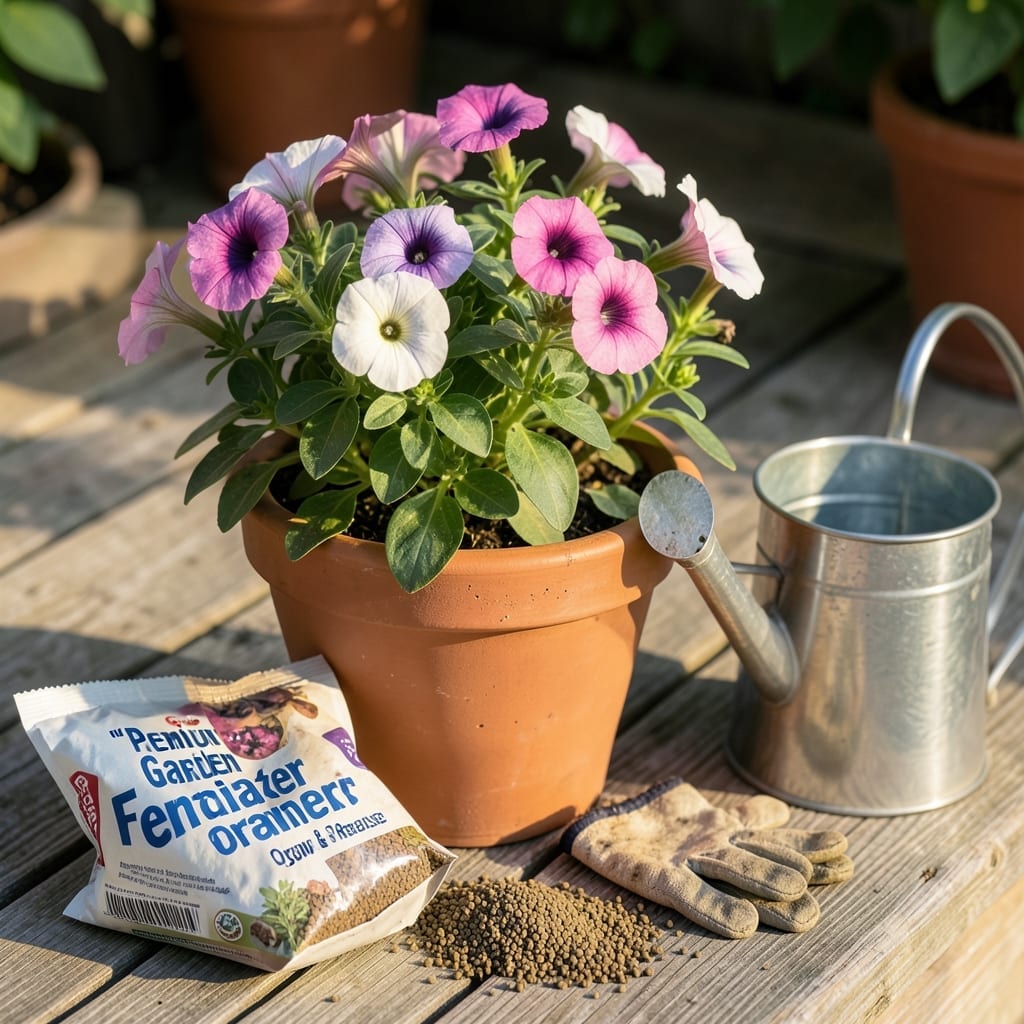
Petunias are heavy feeders that reward consistent care with a cascade of colorful blooms. But did you know that over-fertilizing can do more harm than good to your 🌸 Petunia plants?
Getting the feeding schedule right is the key to vibrant, long-lasting flowers. Too little, and your plants will look weak and sparse. Too much, and you risk burning the roots.
I’ve tested different approaches, and what I found might surprise you. A simple, regular routine makes all the difference for these beautiful spring flowers.
Discover the perfect balance to keep your Petunias thriving all season long. Let’s make your garden the envy of the neighborhood.
Petunias are heavy feeders that thrive on regular nourishment. I’ve found that weekly fertilization during the growing season produces the most vibrant blooms.
For best results, use a balanced liquid fertilizer with an NPK ratio of 10-10-10 or 20-20-20. This ensures steady growth without overloading the plants.
I always recommend water-soluble fertilizers for petunias because they provide immediate nutrients and are easy to adjust. Mix according to package instructions.
During peak summer heat, you might need to fertilize every 5-7 days to maintain blooms. Watch for signs of stress like wilting or yellowing leaves.
If you prefer granular fertilizers, apply them every 4-6 weeks. They release nutrients slowly, which works well for container-grown petunias.
Petunias in hanging baskets or containers need more frequent feeding. I fertilize mine weekly to compensate for faster nutrient depletion.
Watch for signs of over-fertilizing, like salt buildup on soil or leaf burn. If this happens, flush the soil with water.
In early spring, start with a balanced fertilizer. As summer approaches, switch to a bloom-boosting formula higher in phosphorus.
Consistency is key with petunias. Stick to your schedule, and you’ll be rewarded with abundant, colorful blooms all season long 🌸
Petunias thrive with balanced fertilizers that support both foliage growth and abundant blooms. I recommend starting with a 10-10-10 or 20-20-20 formula for consistent results.
For bloom-boosting, switch to a high-phosphorus option like 10-30-20 once flowers appear. Organic choices like compost tea or fish emulsion work well too. 🌸
For even distribution, I water the soil first, then apply liquid fertilizer to help it soak in. Avoid getting fertilizer on the leaves to prevent burn damage.
If using granular fertilizer, work it lightly into the top 1-2 inches of soil. This prevents runoff and ensures the roots get the nutrients they need.
Remember, consistency is key. Stick to a schedule, and your petunias will reward you with vibrant, long-lasting blooms all season long.
Finally, always follow the package instructions for dilution rates. Over-concentrated mixes can harm your plants more than help them. 🌿