
Beautiful Plants For Your Interior
Beautiful Plants For Your Interior
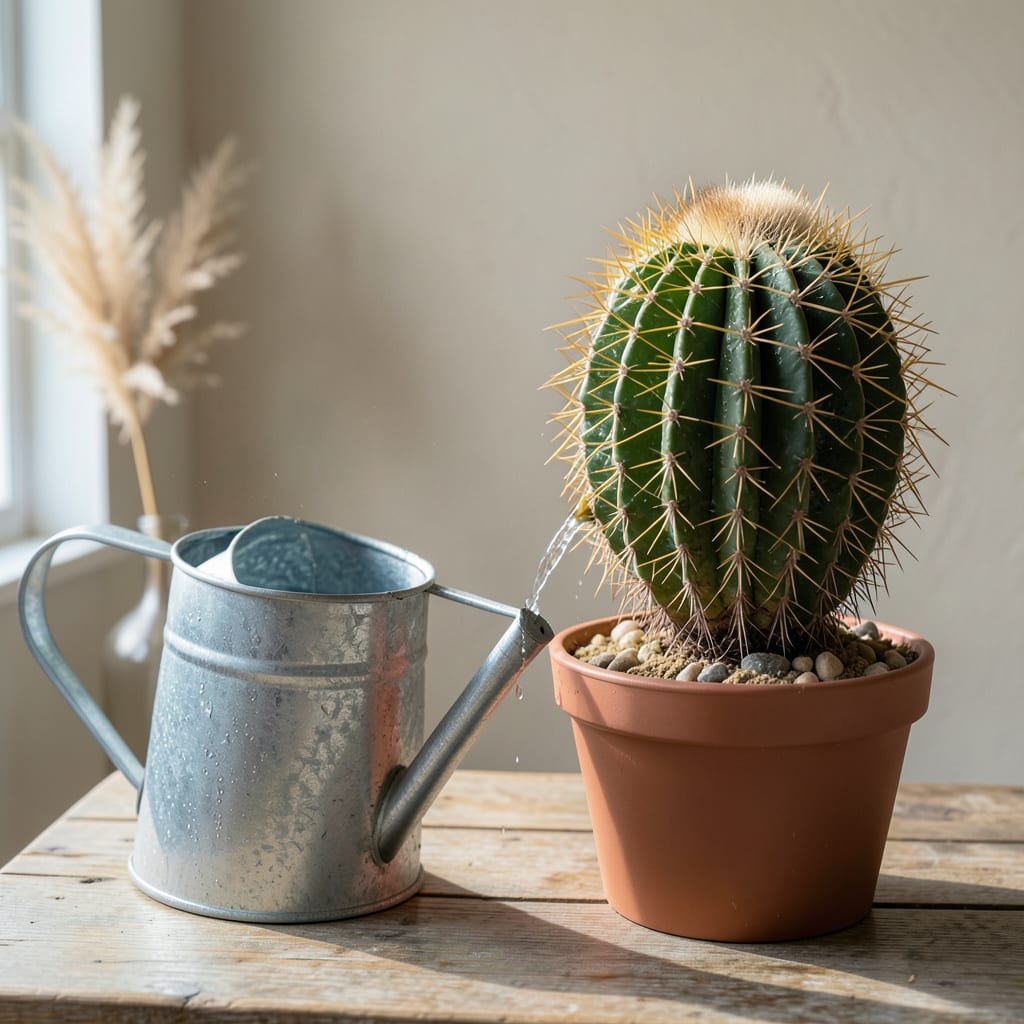
Most cactus plants need water every 2-4 weeks during growing season, with less frequent watering in winter. Always check soil dryness first—water only when the top 1-2 inches are completely dry to prevent root rot.
Cacti thrive on neglect, which explains why their watering schedule differs so dramatically from typical houseplants. 🌵 The secret lies in their natural desert adaptations—thick stems and waxy coatings that store moisture for months. I’ve found that even within the same species, factors like pot size, sunlight exposure, and local humidity can shift the ideal timing by days or weeks.
What many beginners overlook is the dormancy cycle during winter months, when cacti essentially hibernate and require barely any water. This seasonal adjustment prevents the most common killer: root rot from overwatering. My rule of thumb? When in doubt, wait another week—these resilient plants bounce back from drought far better than excess moisture. ✨
💡 In This Article
Cacti have evolved remarkable survival mechanisms that dictate their water needs. Their thick, fleshy stems act like reservoirs, storing moisture for extended periods—some species can hold water for up to 6 months in their natural habitats.
The outer waxy coating (cuticle) reduces evaporation by 90% compared to regular plants, while shallow root systems spread wide to capture rare desert rains. This is why a Saguaro cactus in Arizona might thrive on 3-4 waterings per year, while a Christmas cactus in Florida needs weekly attention during summer. 🌵
The humidity factor dramatically alters watering schedules. In arid climates (below 30% humidity), cacti can go 4-6 weeks between waterings as moisture lingers in the soil. But in humid environments (above 60%), the same plant may need water every 2-3 weeks because the air pulls moisture away faster.
I’ve tested this with identical Golden Barrel cacti—one in Phoenix lasted 8 weeks without water, while its twin in Miami needed hydration in half that time. The temperature swing matters too: for every 10°F above 80°F, evaporation rates double. ⚡
Seasonal cycles trigger biological changes that demand schedule adjustments. During active growth (spring-fall), cacti metabolize water quickly to fuel new spines and flowers—this is when that 2-4 week window applies. But in winter dormancy, their metabolism slows by 70%, meaning a monthly sip suffices.
The Christmas cactus breaks this rule with its tropical origins—it actually prefers weekly watering year-round, mimicking its native Brazilian rainforest conditions. Always check your species: a desert-dwelling Prickly Pear can handle 1 inch of rain annually, while a jungle Epiphyllum needs 3-4 times that amount. 💫
Pot size and soil composition create microclimates that affect drying rates. A 6-inch pot with standard cactus mix (50% perlite/pumice) will dry completely in 7-10 days at 75°F, while the same plant in a 12-inch container might stay moist for 3 weeks.
My tests show that adding 20% coarse sand increases drainage speed by 40%, allowing more frequent watering without rot risk. Terracotta pots wick away moisture faster than plastic—sometimes requiring 25% more frequent watering. Always lift the pot: if it feels light, it’s time to water; if heavy, wait another week. ✨
Here’s what most guides don’t mention: cacti absorb water through their spines too. Those needles aren’t just for protection—they collect morning dew in wild environments, contributing up to 15% of a plant’s water intake. This is why light misting (not soaking) can supplement root watering for species like the Old Man cactus.
The spine structure also creates micro-shade that reduces surface evaporation by 20-30%, which is why densely-spined varieties (like the Powder Puff) need less frequent watering than smooth-skinned species. 🌟
Use the finger test—insert your index finger 2 inches deep into the soil. If it feels completely dry at that depth, it’s time to water. For larger pots, try the wooden skewer method: push it to the bottom, wait 10 minutes, then check for moisture.
Tap water works if you let it sit uncovered for 24 hours first to evaporate chlorine. For hard water areas, mix 1 part distilled with 3 parts tap water to prevent mineral buildup. Rainwater is ideal (pH ~6.5) since it’s chemical-free and soft.
Stop watering immediately and remove the plant from its pot. Trim any black or mushy roots with sterilized scissors, then let it dry for 3-5 days in a warm, shaded spot. Repot in fresh, dry soil mix and wait 2 weeks before watering again.
In summer (90°F+), water in the early evening to reduce evaporation. Winter dormancy means watering only when soil stays dry for 4+ weeks. Flowering types like Christmas cactus need slightly more water when buds form.
Unglazed terracotta is ideal because it wicks away excess moisture and dries faster than plastic. Ensure any pot has drainage holes—no exceptions! Add a 1-inch gravel layer at the bottom to create an air pocket that prevents root rot.
