
Beautiful Plants For Your Interior
Beautiful Plants For Your Interior
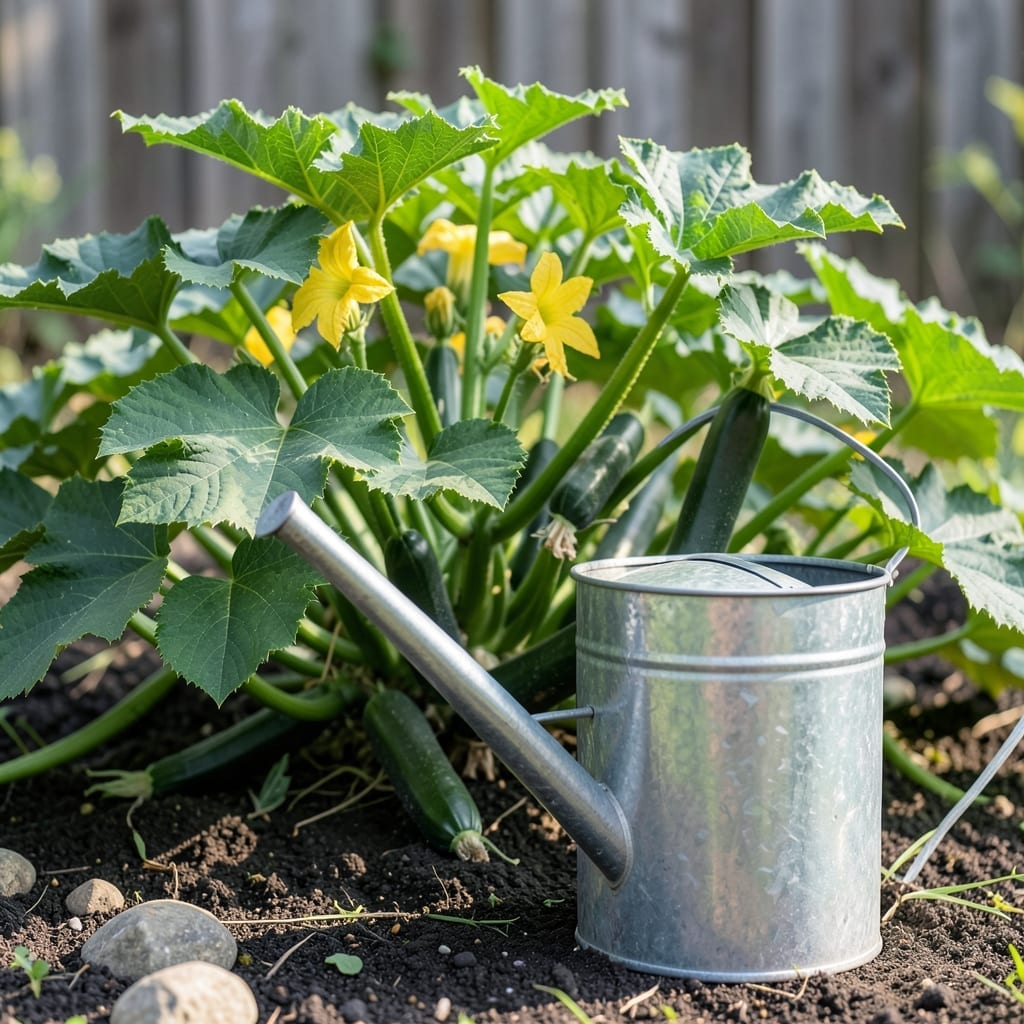
Nothing kills a zucchini plant faster than inconsistent watering. The 🥒 Zucchini thrives on steady moisture, but too much or too little can spell disaster for your harvest.
Getting the balance right means understanding your plant’s changing needs through each growth stage. From seedlings to mature plants, the amount and frequency matter more than you might think.
Discover the simple yet effective weekly guidelines that will keep your zucchini healthy and productive all season long.
Zucchini plants have changing water needs as they grow. I’ve found that seedlings need gentle, consistent moisture to establish roots, while mature plants demand deeper watering to support fruit production.
In my experience, the key to success is adjusting your approach based on the plant’s growth stage and environmental conditions. Here’s how I do it:
| Growth Stage | Water Amount | Frequency | Key Notes |
| Seedlings | 0.5 inches | Every 2-3 days | Keep soil evenly moist |
| Young Plants | 1 inch | Every 5-7 days | Water at base, not leaves |
| Flowering | 1-1.5 inches | Every 3-4 days | Critical for fruit set |
| Fruiting | 1.5-2 inches | Every 2-3 days | Deep watering prevents rot |
I always check the soil moisture before watering. Stick your finger 1-2 inches into the soil—if it feels dry, it’s time to water. This simple trick prevents overwatering and ensures your zucchini gets just what it needs.
During hot summer months, I increase watering to every 2 days for mature plants. The heat can dry out soil quickly, and zucchini’s large leaves lose a lot of water through transpiration.
For container-grown zucchini, the rules change slightly. Potted plants dry out faster, so I water them daily in summer, ensuring the entire root ball stays moist but not soggy.
I’ve learned that morning watering is best. It gives the plants time to absorb moisture before the midday heat and reduces the risk of fungal diseases that thrive in damp evening conditions.
If you notice yellowing leaves or wilting, it might be a sign of underwatering. But be careful—overwatering can cause the same symptoms, so always check the soil first.
Using mulch around your zucchini plants helps retain moisture. I apply a 2-3 inch layer of straw or compost, which also suppresses weeds and keeps the soil temperature stable.
Finally, remember that well-draining soil is crucial. Zucchini hates waterlogged roots, so if your garden has heavy clay, consider amending it with compost or planting in raised beds
Consistent watering techniques make all the difference for zucchini. I’ve learned that drip irrigation works best because it delivers water directly to the root zone without wetting the leaves.
When I use a garden hose, I always aim for the soil base and avoid overhead watering. This prevents fungal diseases like powdery mildew that thrive on damp foliage.
I water my zucchini in the early morning to allow foliage to dry quickly. Evening watering can create a damp environment that encourages disease development overnight.
For container plants, I use a moisture meter to monitor soil conditions. It helps me avoid overwatering, which is easy to do in pots with limited drainage.
I’ve found that soaker hoses work almost as well as drip systems. They slowly release water along the plant row, keeping roots consistently hydrated without runoff.
Remember that sandy soil drains faster than clay. I adjust my watering schedule based on my garden’s soil type, giving more frequent but shorter waterings for sandy areas.
Finally, I always water deeply rather than lightly. This encourages deep root growth, making plants more drought-resistant during dry spells. 💧