
Beautiful Plants For Your Interior
Beautiful Plants For Your Interior
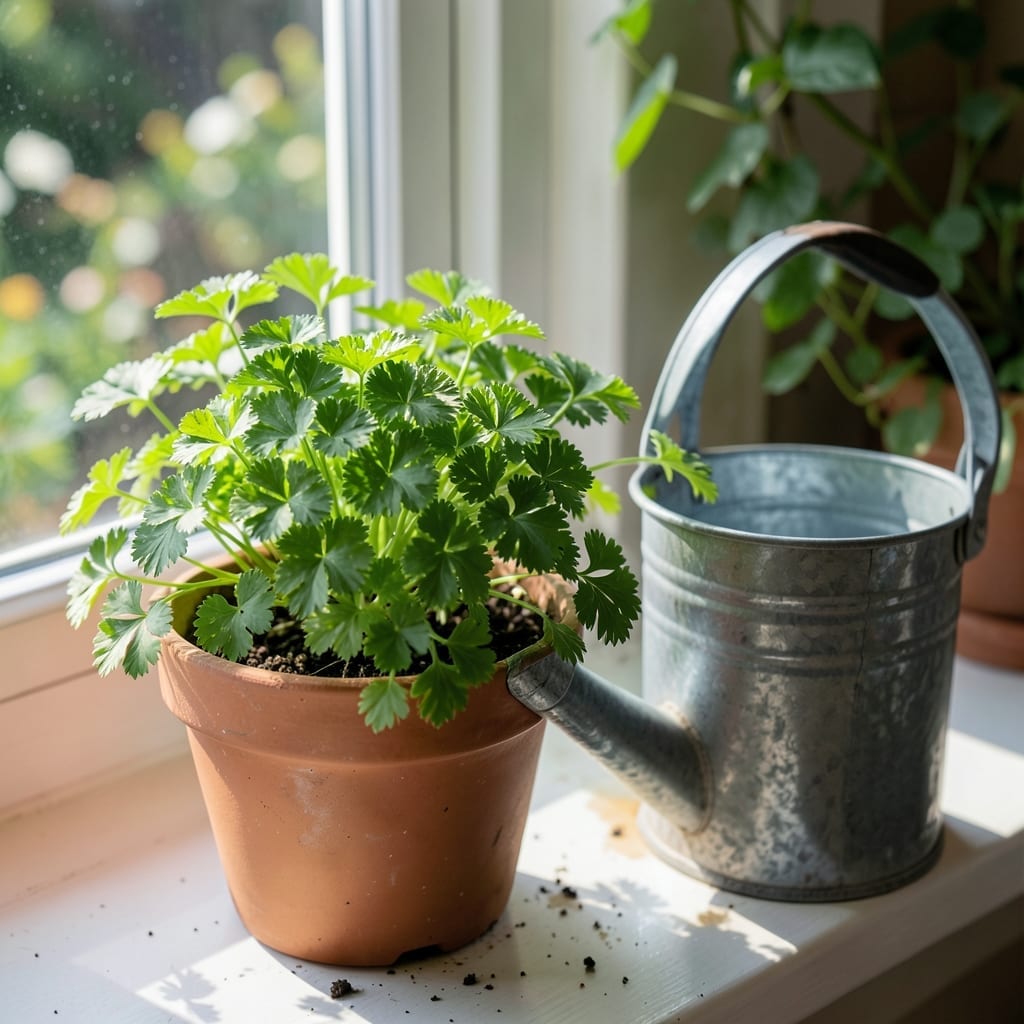
I’ve learned the hard way that Parsley 🌿 doesn’t just survive with proper watering—it thrives. Too much or too little can turn your vibrant herb into a sad, wilted mess.
Getting the balance right means understanding your plant’s needs through every season. Whether you’re growing in pots or garden beds, the rules change slightly.
Discover how to keep your Parsley consistently happy with the perfect amount of moisture. Your kitchen herb garden will thank you.
I’ve found that parsley thrives when the soil stays consistently moist but never soggy. This herb doesn’t tolerate drought well, but it also hates waterlogged roots. The key is balance.
Your watering schedule will depend on the season, growing conditions, and whether your parsley is in pots or garden beds. Let’s break it down so you can keep your plants happy. 🌿
| Growth Stage | Water Frequency | Amount per Week |
|---|---|---|
| Seedlings | Every 2-3 days | 0.5 inch |
| Established Plants | Every 3-5 days | 1 inch |
| Hot Climate | Every 2-3 days | 1.5 inches |
| Cool Climate | Every 5-7 days | 0.75 inch |
| Potted Parsley | Every 3-4 days | 1 inch |
In spring and fall, I water my parsley every 5-7 days. The cooler temperatures and occasional rain help maintain moisture without overdoing it.
Summer is a different story. With higher temperatures and faster evaporation, I switch to watering every 2-3 days. Always check the top inch of soil first.
For potted parsley, the rules change slightly. Containers dry out faster, so I water every 3-4 days, ensuring the water drains freely from the bottom.
If you’re growing in garden beds, 1 inch of water per week is usually sufficient. Use a rain gauge to track natural rainfall and adjust accordingly.
I always water in the early morning to reduce evaporation and prevent fungal issues. This gives the plant time to absorb moisture before the heat of the day.
Remember, well-draining soil is non-negotiable. Parsley roots rot easily in soggy conditions, so ensure your soil or potting mix allows excess water to escape. 💧
Finally, mulching around your parsley helps retain moisture and keeps the soil temperature stable. A 2-inch layer of organic mulch works wonders.
I’ve seen firsthand how parsley reacts to incorrect watering. Yellowing leaves and soft stems often signal overwatering, while dry, crispy leaves scream for more moisture.
Your plant will tell you exactly what it needs if you know the signs. Let’s decode these visual cues so you can adjust your care routine effectively. 🌿
When overwatered, parsley roots suffocate, leading to stunted growth and blackened stems. The soil may also develop a foul odor, a clear sign of trouble.
On the flip side, underwatered parsley will have dry, brittle leaves and may drop foliage prematurely. The soil will feel bone dry an inch below the surface.
I always check the soil moisture by sticking my finger in the dirt. If it feels damp at 1-inch depth, hold off on watering. If it’s dry, it’s time to hydrate.
Correcting overwatering means stopping water immediately and ensuring good drainage. For underwatered plants, give a deep soak and mulch to retain moisture. 💧
Remember, consistency is key. Parsley prefers moist but not soggy conditions, so adjust your routine based on the season and growing environment.