
Beautiful Plants For Your Interior
Beautiful Plants For Your Interior
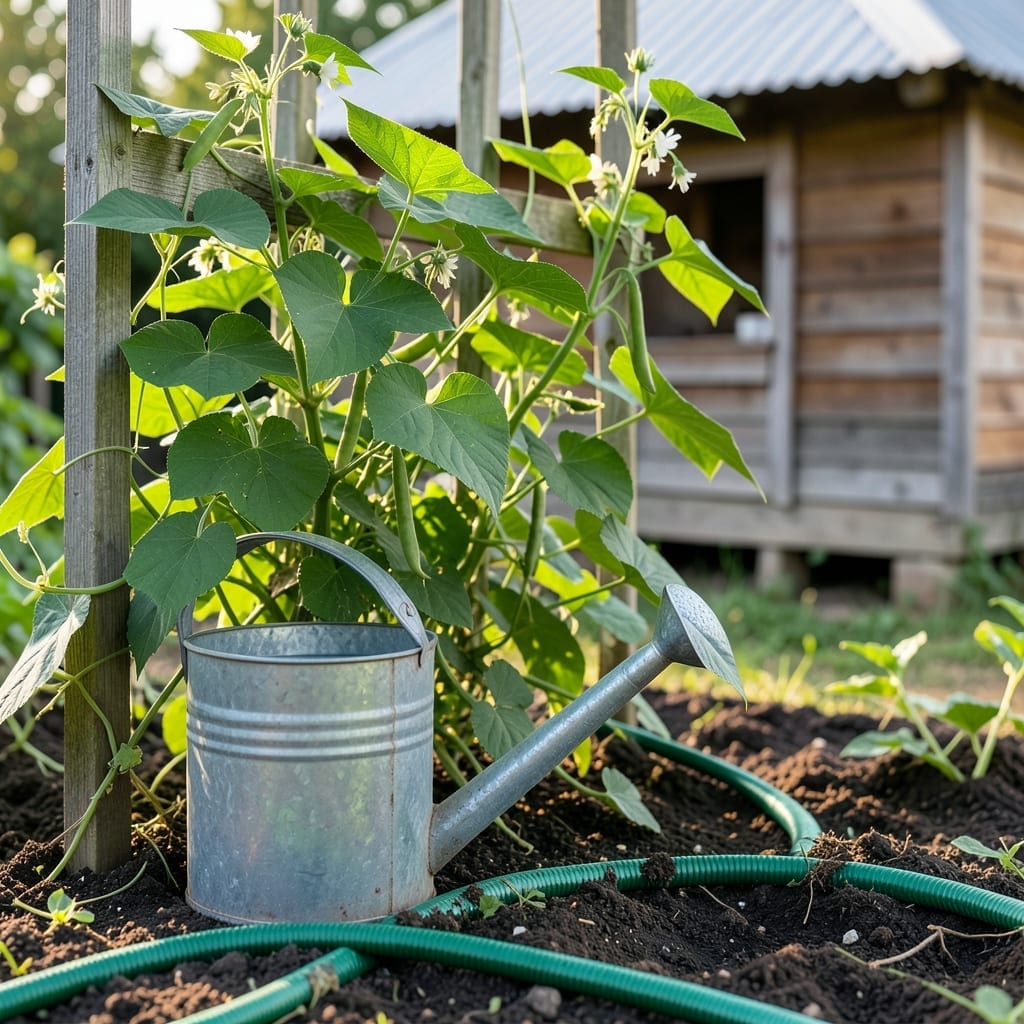
Green beans are a rewarding crop, but getting their water needs right is the key to a bountiful harvest. Overwatering can lead to disease, while underwatering stunts growth.
I’ve learned that consistent moisture without waterlogging is what keeps 🌱 Green Beans thriving. Too much or too little can make or break your plants.
Discover how to strike the perfect balance and watch your garden flourish with healthy, vibrant pods ready for harvest.
Getting the watering schedule right for green beans is crucial at every stage. I’ve found that consistent moisture leads to the best pod development and plant health.
From germination to harvest, your watering approach should adapt. Early stages need less, while flowering plants demand more attention to hydration.
| Growth Stage | Water Amount | Frequency |
|---|---|---|
| Germination | 1 inch per week | Keep soil evenly moist |
| Seedling | 1 inch per week | Water every 5-7 days |
| Flowering | 1.5-2 inches per week | Increase to 2x weekly |
| Pod Development | 1.5 inches per week | Consistent moisture daily |
During germination, green beans need about 1 inch of water weekly. I recommend morning watering to reduce evaporation and prevent fungal issues.
As seedlings emerge, maintain that 1-inch weekly target but watch for dry spells. A light mulch helps retain soil moisture effectively.
When flowering begins, your plants need 1.5-2 inches per week. This is when pod formation starts, so consistent hydration is critical for plump beans.
In the pod development stage, aim for 1.5 inches weekly. I’ve noticed that drip irrigation works best here to avoid wetting the foliage.
Signs of stress include wilting leaves or yellowing. If you see these, check your watering depth—it should reach 6 inches into the soil.
For container-grown beans, water more frequently as pots dry out faster. I suggest checking soil moisture daily in hot weather.
Remember, overwatering is just as harmful as underwatering. Well-draining soil prevents root rot while keeping your green beans happy and productive. 🌱
Even experienced gardeners can make watering mistakes with green beans. I’ve seen overwatering lead to root rot, while underwatering causes stunted growth and poor pod formation.
One common error is watering foliage instead of the soil, which invites fungal diseases. Always aim your water at the base of the plant to keep leaves dry and healthy.
⚠️ Avoid These Watering Mistakes
Watering at night promotes fungal growth. Always water in the early morning to allow foliage to dry.
Inconsistent schedules stress plants. Stick to a regular routine for best results.
Over-saturating soil drowns roots. Use well-draining soil and check moisture before watering.
Another pitfall is inconsistent watering. Green beans thrive on routine, so I recommend checking soil moisture at the same time daily to establish a pattern.
Over-saturating soil is just as damaging as drought. I always check that the top inch of soil is dry before watering again to prevent root suffocation.
Using cold water can shock the roots. I let my water sit for a few hours to reach room temperature before applying it to my plants.
Finally, ignoring drainage leads to problems. If your green beans are in containers, ensure there are drainage holes to prevent waterlogging. 🌱