
Beautiful Plants For Your Interior
Beautiful Plants For Your Interior
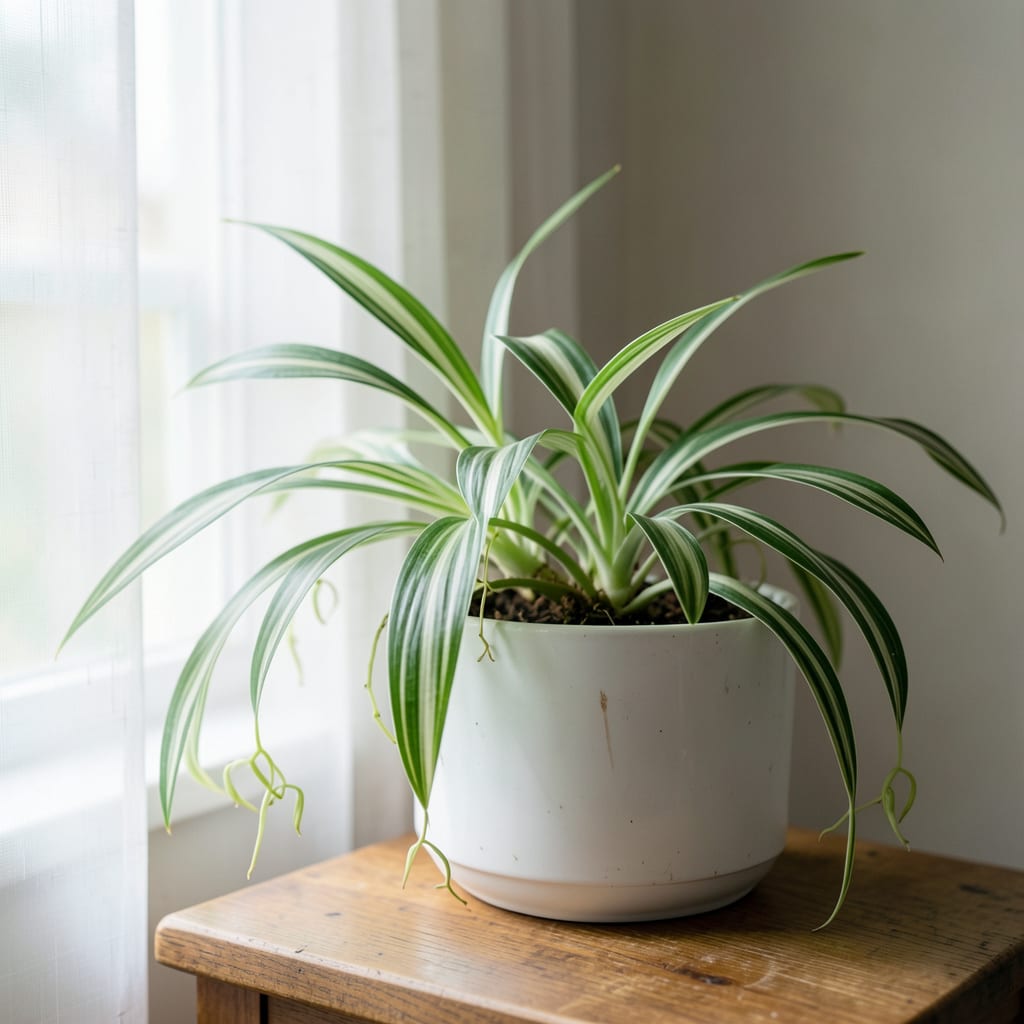
As a Spider Plant 🪴 owner in zone 6a, you’re probably wondering how much light your plant needs to thrive. The right amount of light is crucial for maintaining its health and encouraging growth.
I’ll guide you through the ideal light conditions for your Spider Plant, including signs of over/underlighting and tips for optimizing light exposure. Let’s get started with understanding what your Spider Plant needs to flourish in your care.

Spider plants are known for their adaptability to various light conditions, making them a popular choice for indoor gardening. However, understanding their optimal light requirements is crucial for maintaining their health and encouraging growth 🌱.
I recommend placing spider plants in bright, indirect light for optimal growth. This means positioning them near an east- or west-facing window where they can receive 4-6 hours of filtered sunlight daily. Direct sunlight can cause leaf scorch, while too little light may lead to leggy growth and reduced variegation 🌿.
The ideal light intensity for spider plants is between 60-75% of available light. This can be achieved by using sheer curtains to filter direct sunlight or by placing the plant a few feet away from a sunny window. Monitoring your plant’s response to light is key – if leaves become pale or yellow, it may be getting too much light, while leggy growth indicates insufficient light 🌟.
Adjusting light exposure based on seasonal changes is also important. During summer months, provide more shade to prevent leaf scorch, while in winter, consider moving plants closer to windows to maximize available light. By understanding and adapting to your spider plant’s light needs, you can ensure it remains healthy and thrives in your care 📆.
For optimal results, maintain a consistent light environment and avoid frequent changes in placement. Spider plants can adapt to various lighting conditions, but stability promotes the best growth and appearance. Regular observation will help you fine-tune the lighting to meet your plant’s specific needs 🔍.
In addition to proper lighting, maintaining a balanced care routine is essential. This includes appropriate watering, fertilization, and pruning to support overall plant health. By combining optimal light conditions with other care practices, you can enjoy a lush, vibrant spider plant that enhances your indoor space 🌿.
Spider plants are not only beautiful but also air-purifying, making them a great addition to any home or office. Their ability to remove toxins from the air adds to their appeal, and with the right light, they can be a low-maintenance yet rewarding plant to care for 💚.
By following these guidelines and paying attention to your spider plant’s response to light, you can create an ideal environment for it to flourish. Remember, the key to successful plant care is observation and adjustment – keep an eye on your plant and make changes as needed to ensure it thrives 🌱.
Light plays a crucial role in the growth and appearance of spider plants. The amount and type of light they receive can significantly impact their health, leaf color, and overall development 🌿.
I recommend understanding how different light levels affect spider plants to provide the best care. In bright, indirect light, spider plants tend to have more vibrant leaves and produce more offsets. This is because they can photosynthesize more effectively, leading to healthier growth 🌱.
To maintain optimal leaf color and encourage offset production, ensure your spider plant receives 4-6 hours of bright, indirect light daily. Adjust the plant’s position seasonally to maximize natural light exposure 🌟.
Low light conditions can lead to leggy growth and less vibrant leaves. Spider plants can tolerate low light, but their growth will be slower, and they may not produce as many offsets. If you notice your spider plant stretching towards the light source or developing pale leaves, it may be a sign that it needs more light 🔍.
On the other hand, direct sunlight can cause leaf scorch, especially during peak hours. If you place your spider plant near a south-facing window, consider using sheer curtains to filter the sunlight and prevent damage 🌞.
Monitoring your plant’s response to light is essential. Observe how your spider plant reacts to different light conditions and adjust its placement accordingly. This will help you find the perfect balance for optimal growth and appearance 📊.
In addition to adjusting light exposure, maintaining a consistent care routine is vital. This includes proper watering, fertilization, and pruning to support overall plant health. By combining optimal light conditions with other care practices, you can enjoy a lush, vibrant spider plant that enhances your indoor space 🌿.
By understanding how light affects your spider plant’s growth and appearance, you can make informed decisions to provide the best care. With the right light, your spider plant will thrive and become a beautiful addition to your home or office 💚.
Spider plants are generally resilient, but they can face challenges related to light exposure. Understanding these issues is crucial for maintaining their health and encouraging growth 🌱.
I recommend being aware of the common problems caused by too much or too little light. One of the most frequent issues is leaf scorch, which occurs when spider plants are exposed to direct sunlight for extended periods. This can cause leaves to develop brown tips or patches, detracting from the plant’s appearance 🔥.
To prevent leaf scorch, avoid placing spider plants in direct sunlight for more than 2 hours a day. Use sheer curtains to filter the light if necessary 🌞.
Leggy growth is another issue that can arise from inadequate light. When spider plants don’t receive enough light, they may stretch towards the light source, resulting in an uneven appearance. To address this, consider moving the plant to a brighter location or supplementing with grow lights if natural light is insufficient 💡.
Monitoring your plant’s response to light is essential for preventing these issues. Regularly inspect your spider plant for signs of too much or too little light, and adjust its placement accordingly. By doing so, you can ensure your plant remains healthy and thrives 🔍.
In addition to adjusting light exposure, maintaining a balanced care routine is vital. This includes proper watering, fertilization, and pruning to support overall plant health. By combining optimal light conditions with other care practices, you can enjoy a lush, vibrant spider plant 🌿.
By understanding and addressing common light-related issues, you can provide the best care for your spider plant. With the right attention, your spider plant will continue to be a beautiful and air-purifying addition to your home or office 💚.
For further guidance on spider plant care, consider exploring additional resources on plant maintenance and troubleshooting. This will help you stay informed and equipped to handle any challenges that may arise in your plant care journey 📚.
Spider plants thrive in bright, indirect light, making east- or west-facing windows ideal. They can tolerate low light but may not produce as many offsets. Avoid direct sunlight to prevent leaf scorch .
Yes, spider plants can survive in low-light conditions, but their growth will be slower and they may not produce as many offsets. If you notice leggy growth or pale leaves, consider moving them to a brighter location .
Spider plants need 4-6 hours of bright, indirect light daily for optimal growth. Adjust their position seasonally to maximize natural light exposure, and consider using sheer curtains to filter direct sunlight .
Too much light can cause leaf scorch, while too little light leads to leggy growth and pale leaves. Monitor your plant’s response and adjust its placement accordingly to ensure optimal growth and appearance .
