
Beautiful Plants For Your Interior
Beautiful Plants For Your Interior
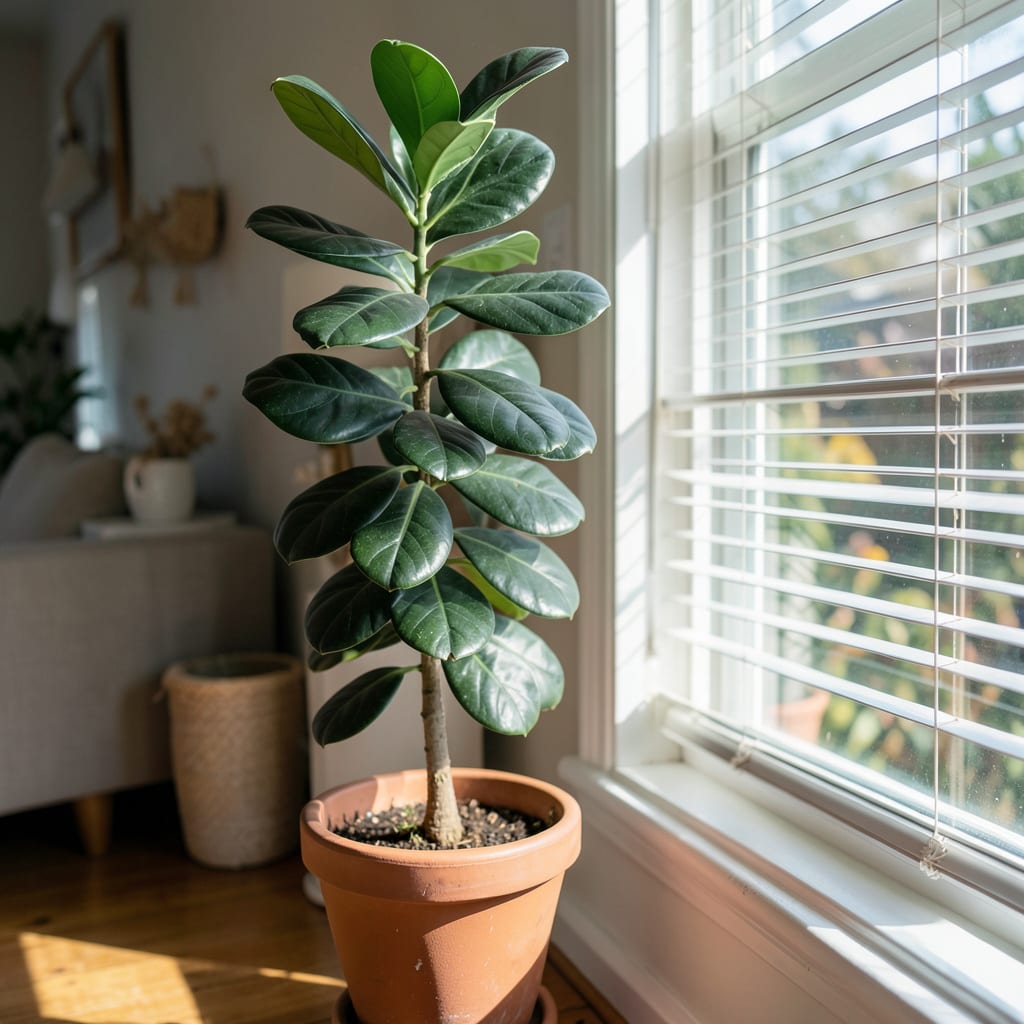
As a Rubber Plant 🌿 owner in zone 6a, getting the right amount of light can be tricky. Too little light leads to leggy growth, while too much can cause leaf scorch – but finding that sweet spot is key to keeping your plant thriving.
I’ll walk you through the ideal lighting conditions for your Rubber Plant, helping you determine if it’s getting enough light and how to adjust its placement for healthy growth. Let’s get started with the basics of Rubber Plant lighting needs.


Rubber plants are native to tropical regions where they grow under the canopy of larger trees, receiving bright, indirect light. This natural habitat gives us a clue about their lighting needs – they thrive in bright indirect light conditions 🌿.
In their natural environment, rubber plants are accustomed to filtered sunlight and can adapt to various light levels. However, when grown indoors, they require careful placement to meet their lighting needs. Let’s explore the ideal light conditions for rubber plants and how to achieve them.
Rubber plants can tolerate some variation in light conditions, but consistent bright indirect light yields the best results. In their natural habitat, they receive dappled sunlight through the tree canopy, which helps maintain their characteristic large, glossy leaves.
When grown indoors, it’s essential to replicate these conditions as closely as possible. Direct sunlight should be avoided as it can cause leaf scorch, especially during peak hours. If you notice your plant is getting too much light, consider using a sheer curtain to filter the sunlight 🌻.
The ideal daily light duration for rubber plants is between 4 to 6 hours of bright indirect light. This duration supports healthy growth without causing stress to the plant. If you’re using artificial lighting, ensure it’s supplemental and not the primary light source.
East or west-facing windows are ideal for rubber plants as they provide gentle, indirect light for most of the day. If you only have south-facing windows, consider using a sheer curtain to filter the intense afternoon sun.
It’s worth noting that rubber plants can adapt to lower light conditions, but this may result in slower growth and potentially smaller leaves. However, they are not suitable for extremely low-light environments.
To maintain optimal lighting conditions, you can also consider using grow lights during the winter months or in rooms with limited natural light. LED grow lights are a popular choice as they provide the necessary spectrum without generating excessive heat.
When adjusting your plant’s lighting, observe how it responds over time. If you notice leggy growth or yellowing leaves, it may be a sign that the light conditions need adjustment.
By understanding and providing the right light conditions, you can help your rubber plant maintain its lush, healthy foliage and enjoy its beauty for years to come.
Remember, every home is different, so be prepared to experiment with placement to find the perfect spot for your rubber plant. With the right light, your plant will thrive and become a stunning addition to your indoor space 🌿.
Now that we’ve covered the ideal light conditions for rubber plants, let’s focus on practical ways to provide the right amount of light for your plant. Proper positioning is key to ensuring your rubber plant receives the bright indirect light it needs to thrive 🌿.
First, consider the window orientation in your home. As previously discussed, east or west-facing windows are ideal for rubber plants. These windows provide gentle, indirect light that matches the plant’s natural habitat.
For south-facing windows, use a sheer curtain to filter intense afternoon sun, protecting your plant from leaf scorch.
When placing your rubber plant near a window, ensure it’s not too close to the glass, as this can cause temperature fluctuations. Maintain a distance of at least 3-5 feet from the window to provide the right balance of light and temperature.
If natural light is limited in your space, consider using grow lights to supplement the available light. LED grow lights are an excellent choice as they provide the necessary spectrum without generating excessive heat.
When using grow lights, follow these guidelines:
Adjusting your plant’s lighting according to seasonal changes is also crucial. During winter months when daylight hours are shorter, you may need to move your plant closer to the window or supplement with grow lights.
By following these practical tips, you can ensure your rubber plant receives the optimal light it needs to maintain its health and beauty. Remember, every home is different, so be prepared to experiment with placement and lighting solutions to find what works best for your rubber plant 🌻.
With the right lighting, your rubber plant will continue to be a stunning addition to your indoor space, providing lush, healthy foliage for years to come.
Rubber plants are sensitive to lighting conditions, and improper light can lead to various issues. Understanding the signs of too much or too little light is crucial for maintaining your plant’s health 🌿.
If your rubber plant is receiving too little light, you may notice leggy growth or yellowing leaves. On the other hand, too much light can cause leaf scorch or browning. Let’s explore these signs in more detail.
Monitor your rubber plant’s response to light and adjust its position accordingly to maintain optimal health.
One of the most common signs of insufficient light is leggy growth. If your rubber plant is stretching towards the light source, it may not be receiving enough light. To address this, consider moving the plant to a brighter location or supplementing with grow lights 🔦.
Conversely, if your rubber plant is exposed to too much direct sunlight, it may develop leaf scorch. This appears as brown or yellow patches on the leaves. To prevent this, ensure your plant is placed in a spot with bright, indirect light ☀️.
Another indicator of improper lighting is leaf drop. While this can be caused by various factors, sudden changes in lighting can trigger leaf drop. If you notice this happening, assess your plant’s lighting conditions and make adjustments as needed 🌱.
To maintain optimal lighting for your rubber plant,
By being aware of these signs and taking appropriate action, you can ensure your rubber plant receives the right amount of light for healthy growth and development. Keep an eye on your plant’s response to its lighting conditions, and don’t hesitate to make changes to provide the best environment 🌟.
With proper lighting, your rubber plant will continue to thrive and remain a beautiful addition to your indoor space, providing lush, healthy foliage for years to come 🌿.
East or west-facing windows are perfect for rubber plants as they provide gentle, indirect light throughout the day. This direction helps maintain the plant’s characteristic large, glossy leaves.
Yes, you can use grow lights to supplement natural light, especially during winter months or in low-light spaces. LED grow lights are recommended as they provide the necessary spectrum without generating excessive heat. Position them 12-18 inches above the plant and keep them on for 12-14 hours a day.
Watch for signs like leggy growth or yellowing leaves for insufficient light, and leaf scorch or browning for too much light. Adjust the plant’s position accordingly to maintain optimal health. Monitor your plant’s response and make changes as needed.
Rubber plants require 4-6 hours of bright, indirect light daily. This duration supports healthy growth without causing stress to the plant. You can adjust this based on your plant’s response and the time of year.
