
Beautiful Plants For Your Interior
Beautiful Plants For Your Interior
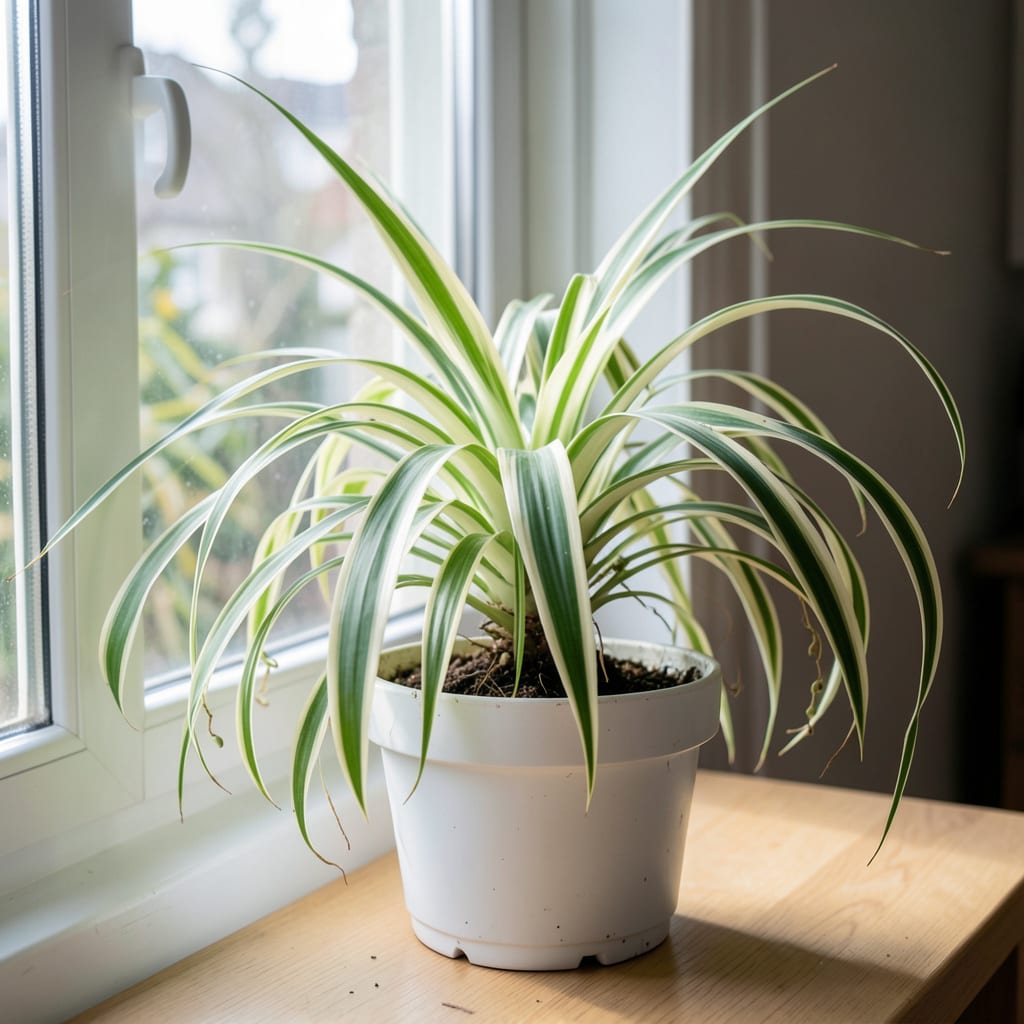
I’ve always been fascinated by how a simple change in lighting can transform my Spider Plant 🌿. Too little light, and it becomes leggy; too much, and it gets scorched. Finding that perfect balance is key to keeping it thriving.
So, how much light does your Spider Plant actually need? Let’s explore the optimal lighting conditions that will keep your plant happy and healthy in your General location.

I’ve found that understanding the lighting needs of my Spider Plant has been crucial for its health and growth. Spider plants are known to thrive in bright indirect light, making them perfect for homes with east- or west-facing windows 🌿.
The ideal lighting conditions for Spider Plants involve receiving 4-6 hours of bright indirect light daily. This can be achieved by placing them near an east- or west-facing window, where they can receive gentle, indirect sunlight throughout the day.
When it comes to direct sunlight, it’s best to avoid it as it can cause leaf scorch and damage to the plant. On the other hand, low light conditions can result in leggy growth and reduced plant vigor. By providing your Spider Plant with the right amount of bright indirect light, you can promote healthy growth and enjoy its beautiful foliage.
I recommend keeping an eye on your Spider Plant’s response to its lighting conditions and adjusting its placement accordingly. With the right light, your Spider Plant will thrive and become a beautiful addition to your indoor space 🌿.
To further optimize your Spider Plant’s lighting, consider using sheer curtains to filter direct sunlight and provide a more suitable light environment. You can also rotate the plant regularly to ensure even growth and prevent leaning.
By understanding and providing the right lighting conditions for your Spider Plant, you can enjoy its many benefits, including air-purifying qualities and easy care. With a little attention to its lighting needs, your Spider Plant will continue to thrive and bring joy to your indoor space.
In my experience, Spider Plants are quite adaptable to different lighting conditions, but they do best in bright indirect light. By providing the right amount of light, you can encourage healthy growth and enjoy the plant’s beautiful foliage.
One of the key benefits of Spider Plants is their ability to purify the air and improve indoor air quality. By placing them in a spot with bright indirect light, you can maximize their air-purifying benefits and create a healthier indoor environment.
In addition to their lighting needs, Spider Plants are also relatively low-maintenance and easy to care for. They can thrive in a variety of conditions, making them a great choice for busy people or those new to plant care.
Overall, understanding the lighting requirements of your Spider Plant is crucial for its health and growth. By providing the right amount of bright indirect light, you can promote healthy growth and enjoy the many benefits of this versatile and low-maintenance plant.
By following these guidelines and providing your Spider Plant with the right lighting conditions, you can enjoy a thriving and healthy plant that brings beauty and benefits to your indoor space 🌿.
I’ve found that determining the right amount of light for my Spider Plant is crucial for its health and growth. To provide the best lighting conditions, I consider factors such as window placement and light duration.
When it comes to window placement, I recommend positioning your Spider Plant near an east- or west-facing window. These directions provide gentle, indirect sunlight that promotes healthy growth and development 🌿.
For optimal growth, ensure your Spider Plant receives 4-6 hours of bright indirect light daily. You can achieve this by placing it near an east- or west-facing window.
In terms of light duration, Spider Plants require 4-6 hours of bright indirect light daily. This can be achieved by placing them near an east- or west-facing window, where they can receive gentle, indirect sunlight throughout the day.
To further optimize your Spider Plant’s lighting, consider using sheer curtains to filter direct sunlight and provide a more suitable light environment. You can also rotate the plant regularly to ensure even growth and prevent leaning.
I recommend monitoring your Spider Plant’s response to its lighting conditions and adjusting its placement accordingly. With the right light, your Spider Plant will thrive and become a beautiful addition to your indoor space 🌿.
By providing your Spider Plant with the right amount of bright indirect light, you can promote healthy growth and enjoy its beautiful foliage. In my experience, Spider Plants are quite adaptable to different lighting conditions, but they do best in bright indirect light.
One of the key benefits of Spider Plants is their ability to purify the air and improve indoor air quality. By placing them in a spot with bright indirect light, you can maximize their air-purifying benefits and create a healthier indoor environment.
Overall, determining the right amount of light for your Spider Plant is crucial for its health and growth. By following these guidelines and providing your Spider Plant with the right lighting conditions, you can enjoy a thriving and healthy plant that brings beauty and benefits to your indoor space 🌿.
I’ve noticed that my Spider Plant’s response to lighting conditions can be quite telling. If it’s getting too much or too little light, there are several signs to watch out for that can help me adjust its placement accordingly 🌿.
Keep an eye out for leaf discoloration, slow growth, or burning, as these can indicate that your Spider Plant is receiving too much or too little light.
One of the most common signs of too much light is leaf scorch, which can cause the leaves to become discolored or develop brown tips. On the other hand, if your Spider Plant is not getting enough light, it may exhibit leggy growth, where the stems become elongated and the leaves become smaller.
To adjust your Spider Plant’s lighting conditions, you can try moving it to a different location or using sheer curtains to filter direct sunlight. By providing the right amount of bright indirect light, you can promote healthy growth and enjoy your Spider Plant’s beautiful foliage 🌿.
In my experience, Spider Plants are quite adaptable to different lighting conditions, but they do best in bright indirect light. By monitoring your plant’s response to its lighting conditions and making adjustments as needed, you can ensure it continues to thrive and bring joy to your indoor space.
Some other signs to watch out for include yellowing leaves, which can indicate too much direct sunlight, or slow growth, which can indicate insufficient light. By being aware of these signs and adjusting your Spider Plant’s lighting conditions accordingly, you can help it stay healthy and happy.
Overall, understanding the signs of improper lighting and making adjustments as needed is crucial for maintaining the health and promoting the growth of your Spider Plant. By providing the right amount of bright indirect light, you can enjoy a thriving and healthy plant that brings beauty and benefits to your indoor space 🌿.
Yes, Spider Plants can tolerate low light, but they won’t thrive. In low light, they may become leggy and produce fewer leaves. For optimal growth, provide 4-6 hours of bright indirect light daily.
If your Spider Plant is getting too much direct sun, consider using sheer curtains to filter the light. You can also move the plant further away from the window or to a spot with bright indirect light. This will help prevent leaf scorch and promote healthy growth.
If your Spider Plant is not getting enough light, it may exhibit leggy growth, where the stems become elongated and the leaves become smaller. You may also notice slow growth or a lack of new leaves. To address this, move the plant to a brighter location or consider using grow lights.
Yes, you can use grow lights to supplement natural light for your Spider Plant. This is especially helpful during winter months or in low-light environments. Keep the grow lights on for 12-14 hours a day to provide your plant with the light it needs to thrive.
