
Beautiful Plants For Your Interior
Beautiful Plants For Your Interior
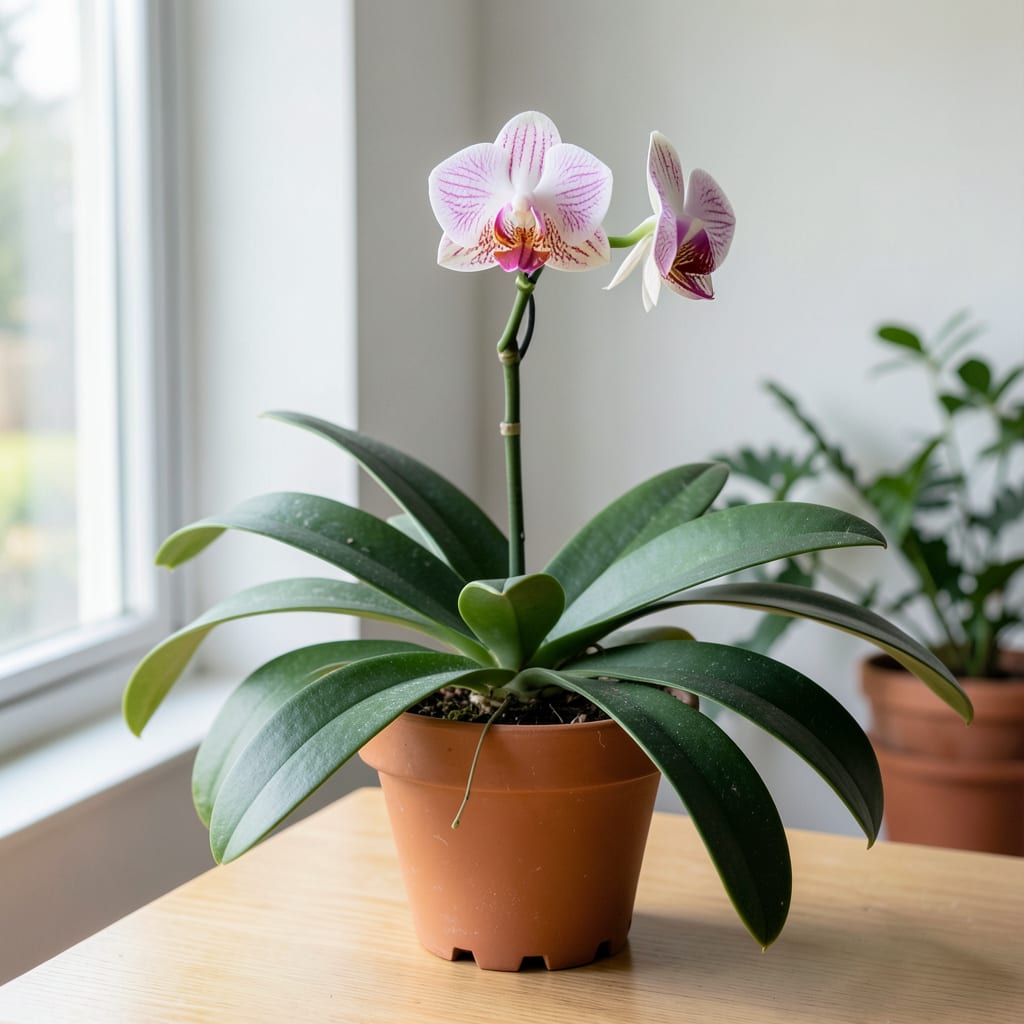
I’ve always been fascinated by the beauty of Orchids 💐, but understanding their light requirements can be tricky. Too little light, and they won’t bloom; too much, and they might get scorched.
So, how much light does your Orchid really need? Let’s explore the ideal lighting conditions for these stunning plants to thrive in your home, particularly in USDA Zone 6 during spring.
 Best Window Placement
Orchids are known for their exotic beauty, but their lighting needs can be puzzling for many gardeners. Understanding how much light your orchid needs is crucial for its survival and blooming success.
Different orchid species have varying light requirements, ranging from low light to bright light conditions. Knowing the specific needs of your orchid is key to providing the right environment 🌿.
The ideal light duration for most orchids is 12-14 hours daily. This can be achieved through a combination of natural and artificial lighting 💡.
Monitoring your orchid’s response to light is crucial. If the leaves are dark green, it may need more light. If they’re yellow or red, it’s getting too much light 🔍.
Understanding these lighting requirements will help you create the perfect environment for your orchid to thrive and bloom beautifully 🌼.
For more specific guidance, consider the type of orchid you have, as different species have unique needs. Researching the specific variety will ensure you’re providing the best care 🌱.
By adjusting the light exposure according to your orchid’s needs, you’ll be on your way to enjoying its stunning blooms for months to come 💐.
Remember, proper lighting is just one aspect of orchid care. Combining it with the right watering and fertilization practices will result in a healthy, thriving plant 🌿.
With the right lighting conditions, your orchid will reward you with beautiful blooms and a touch of exotic elegance to your home 🏠.
In summary, understanding and providing the correct light requirements is essential for the health and blooming success of your orchid. By following these guidelines, you’ll be well on your way to becoming an orchid expert 🌟.
I’ve found that providing the right light for my orchid is crucial for its blooming success. Most orchids require bright, indirect light to produce beautiful flowers 🌼.
To achieve this, I place my orchid near an east or west-facing window, where it receives gentle, filtered sunlight. This direction provides the ideal amount of light without causing the leaves to become scorched 🔥.
For optimal blooming, ensure your orchid receives 12-14 hours of light daily. You can supplement natural light with artificial lighting if necessary.
If you don’t have an east or west-facing window, don’t worry! You can still provide your orchid with the right light. South-facing windows can work too, but be sure to filter the light with a sheer curtain to prevent scorching 🌞.
Artificial lighting is another great option. I use LED grow lights to supplement the natural light, especially during the winter months when daylight hours are shorter 💡.
When using artificial lighting,
By providing the right light, you’ll be on your way to enjoying your orchid’s beautiful blooms for months to come 💐.
With a little practice and patience, you’ll become an expert in providing the perfect light for your orchid to thrive 🌟.
I’ve seen many orchid enthusiasts struggle with providing the right light for their plants. One of the most common mistakes is placing orchids in direct sunlight, which can cause the leaves to become scorched 🔥.
Another mistake is not providing enough light, resulting in weak and spindly growth. Orchids need bright, indirect light to photosynthesize and produce beautiful blooms 🌼.
Be cautious of overexposure to direct sunlight, as it can cause irreparable damage to your orchid’s leaves and flowers.
To avoid these mistakes, it’s essential to monitor your orchid’s response to light. Check the leaves regularly for signs of too much or too little light 🔍.
If you notice yellow or red leaves, it’s likely getting too much light. On the other hand, if the leaves are dark green, it may need more light 🌿.
By being aware of these common lighting mistakes and taking steps to correct them, you’ll be able to provide your orchid with the right conditions to thrive and bloom beautifully 💐.
With a little practice and patience, you’ll become an expert in providing the perfect light for your orchid to flourish 🌟.
Most orchids require 12-14 hours of light daily for optimal growth and blooming. This can be achieved through a combination of natural and artificial lighting. Proper light duration helps prevent weak and spindly growth .
Yes, artificial lighting is a great option, especially during winter months when natural light is limited. LED grow lights are particularly effective as they provide the necessary spectrum for orchid growth. Use them to supplement natural light for 12-14 hours daily .
Monitor your orchid’s leaves for signs of light stress. If they’re yellow or red, it’s getting too much light. If they’re dark green, it may need more light. Adjust the light exposure accordingly to ensure optimal health .
East or west-facing windows are ideal for most orchids as they provide gentle, filtered sunlight. South-facing windows can work too, but use a sheer curtain to filter the intense light and prevent scorching .
