
Beautiful Plants For Your Interior
Beautiful Plants For Your Interior
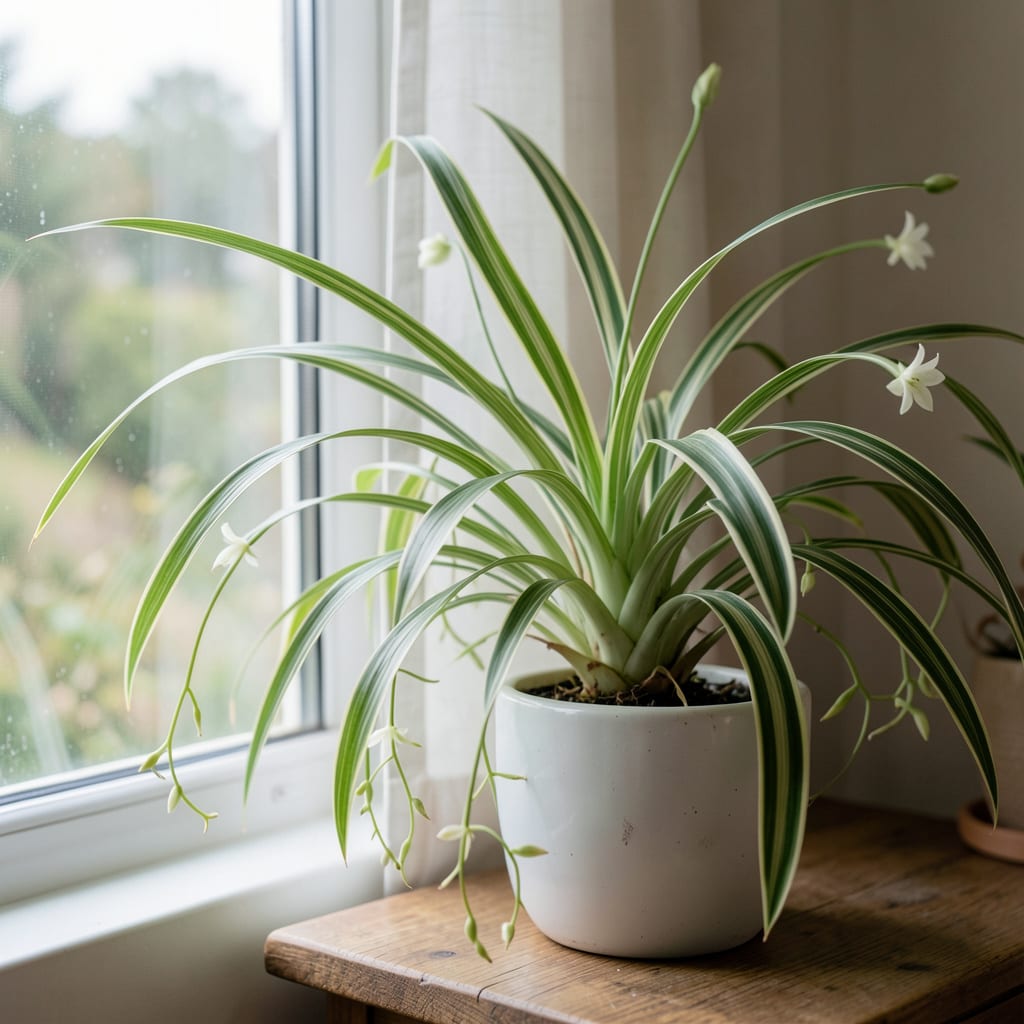
As I care for my Airplane Plant 🌱 in USDA Zone 6, I’ve learned that understanding its light requirements is crucial. Too little or too much light can affect its health and appearance.
The Airplane Plant thrives in bright indirect light, making an east or west-facing window ideal. Let’s explore how to provide the right lighting for your Airplane Plant to flourish.

The Airplane Plant (Chlorophytum comosum) is a versatile houseplant that can thrive in various lighting conditions, but understanding its ideal light requirements is crucial for optimal growth. In my experience, providing the right amount of light is key to maintaining the plant’s health and vibrant appearance 🌿.
Airplane Plants prefer bright indirect light, which makes them suitable for rooms with east or west-facing windows. This type of lighting provides the necessary energy for photosynthesis without causing leaf scorch 🔥.
To provide optimal lighting for your Airplane Plant, place it near an east or west-facing window where it can receive 4-6 hours of bright indirect light daily. If this isn’t possible, consider using supplemental grow lights to achieve the desired light intensity 💡.
It’s essential to monitor your plant’s response to its lighting conditions. If you notice signs of too much or too little light, such as leaf discoloration or stunted growth, adjust its position accordingly 🔄.
By understanding and meeting the light requirements of your Airplane Plant, you can enjoy a thriving, healthy plant that adds beauty and freshness to your indoor space 🌸.
For more detailed information on caring for Airplane Plants, including tips on watering and fertilization, refer to our comprehensive guide 📚.
Additional considerations for lighting include seasonal changes and the use of artificial light sources. During winter months, when natural light is scarce, supplemental lighting can help maintain your plant’s health ❄️.
When using grow lights, ensure they are not too intense, as this can cause damage similar to direct sunlight. A fluorescent or LED grow light set to a moderate intensity is usually sufficient 💻.
By following these guidelines and being mindful of your Airplane Plant’s lighting needs, you can create an optimal environment for it to flourish 🌞.
Regularly check your plant’s condition and adjust its lighting as needed to ensure it remains healthy and vibrant 📝.
To ensure your Airplane Plant thrives, it’s essential to provide the right lighting conditions. I recommend placing your plant near an east or west-facing window where it can receive 4-6 hours of bright indirect light daily 🌞.
If you don’t have a suitable window, don’t worry! You can use supplemental grow lights to achieve the desired light intensity. This is especially helpful during winter months when natural light is scarce ❄️.
When using grow lights, keep them at a moderate intensity to avoid damaging your plant. A fluorescent or LED grow light is a good option 💻.
It’s also crucial to monitor your plant’s response to its lighting conditions. If you notice signs of too much or too little light, such as leaf discoloration or stunted growth, adjust its position accordingly 🔄.
By understanding and meeting the light requirements of your Airplane Plant, you can enjoy a thriving, healthy plant that adds beauty and freshness to your indoor space 🌸.
For more detailed information on caring for Airplane Plants, including tips on watering and fertilization, refer to our comprehensive guide 📚.
Regularly checking your plant’s condition and adjusting its lighting as needed will ensure it remains healthy and vibrant 📝.
Understanding the signs of improper lighting is crucial for maintaining your Airplane Plant’s health. Too much or too little light can cause noticeable changes in the plant’s appearance 🔍.
One of the most common signs of too much light is leaf scorch, which appears as brown or yellow spots on the leaves. On the other hand, too little light can cause leggy growth, where the plant becomes stretched out and sparse 🌱.
Monitor your Airplane Plant’s leaves for signs of too much or too little light, and adjust its position accordingly to maintain optimal health.
If you notice your Airplane Plant’s leaves are turning yellow or brown, it may be a sign that it’s receiving too much direct sunlight 🔥. Conversely, if the leaves are becoming pale or the plant is growing unevenly, it might not be getting enough light 🌟.
To adjust your plant’s lighting, you can move it to a different location or use supplemental grow lights to achieve the ideal bright indirect light 💡.
Regular monitoring and adjustments will help ensure your Airplane Plant remains healthy and vibrant 📝.
An east or west-facing window is perfect for Airplane Plants as it provides bright indirect light without direct sun exposure. This direction offers 4-6 hours of gentle light daily, ideal for maintaining the plant’s health and vibrant appearance.
Yes, you can use supplemental grow lights for your Airplane Plant, especially during winter months when natural light is scarce. A fluorescent or LED grow light set to moderate intensity can help achieve the desired light conditions.
Watch for signs like leaf scorch (brown/yellow spots) for too much light, or leggy growth (stretched out appearance) for too little light. Adjust the plant’s position or lighting accordingly to maintain optimal health.
Regularly check your plant’s condition and adjust its lighting as needed. This ensures your Airplane Plant remains healthy and vibrant. Monitor its leaves for signs of too much or too little light.
