
Beautiful Plants For Your Interior
Beautiful Plants For Your Interior
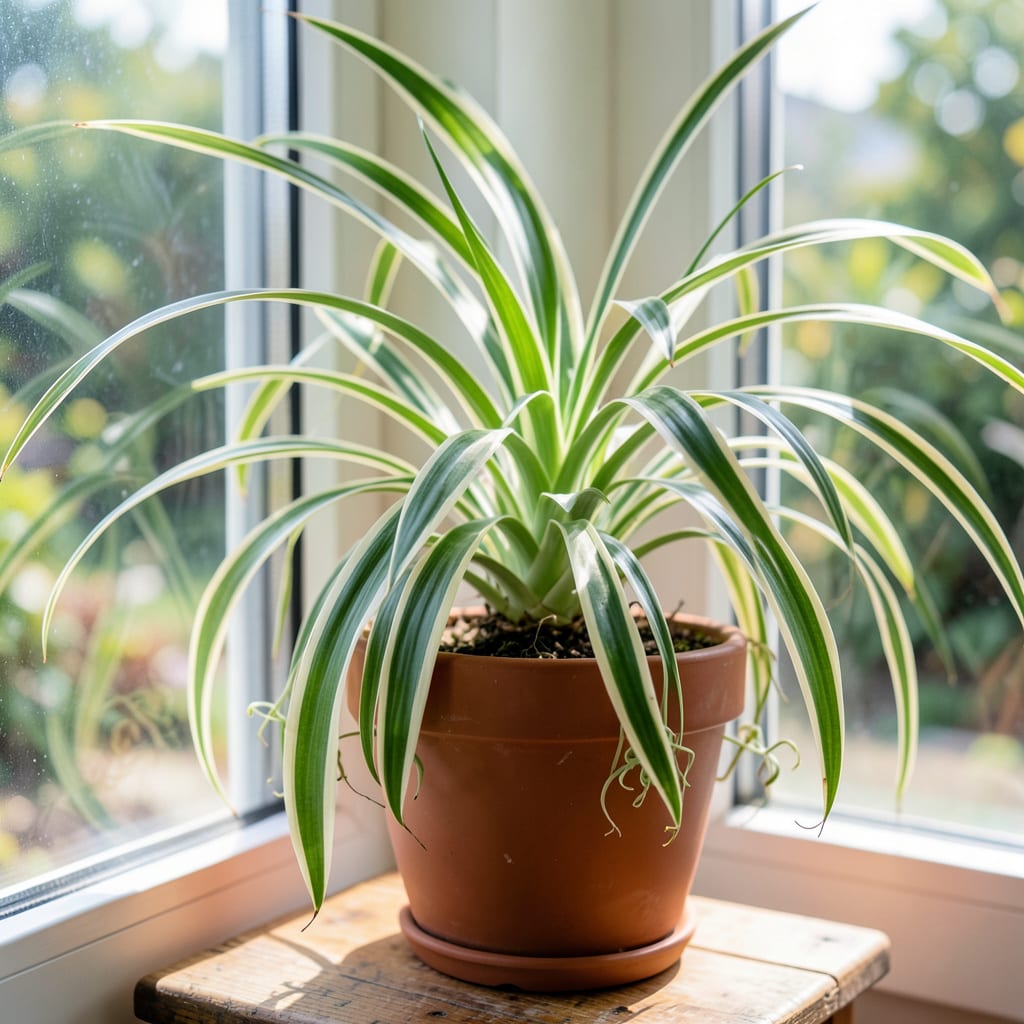
As a plant enthusiast, I’ve learned that proper lighting is crucial for keeping your Spider Plant 🌿 thriving. Too little light can cause leggy growth, while too much can scorch those beautiful leaves.
So, what’s the sweet spot? Let’s dive into the ideal lighting conditions for your Spider Plant to flourish in your home, particularly in USDA Zone 6.

Spider plants are known for their adaptability to various lighting conditions, but they still have specific needs for optimal growth. The ideal lighting for spider plants is bright indirect light, which means they thrive best with 4-6 hours of bright, indirect sunlight daily 🌞.
Direct sunlight can be too intense and may cause the leaves to become scorched, while too little light can lead to leggy growth and a loss of the plant’s vibrant color. Understanding the lighting requirements is crucial for maintaining the health and appearance of your spider plant 🌿.
The light intensity that spider plants prefer is often described as medium to bright. They can tolerate lower light levels, but their growth may slow, and the leaves might become less vibrant. On the other hand, very bright light can cause the leaves to become pale or develop brown tips 🔍.
Window placement is a critical factor in providing the right amount of light. East or west-facing windows are ideal as they provide gentle, indirect sunlight for most of the day. North-facing windows can also work, but the plant might not grow as vigorously. South-facing windows should be avoided unless you can filter the direct sunlight with a sheer curtain 🌻.
If you’re using artificial lighting, ensure that the light source is not too close to the plant to avoid overheating. Fluorescent lights or LED grow lights can be effective alternatives, especially during the winter months when natural light is scarce 💡.
It’s also worth noting that spider plants can adapt to different lighting conditions over time. If you’re moving your plant to a new location, it’s best to do so gradually to prevent shocking the plant with a sudden change in light intensity 🌱.
Monitoring your plant’s response to its lighting conditions is key. If the leaves are turning yellow or brown, it might be getting too much light. Conversely, if the leaves are becoming pale or the plant is stretching towards the light source, it might need more light 🔄.
By understanding and adjusting the lighting for your spider plant, you can ensure it remains healthy and continues to be a beautiful addition to your home or office 🌿.
In summary, providing your spider plant with the right amount of light is essential for its health and growth. By choosing the right location and being mindful of the light intensity and duration, you can enjoy a thriving and vibrant spider plant for years to come 🌸.
When it comes to placing your spider plant in your home, understanding the best lighting conditions is crucial for its health and vibrancy. Spider plants thrive in bright indirect light, making them perfect for rooms with plenty of natural light that isn’t directly hitting the plant 🌞.
One of the most effective ways to provide your spider plant with the right light is by placing it near east or west-facing windows. These orientations offer gentle, indirect sunlight that is ideal for spider plants. Avoid placing your spider plant in south-facing windows unless you can filter the direct sunlight with a sheer curtain to prevent scorching the leaves 🌻.
For optimal growth, rotate your spider plant every few days to ensure even light distribution and prevent leaning 🌿.
If your home doesn’t receive much natural light, don’t worry! Spider plants can also thrive under artificial lighting. Fluorescent lights or LED grow lights are excellent options, especially during the winter months when natural light is scarce. Just ensure that the light source is not too close to the plant to avoid overheating 💡.
It’s also worth noting that while spider plants can adapt to different lighting conditions, they do best in consistent lighting. If you’re moving your plant to a new location, do so gradually to prevent shocking the plant with a sudden change in light intensity 🌱.
Monitoring your plant’s response to its lighting conditions is key. If the leaves start to turn yellow or brown, it might be getting too much light. Conversely, if the leaves are becoming pale or the plant is stretching towards the light source, it might need more light 🔄.
By choosing the right location and being mindful of the light intensity and duration, you can keep your spider plant healthy and thriving. Remember, the goal is to provide 4-6 hours of bright, indirect light daily for the best results 🌟.
In summary, placing your spider plant in a spot with the right lighting conditions is essential for its health and growth. With a little attention to its lighting needs, your spider plant will continue to be a beautiful and vibrant addition to your home or office 🌸.
When it comes to understanding whether your spider plant is getting the right amount of light, observing its leaves is key. Spider plants are quite communicative about their lighting needs through their foliage 🌿.
If your spider plant is receiving too much light, you might notice that its leaves are turning yello or developing brown tips. This is often a sign that the plant is getting more direct sunlight than it can handle 🔥.
If leaves are yellow/brown, it’s too much light. If pale/stretching, it needs more light 🔄.
On the other hand, if the leaves are becoming pale or the plant is stretching towards the light source, it’s likely a sign that the spider plant isn’t getting enough light 🌱.
Adjusting your spider plant’s position or supplementing with grow lights can help achieve the ideal lighting conditions. Remember, the goal is to provide 4-6 hours of bright, indirect light daily for optimal growth 💡.
By paying attention to these signs and making necessary adjustments, you can ensure your spider plant remains healthy and continues to be a beautiful addition to your home or office 🌸.
In summary, monitoring your spider plant’s response to its lighting conditions and making adjustments as needed is crucial for its health and vibrancy 🌿.
With proper care and attention to lighting, your spider plant will thrive and continue to be a great addition to your space 🌟.
Yes, spider plants can tolerate low light, but their growth will be slower and the leaves may become less vibrant. For optimal growth, they still need 4-6 hours of bright, indirect light daily.
East or west-facing windows are ideal for spider plants as they provide gentle, indirect sunlight. Avoid south-facing windows unless you can filter the direct sunlight with a sheer curtain.
Yes, spider plants can thrive under artificial lighting like fluorescent or LED grow lights, especially during winter months when natural light is scarce. Keep the light source at a safe distance to avoid overheating.
Watch for signs: if leaves turn yellow or brown, it’s too much light. If they become pale or the plant stretches towards the light, it needs more. Adjust the plant’s position or supplement with grow lights as needed.
