
Beautiful Plants For Your Interior
Beautiful Plants For Your Interior
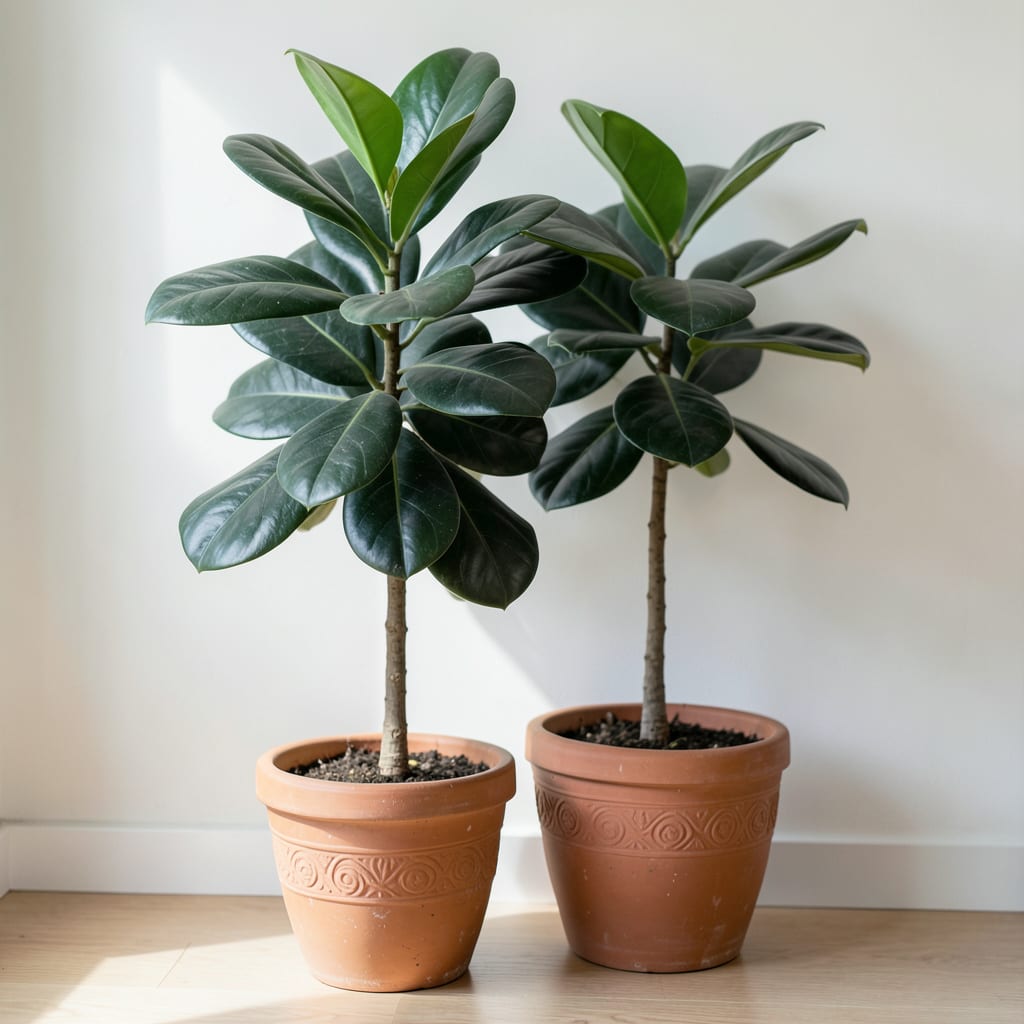
As I care for my Rubber Plant 🌱 indoors, I’ve learned that getting the light just right is crucial. Too little or too much can affect its health and growth.
Let’s explore the ideal lighting conditions for your Rubber Plant and how to achieve them for a thriving, beautiful plant.

Rubber plants are known for their large, glossy leaves and can thrive indoors with the right lighting conditions. The ideal light for rubber plants is bright, indirect light that lasts for 4-6 hours daily. This can be achieved by placing them near an east or west-facing window where they receive filtered sunlight 🌞.
Direct sunlight can cause the leaves to become scorched, while too little light can lead to leggy growth and a loss of the plant’s vibrant color. It’s essential to strike a balance to keep your rubber plant healthy and thriving.
The quality of light is more important than the quantity. Rubber plants can adapt to various light conditions, but consistent bright indirect light will promote the best growth and maintain the plant’s beautiful foliage 🌿.
When placing your rubber plant, consider the time of day and the window orientation. Morning or late afternoon sun is generally gentler and less likely to cause damage than the intense midday sun.
Monitoring your plant’s response to the light it receives is crucial. If the leaves start to fade or become scorched, it may be getting too much light. Conversely, if the plant becomes leggy or the leaves are pale, it might not be getting enough light 🔍.
Adjusting the plant’s position or using sheer curtains to filter the sunlight can help achieve the perfect lighting conditions. This flexibility makes rubber plants a popular choice for indoor gardening enthusiasts.
By understanding and meeting the lighting needs of your rubber plant, you can ensure it remains a healthy and striking addition to your indoor space 🏠.
In summary, providing your rubber plant with the right amount and type of light is key to its health and growth. With the right conditions, your plant will thrive and continue to be a beautiful part of your home 🌸.
For more specific guidance on caring for your rubber plant, including tips on watering and fertilizing, be sure to check out our other articles on indoor plant care 📚.
To keep your rubber plant thriving indoors, providing the right light is crucial. I recommend placing your plant near an east or west-facing window where it can receive bright, indirect light for 4-6 hours daily 🌞.
If direct sunlight is unavoidable, consider using sheer curtains or blinds to filter the light and prevent scorching the leaves. This simple adjustment can make a significant difference in your plant’s health 🌿.
Rotate your rubber plant every 1-2 weeks to ensure even growth and prevent leaning towards the light source 🔄.
In addition to natural light, you can also use artificial lighting to supplement your rubber plant’s needs. LED grow lights are an excellent option as they provide the necessary spectrum without generating excessive heat 💡.
When using artificial lighting, maintain a distance of 12-18 inches between the light source and your plant to avoid burning the leaves. A 12-hour light cycle can help mimic natural daylight conditions and support healthy growth 🕰️.
Monitoring your plant’s response to the lighting conditions is essential. If you notice the leaves becoming pale or leggy, it may be a sign that the plant needs more light. Conversely, if the leaves are scorched or discolored, it might be receiving too much light 🔍.
By providing the right light and making adjustments as needed, you can keep your rubber plant healthy and thriving indoors. Remember, the key is to maintain consistent bright, indirect light and be mindful of your plant’s needs 🌟.
For more tips on caring for your rubber plant, including advice on watering and fertilizing, check out our other articles on indoor plant care 📚.
When it comes to rubber plants, incorrect lighting can have significant consequences on their health and appearance. I have seen many rubber plants suffer from improper lighting conditions, and it’s essential to understand the risks to provide the best care 🌿.
Too much light can cause the leaves to become scorched, leading to discoloration and damage. On the other hand, too little light can result in leggy growth and a loss of the plant’s vibrant color 🔍.
Be cautious of the lighting conditions for your rubber plant, as too much or too little light can cause damage and affect its overall health 🔥.
To avoid these issues, it’s crucial to monitor your plant’s response to the lighting conditions. If you notice any adverse effects, adjust the plant’s position or use sheer curtains to filter the sunlight 🌞.
By being aware of the consequences of incorrect lighting, you can take steps to provide your rubber plant with the right conditions to thrive. Remember, the key is to maintain consistent bright, indirect light and be mindful of your plant’s needs 🌟.
For more information on caring for your rubber plant, including tips on watering and fertilizing, be sure to check out our other articles on indoor plant care 📚.
In conclusion, understanding the consequences of incorrect lighting is vital for keeping your rubber plant healthy and thriving. By providing the right light, you can enjoy a beautiful and robust plant in your indoor space 🌸.
East or west-facing windows are best for rubber plants as they provide bright, indirect light for 4-6 hours daily. This direction offers gentle, filtered sunlight that’s perfect for their growth .
No, rubber plants are sensitive to direct sunlight, which can cause their leaves to become scorched. If direct sunlight is unavoidable, use sheer curtains or blinds to filter the light and prevent damage .
Rotate your rubber plant every 1-2 weeks to ensure even growth and prevent it from leaning towards the light source. This simple practice promotes balanced development and maintains the plant’s aesthetic appeal .
Yes, you can use LED grow lights to supplement your rubber plant’s lighting needs. Keep the lights 12-18 inches away from the plant and maintain a 12-hour light cycle to mimic natural daylight conditions .
