
Beautiful Plants For Your Interior
Beautiful Plants For Your Interior
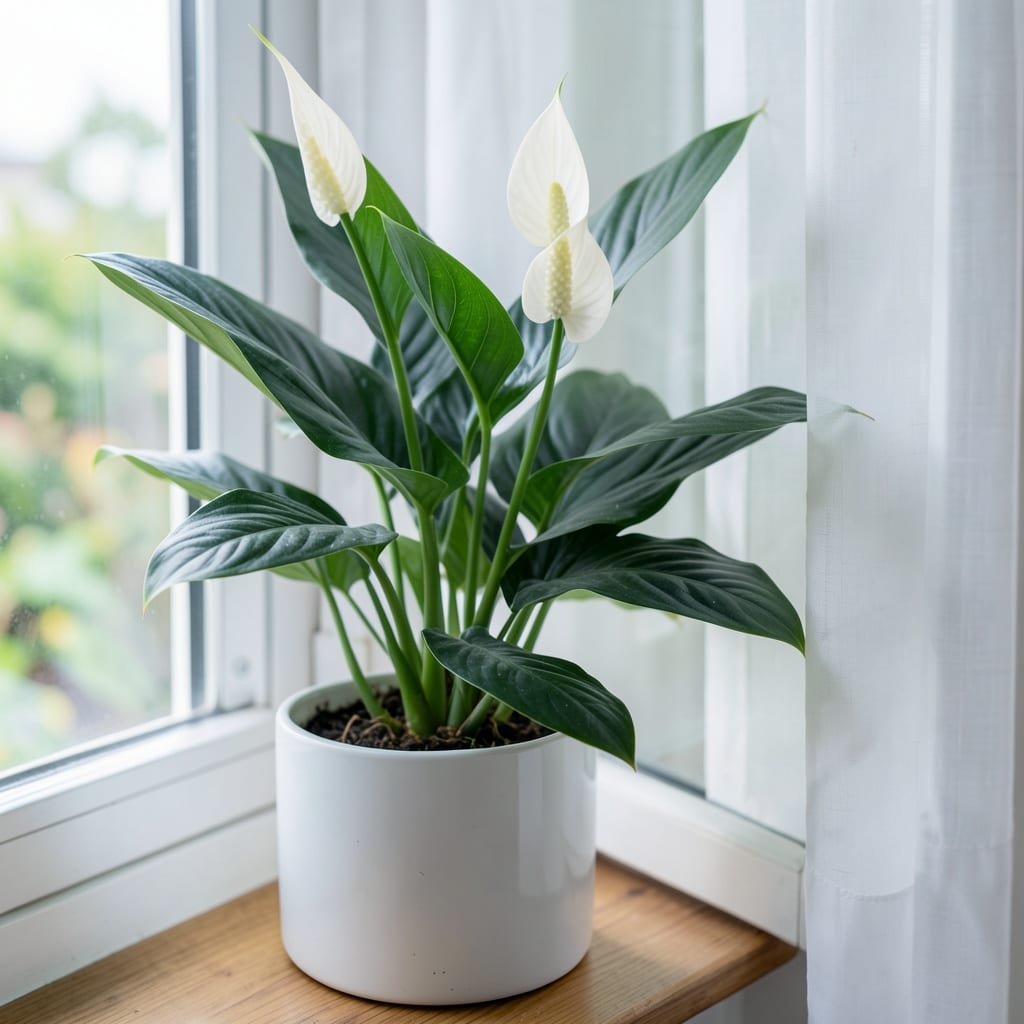
As I care for my Peace Lily 💐, I’ve learned that getting the light just right is crucial for its health. Too little or too much light can affect its beautiful white blooms and air-purifying qualities.
In this guide, I’ll share expert tips on how to provide your Peace Lily with the optimal lighting conditions it needs to thrive in your home, whether you’re in USDA Zone 6 or elsewhere.

When it comes to peace lily care, lighting is a crucial factor that can make or break the plant’s health and appearance. I’ve found that understanding the ideal light conditions for peace lilies is essential for their well-being.
Peace lilies are known to thrive in low to moderate light conditions, making them an excellent choice for homes with limited natural light. However, the type of light they receive is just as important as the amount.
It’s essential to note that peace lilies can tolerate a range of light conditions, but direct sunlight can be detrimental to their health. Direct sunlight can cause the leaves to become scorched, leading to unsightly brown spots and damage.
In my experience, peace lilies prefer indirect or filtered light, which can be achieved by placing them near an east- or west-facing window or using a sheer curtain to filter the direct sunlight.
When it comes to the duration of light exposure, peace lilies can thrive in conditions with low light intensity, making them suitable for offices or rooms with limited natural light.
To summarize, peace lilies require careful consideration of their lighting needs to ensure they remain healthy and thrive. By providing the right type and amount of light, you can enjoy their beautiful blooms and air-purifying qualities for years to come 🌿.
Now that we’ve explored the ideal lighting conditions for peace lilies, let’s discuss how to provide optimal light for your peace lily plant in different home environments.
It’s also worth noting that supplemental lighting can be used to support peace lilies during periods of low natural light, such as during the winter months.
By understanding the lighting requirements of peace lilies, you can create an optimal growing environment that promotes healthy growth and flowering.
Peace lilies are relatively low-maintenance plants when it comes to lighting, but they still require attention to their specific needs to thrive.
In the next section, we’ll explore practical tips on positioning peace lilies in different home environments and adjusting light exposure to ensure they receive the right amount of light 🌻.
Now that we’ve explored the ideal lighting conditions for peace lilies, let’s dive into practical tips on how to provide optimal light for your peace lily plant in different home environments 🌿.
Positioning your peace lily correctly is crucial for its health. I’ve found that placing them near a north-facing window is ideal, as it provides the right amount of indirect light.
Use sheer curtains to filter direct sunlight and prevent scorching your peace lily’s leaves.
If you don’t have a north-facing window, don’t worry! You can still provide your peace lily with the right light. East- or west-facing windows are also suitable, as they receive gentle, indirect sunlight.
It’s also essential to be mindful of the duration of light exposure. Peace lilies can thrive in conditions with low light intensity, making them suitable for offices or rooms with limited natural light ⏰.
In my experience, it’s better to provide peace lilies with consistent, indirect light rather than direct sunlight. This will help prevent damage to the leaves and promote healthy growth.
To ensure your peace lily receives the right amount of light, you can also consider using supplemental lighting, such as LED grow lights, during periods of low natural light 🌟.
By following these tips, you can create an optimal growing environment for your peace lily, promoting healthy growth and flowering 🌻.
Now that we’ve covered how to provide optimal light for your peace lily, let’s move on to recognizing and fixing common peace lily lighting issues.
As I care for my peace lily, I’ve noticed that even with proper lighting, issues can arise if the light isn’t quite right. Let’s explore how to identify and fix common lighting problems 🌿.
One of the most common issues is too much direct sunlight, which can cause the leaves to become scorched. If you notice brown spots or yellowing leaves, it may be a sign that your peace lily is receiving too much direct light 🔥.
If your peace lily’s leaves are developing brown tips or yellowing, it may be getting too much direct sunlight. Consider moving it to a spot with filtered or indirect light.
On the other hand, too little light can cause peace lilies to become leggy or fail to produce blooms. If your peace lily isn’t flowering, it might be due to insufficient light 🌸.
To fix these issues, you can adjust the plant’s position to receive the right amount of light. If that’s not possible, consider using supplemental lighting, such as LED grow lights, to support your peace lily’s needs 💡.
In my experience, monitoring your peace lily’s response to light and making adjustments as needed is key to maintaining its health and promoting beautiful blooms 🌻.
By being aware of these common lighting issues and taking steps to address them, you can help your peace lily thrive and enjoy its elegant white blooms for years to come.
To summarize, recognizing the signs of too much or too little light and taking corrective action is crucial for maintaining a healthy peace lily 🌟.
No, peace lilies prefer indirect or filtered light. Direct sunlight can cause their leaves to become scorched, leading to brown spots and damage. Place them near an east- or west-facing window for optimal light.
Peace lilies thrive in conditions with 2-4 hours of indirect light per day. They can tolerate low light conditions, making them suitable for offices or rooms with limited natural light.
Too much light can cause brown spots or yellowing leaves, while too little light can lead to leggy growth or a lack of blooms. Adjust the plant’s position or consider using supplemental lighting to address these issues.
Yes, you can use LED grow lights to support your peace lily’s lighting needs, especially during periods of low natural light. This can help promote healthy growth and flowering.
