
Beautiful Plants For Your Interior
Beautiful Plants For Your Interior
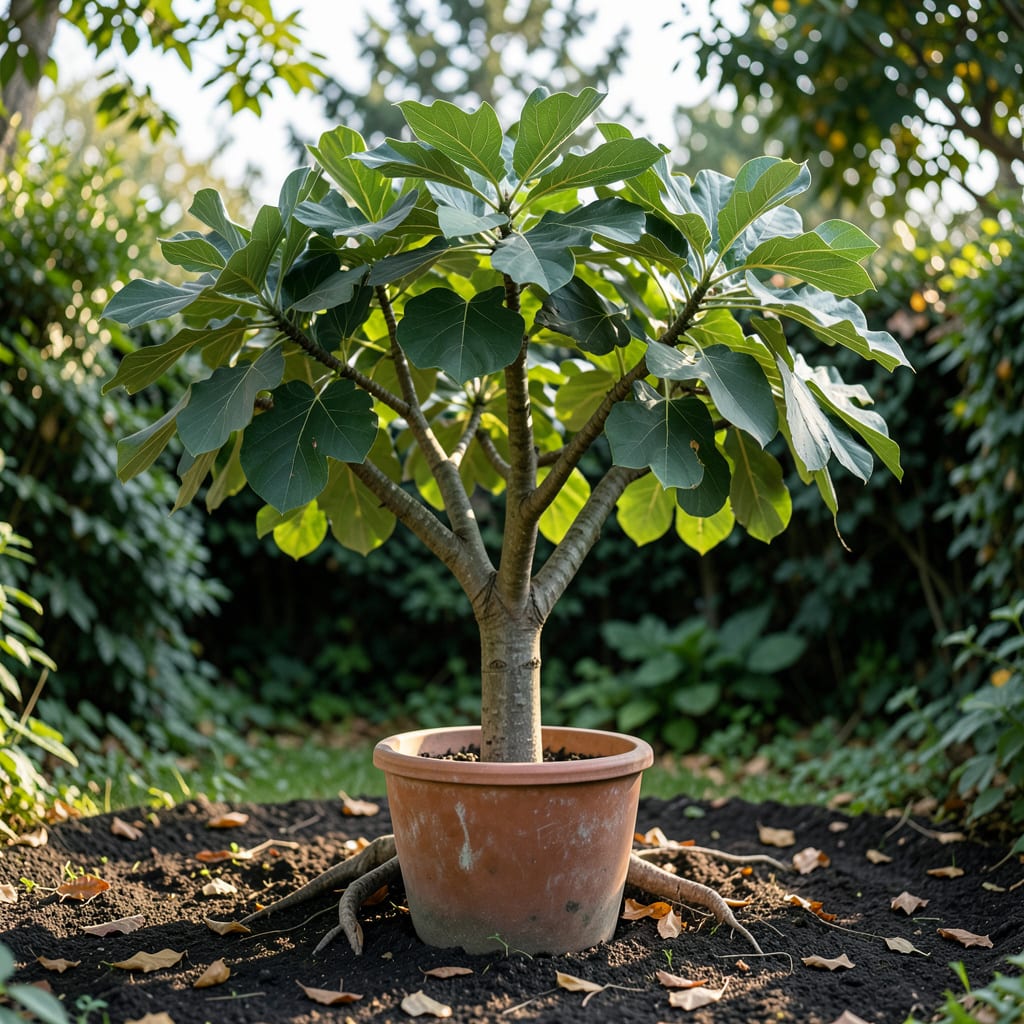
Growing a healthy Fig Tree 🫐 requires understanding its light needs. Too little or too much light can affect its growth and fruit production.
In USDA Zone 6, Fig Trees thrive in full sun conditions. I’ll guide you through the optimal light conditions and practical tips to ensure your Fig Tree gets the right amount of light for optimal growth.

Fig leaf plants require bright, indirect light to thrive. In their natural habitat, they grow under the canopy of larger trees, receiving filtered sunlight. To replicate this condition, it’s essential to provide your fig leaf plant with the right amount of light 🌿.
The ideal light condition for fig leaf plants is 4-6 hours of indirect sunlight per day. Direct sunlight can cause leaf scorch, while too little light can lead to weak and leggy growth. In USDA Zone 6, it’s possible to grow fig leaf plants outdoors during the warmer months, but they need protection from intense sunlight 🔥.
To ensure your fig leaf plant receives the right amount of light, consider its placement carefully. If you’re growing it indoors, place it near a south-facing window with a sheer curtain to filter the sunlight. If you’re growing it outdoors, choose a location with morning sun and afternoon shade 🌻.
Understanding the light requirements of your fig leaf plant is crucial for its health and growth. By providing the right amount of light, you can promote healthy growth and enjoy the beautiful foliage of your plant 🌸.
Fig leaf plants are not just beautiful additions to your garden or indoor space; they’re also relatively low-maintenance. However, they do require specific care, including the right amount of light, water, and nutrients. I’ll discuss the importance of light for fig leaf plants and provide tips on how to provide the right conditions 🌱.
In addition to light, fig leaf plants require consistent moisture and balanced fertilization. I’ll cover these topics in more detail later, but for now, let’s focus on the importance of light 💡.
One of the most common mistakes people make when growing fig leaf plants is providing too much or too little light. Too much direct sunlight can cause the leaves to become scorched, while too little light can lead to weak and leggy growth. I’ll provide more information on how to avoid these common mistakes later 🚫.
If you’re new to growing fig leaf plants, you might be wondering how to determine if your plant is receiving the right amount of light. One way to check is to observe the leaves; if they’re a healthy green color and have a robust texture, it’s likely receiving the right amount of light 🌿.
On the other hand, if the leaves are becoming scorched or are weak and leggy, it may be a sign that the plant is receiving too much or too little light. In this case, you can adjust the plant’s position or use grow lights to supplement the natural light 💡.
Grow lights can be a great option for fig leaf plants, especially during the winter months when natural light is scarce. They provide a controlled amount of light that can help promote healthy growth and development. I’ll discuss the benefits of using grow lights in more detail later 🔦.
In conclusion, providing the right amount of light is crucial for the health and growth of your fig leaf plant. By understanding the ideal light conditions and taking steps to provide the right amount of light, you can enjoy a thriving and beautiful plant 🌸.
Fig leaf plants require careful placement to receive the right amount of light. I recommend placing them near a south-facing window with a sheer curtain to filter the sunlight 🌞.
The ideal light condition for fig leaf plants is 4-6 hours of indirect sunlight per day. To achieve this, you can use a combination of natural and artificial light sources 💡.
Use grow lights to supplement natural light during winter months or in low-light conditions. This will help maintain optimal growth and prevent leggy stems 🌱.
When using grow lights,
It’s also essential to monitor your plant’s response to the light it’s receiving. If the leaves are becoming scorched, it may be a sign that the plant is receiving too much direct sunlight 🔥.
On the other hand, if the leaves are weak and leggy, it may be a sign that the plant is not receiving enough light 🌿.
Adjust the plant’s position or the grow lights accordingly to ensure it’s receiving the right amount of light. By doing so, you’ll be able to promote healthy growth and enjoy the beautiful foliage of your fig leaf plant 🌸.
Remember, fig leaf plants are relatively low-maintenance, but they do require specific care. By providing the right amount of light, you’ll be able to keep your plant thriving 🌱.
In addition to light, fig leaf plants require consistent moisture and balanced fertilization. I’ll cover these topics in more detail later, but for now, let’s focus on the importance of light 💡.
When growing fig leaf plants, it’s essential to avoid common lighting mistakes that can harm their health and growth. One of the most significant errors is exposing them to too much direct sunlight, which can cause leaf scorch and damage 🔥.
Another mistake is not providing enough light, leading to weak and leggy growth. Fig leaf plants need bright, indirect light to thrive, so it’s crucial to find the right balance 🌿.
Avoid placing fig leaf plants in low-light areas or exposing them to direct sunlight for extended periods. This can lead to poor growth and damage to the plant 🌟.
To avoid these mistakes, it’s crucial to monitor your plant’s response to the light it’s receiving. If the leaves are becoming scorched, it may be a sign that the plant is receiving too much direct sunlight 🔥.
On the other hand, if the leaves are weak and leggy, it may be a sign that the plant is not receiving enough light 🌿.
By being aware of these common lighting mistakes and taking steps to avoid them, you can promote healthy growth and enjoy the beautiful foliage of your fig leaf plant 🌸.
Additionally, using grow lights can be beneficial, especially during the winter months or in low-light conditions. This can help maintain optimal growth and prevent leggy stems 🌱.
In summary, being mindful of the lighting needs of your fig leaf plant and avoiding common mistakes can significantly impact its health and growth. By providing the right amount of light, you can enjoy a thriving and beautiful plant 🌸.
Fig leaf plants require 4-6 hours of indirect sunlight per day. Direct sunlight can cause leaf scorch, while too little light leads to weak growth. Place them near a south-facing window with a sheer curtain to filter the sunlight .
Yes, grow lights can be beneficial, especially during winter months or in low-light conditions. They provide a controlled amount of light that promotes healthy growth and prevents leggy stems. Use them to supplement natural light .
Monitor the leaves; if they’re scorched, it’s likely too much direct sunlight . If they’re weak and leggy, it may not be getting enough light . Adjust the plant’s position or use grow lights accordingly.
Yes, in USDA Zone 6, fig leaf plants can be grown outdoors during warmer months. Choose a location with morning sun and afternoon shade to provide the right amount of light .
