
Beautiful Plants For Your Interior
Beautiful Plants For Your Interior
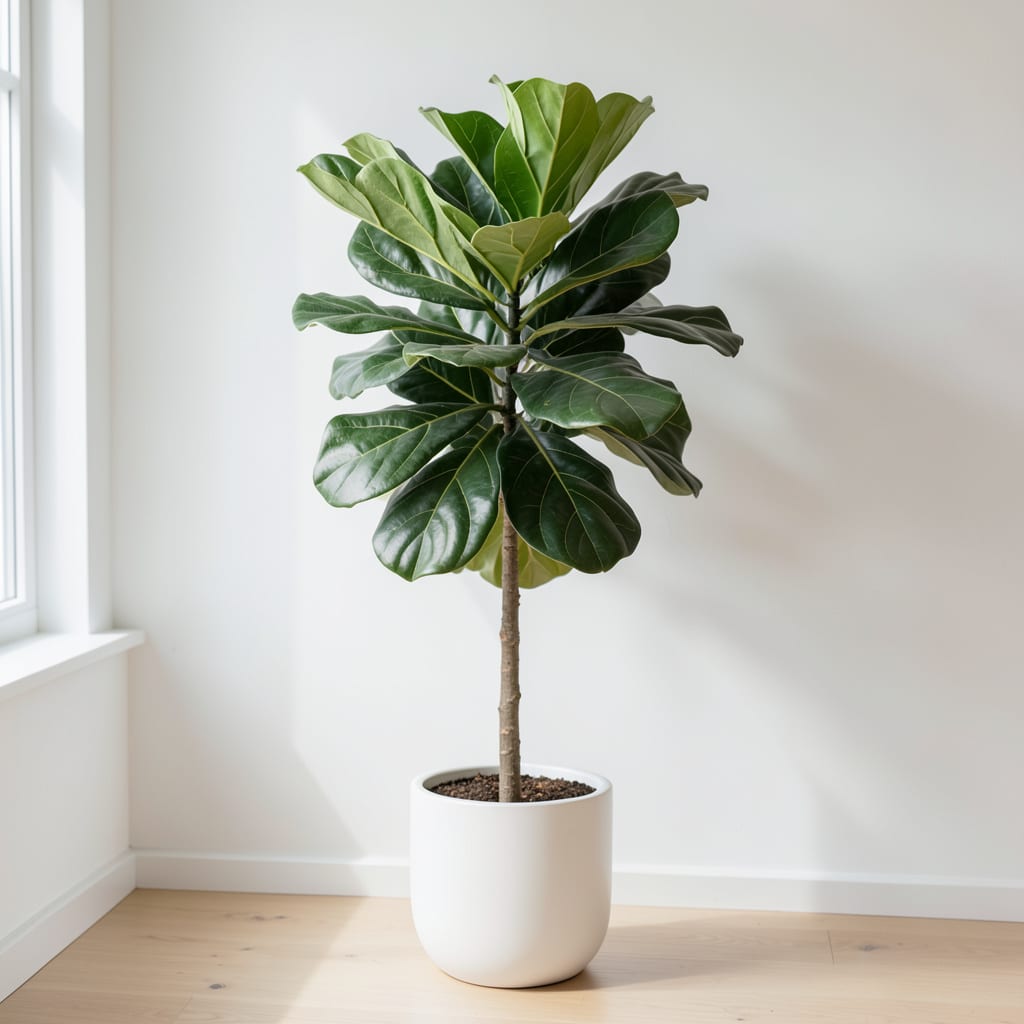
Fiddle leaf figs 🌱 have become a popular choice for indoor gardening, but their lighting needs can be puzzling. To keep your plant thriving, it’s essential to understand its light requirements, especially if you’re in USDA Zone 6.
Let’s explore the optimal lighting conditions for your fiddle leaf fig and how to achieve them in your home. I’ll share practical tips on providing the right amount of light to keep your plant happy and healthy.

Fiddle leaf figs are native to tropical rainforests where they thrive under the canopy of larger trees, receiving bright, indirect light. To replicate these conditions indoors, it’s essential to provide your plant with the right amount of light. In their natural habitat, these plants are accustomed to filtered sunlight and partial shade, which is crucial for their growth and development 🌿.
The ideal light condition for fiddle leaf figs is bright, indirect light for 4-6 hours a day. This can be achieved by placing the plant near an east- or west-facing window. Direct sunlight can cause the leaves to become scorched, so it’s best to filter the light through a sheer curtain if necessary. Understanding these light requirements is key to keeping your fiddle leaf fig healthy and thriving 🌱.
Maintaining the right light conditions is crucial for the health of your fiddle leaf fig. Insufficient light can lead to leggy growth and smaller leaves, while excessive direct light can cause leaf scorch and browning. By understanding and meeting your plant’s light needs, you can ensure it remains a vibrant and beautiful addition to your home 🌟.
Fiddle leaf figs are considered moderate to high light plants, meaning they need more than just ambient light to thrive. They require a significant amount of bright, indirect light to maintain their health and support their growth. This is particularly important in USDA Zone 6, where natural light can be limited during certain parts of the year ❄️.
To further enhance your understanding, it’s helpful to know that fiddle leaf figs can adapt to different light conditions, but their optimal growth occurs in bright, indirect light. This adaptability makes them a popular choice for indoor gardening, as they can be placed in various locations around the home, provided the light conditions are met 🌿.
When assessing the light needs of your fiddle leaf fig, consider the time of year and the natural light availability in your home. During the winter months, when natural light is scarce, you may need to supplement with grow lights to ensure your plant receives the light it needs to thrive 💡.
It’s also worth noting that the quality of light is as important as the quantity. Fiddle leaf figs benefit from filtered sunlight, which mimics the conditions under the forest canopy. This type of light promotes healthy growth and helps prevent common issues associated with direct sunlight, such as leaf damage ☀️.
In summary, providing the right amount of bright, indirect light is essential for the health and well-being of your fiddle leaf fig. By understanding and meeting these light requirements, you can enjoy a thriving and beautiful plant in your home for years to come 🌸.
For those new to caring for fiddle leaf figs, it’s reassuring to know that with the right light conditions, these plants can be relatively low maintenance. Regularly checking the light conditions and adjusting as necessary will help keep your plant happy and healthy 🌞.
Finally, remember that every home is different, and the specific light needs of your fiddle leaf fig may vary depending on your location and the layout of your home. By paying attention to your plant’s response to its environment, you can make informed decisions to provide the best possible care 🌟.
Now that you understand the importance of light for your fiddle leaf fig, let’s explore practical ways to provide the right amount of light. Proper positioning is key to ensuring your plant receives bright, indirect light for 4-6 hours daily 🌞.
One effective method is to place your fiddle leaf fig near an east- or west-facing window. These orientations provide gentle, indirect light that is ideal for the plant’s growth. If you only have south-facing windows, consider using a sheer curtain to filter the direct sunlight and prevent leaf scorch 🔍.
Rotate your fiddle leaf fig every 1-2 weeks to ensure even light distribution and prevent uneven growth.
In addition to natural light, you can also use artificial lighting to supplement your plant’s needs. LED grow lights are a popular choice as they provide the necessary spectrum for plant growth without generating excessive heat 💡.
When using artificial light, maintain a distance of 12-18 inches between the light source and your plant to avoid burning the leaves. A general rule is to provide 12-14 hours of artificial light daily to mimic natural daylight conditions 🌟.
It’s also important to monitor your plant’s response to its lighting conditions. If you notice leggy growth or pale leaves, it may be a sign that your fiddle leaf fig needs more light. Conversely, if the leaves are scorched or browning, you may need to adjust the light intensity or duration 🔄.
By combining proper positioning with artificial lighting when necessary, you can create an optimal lighting environment for your fiddle leaf fig. This will help ensure your plant remains healthy, vibrant, and a beautiful addition to your home for years to come 🌿.
To further enhance your plant’s lighting, consider the time of year and adjust accordingly. During winter months, when natural light is limited, supplementing with grow lights can be particularly beneficial ❄️.
Finally, remember that every home is unique, and the specific lighting needs of your fiddle leaf fig may vary. By observing your plant’s response to its environment and making adjustments as needed, you can provide the best possible care and enjoy a thriving fiddle leaf fig 🌸.
Fiddle leaf figs can experience several light-related issues that affect their health and appearance. One common problem is leggy growth, which occurs when the plant doesn’t receive enough light 🌿.
When a fiddle leaf fig is not getting sufficient light, it may stretch towards the light source, resulting in an uneven shape. To address this, you can either move the plant to a brighter location or supplement with artificial lighting 🔦.
On the other hand, too much direct sunlight can cause leaf scorch and browning. If you notice these symptoms, consider filtering the sunlight with a sheer curtain or moving the plant to a location with indirect light 🌞.
Regularly monitoring your plant’s response to its lighting conditions is crucial. Adjust the light exposure as needed to maintain your fiddle leaf fig’s health and appearance 🔄.
By understanding the signs of light-related issues and taking corrective action, you can ensure your fiddle leaf fig remains a vibrant and beautiful addition to your home 🌸.
For optimal results, maintain a consistent lighting schedule and avoid frequent changes in your plant’s environment 🕰️.
With proper care and attention to lighting, your fiddle leaf fig will thrive and continue to be a stunning element in your indoor garden 🌿.
East- or west-facing windows are best as they provide bright, indirect light for 4-6 hours daily. This gentle light promotes healthy growth without scorching the leaves. If you only have south-facing windows, consider using a sheer curtain to filter the direct sunlight.
Yes, you can supplement natural light with artificial lighting, especially during winter months when natural light is limited. LED grow lights are a popular choice as they provide the necessary spectrum for plant growth without generating excessive heat. Maintain a distance of 12-18 inches between the light source and your plant.
Watch for signs like leggy growth or pale leaves indicating insufficient light, or leaf scorch and browning from excessive direct light. Adjust the light exposure accordingly to maintain your plant’s health. Regular monitoring helps prevent these issues.
Rotate your fiddle leaf fig every 1-2 weeks to ensure even light distribution and prevent uneven growth. This simple practice helps maintain a balanced shape and promotes healthy development.
