
Beautiful Plants For Your Interior
Beautiful Plants For Your Interior
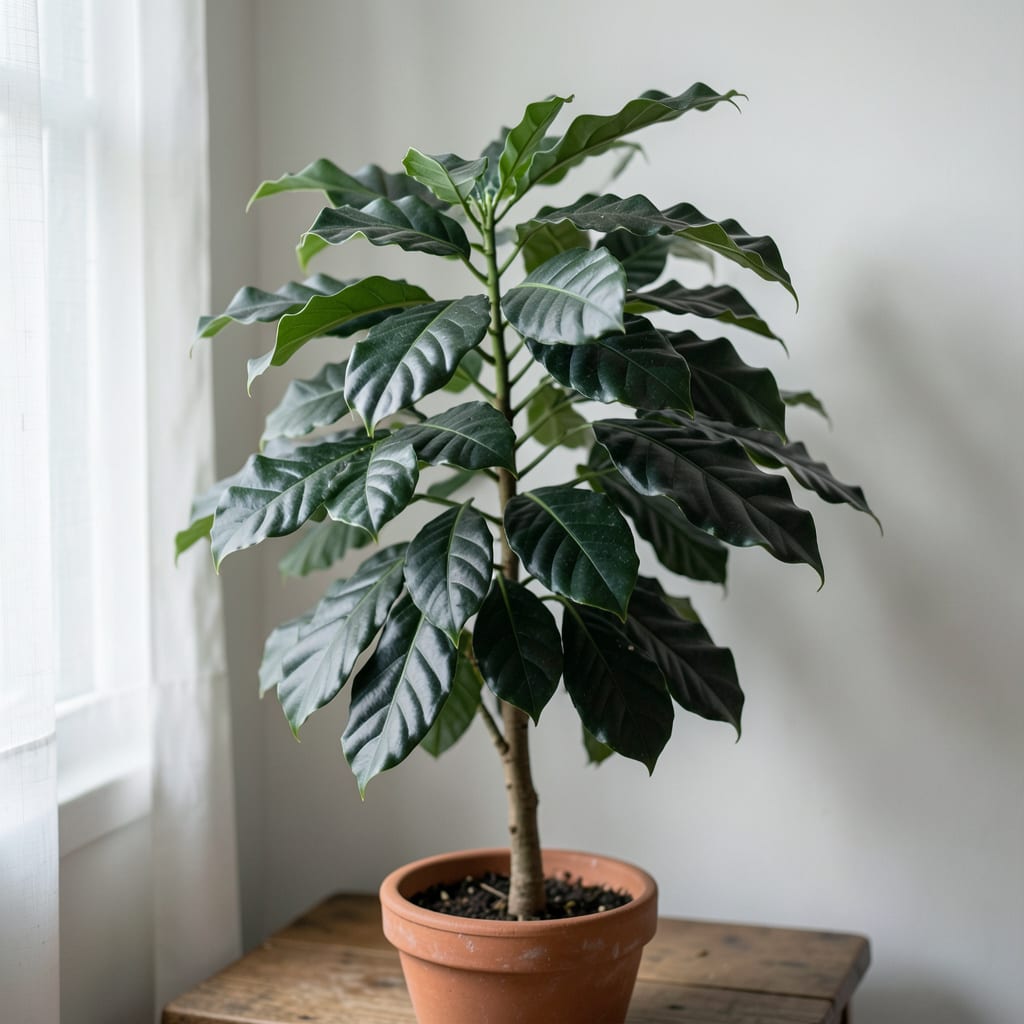
Growing a healthy ☕️ Coffee Plant requires understanding its light needs. Too little or too much light can affect its growth and productivity.
I’ll guide you through the ideal lighting conditions for your Coffee Plant, helping you create an optimal environment for it to thrive in your home or garden in USDA Zone 10.

Coffee plants require bright, indirect light to thrive, typically needing 4-6 hours of such light daily. This can be achieved by placing them near an east or west-facing window, where they receive gentle, indirect sunlight 🌞.
The ideal light intensity for coffee plants is moderate to bright, but not direct sunlight, which can cause leaf scorch. In their natural habitat, coffee plants grow under the canopy of larger trees, so they are adapted to filtered sunlight ☕️.
Coffee plants can adapt to different light conditions, but consistent bright, indirect light promotes healthy growth and flowering. In indoor settings, it’s essential to maintain this light quality to mimic their natural environment 🌿.
Direct sunlight should be avoided, as it can cause leaf damage and reduce plant health. Instead, use sheer curtains or shade cloth to filter the sunlight, ensuring your coffee plant receives the right amount of light 💡.
The duration and intensity of light also affect flowering and fruiting. Coffee plants that receive adequate light will produce more flowers and, subsequently, coffee cherries 🌼.
For coffee plants grown outdoors in USDA Zone 10, it’s crucial to provide shade, especially during the hottest part of the day, to prevent overheating and leaf damage 🌳.
Grow lights can be an effective supplement for coffee plants, especially during winter months or in low-light conditions. Use LED grow lights with a spectrum suitable for tropical plants like coffee 💻.
When using grow lights, maintain a distance of 12-18 inches between the light source and the plant to avoid overheating 🔍.
The quality of light also matters; coffee plants respond well to full-spectrum lighting that mimics natural daylight. This type of lighting supports overall plant health and development 🌻.
In summary, providing the right amount and type of light is crucial for the health and productivity of coffee plants. By understanding and meeting their light requirements, you can enjoy a thriving and fruitful coffee plant ☕️.
To ensure your coffee plant thrives, it’s essential to provide the right amount of light. Coffee plants require bright, indirect light for 4-6 hours daily. Placing them near an east or west-facing window is ideal, as it provides gentle, indirect sunlight 🌞.
Use sheer curtains or shade cloth to filter direct sunlight and maintain optimal light conditions for your coffee plant.
When growing coffee plants indoors, it’s crucial to maintain consistent bright, indirect light to mimic their natural environment. Avoid direct sunlight, which can cause leaf damage and reduce plant health 🌿.
Grow lights can be an effective supplement, especially during winter months or in low-light conditions. Use LED grow lights with a spectrum suitable for tropical plants like coffee, and maintain a distance of 12-18 inches between the light source and the plant 🔍.
The quality of light also matters; coffee plants respond well to full-spectrum lighting that mimics natural daylight, supporting overall plant health and development 🌻.
For coffee plants grown outdoors in USDA Zone 10, provide shade, especially during the hottest part of the day, to prevent overheating and leaf damage 🌳.
By understanding and meeting the light requirements of your coffee plant, you can enjoy a thriving and fruitful plant. Proper lighting is key to healthy growth and productivity ☕️.
Adjusting the lighting conditions according to the seasonal changes is also important. During winter, when natural light is scarce, consider using grow lights to supplement the natural light ❄️.
Monitoring your coffee plant’s response to light is crucial. If you notice leggy growth or yellowing leaves, it may be a sign that the light conditions need adjustment 🌟.
Growing coffee plants requires careful attention to their lighting needs. One of the most common mistakes is exposing them to direct sunlight, which can cause leaf scorch and damage the plant 🌞.
Avoid placing coffee plants in direct sunlight or low-light conditions for extended periods, as this can significantly impact their health and productivity.
Another critical error is not adjusting the lighting according to seasonal changes. During winter, when natural light is scarce, coffee plants may require supplemental lighting to maintain optimal conditions ❄️.
Insufficient light can lead to leggy growth and reduced flowering, while excessive light can cause leaf damage and stress to the plant 🌟.
To avoid these common lighting mistakes, it’s essential to monitor your coffee plant’s response to light and adjust the conditions accordingly. By doing so, you can ensure your plant receives the right amount of light to thrive ☕️.
Proper lighting is crucial for the overall health and productivity of coffee plants. By understanding their lighting needs and avoiding common mistakes, you can enjoy a thriving and fruitful coffee plant 🌿.
For coffee plants grown outdoors in USDA Zone 10, providing shade during the hottest part of the day is vital to prevent overheating and leaf damage 🌳.
By being aware of these common lighting mistakes and taking steps to avoid them, you can create an optimal environment for your coffee plant to grow and flourish 🌻.
Coffee plants thrive best near east or west-facing windows where they receive 4-6 hours of gentle, indirect sunlight daily. This direction provides the right amount of bright, indirect light without the harsh direct sun that can cause leaf damage .
Yes, LED grow lights can be an effective supplement for coffee plants, especially during winter months or in low-light conditions. Use lights with a spectrum suitable for tropical plants and maintain a distance of 12-18 inches between the light source and the plant .
If your coffee plant is getting too little light, it may exhibit leggy growth or yellowing leaves. Too much light can cause leaf scorch or browning. Adjust the lighting conditions accordingly to maintain optimal health .
Yes, it’s essential to adjust the lighting according to seasonal changes. During winter, when natural light is scarce, consider using grow lights to supplement the natural light and maintain optimal conditions .
