
Beautiful Plants For Your Interior
Beautiful Plants For Your Interior
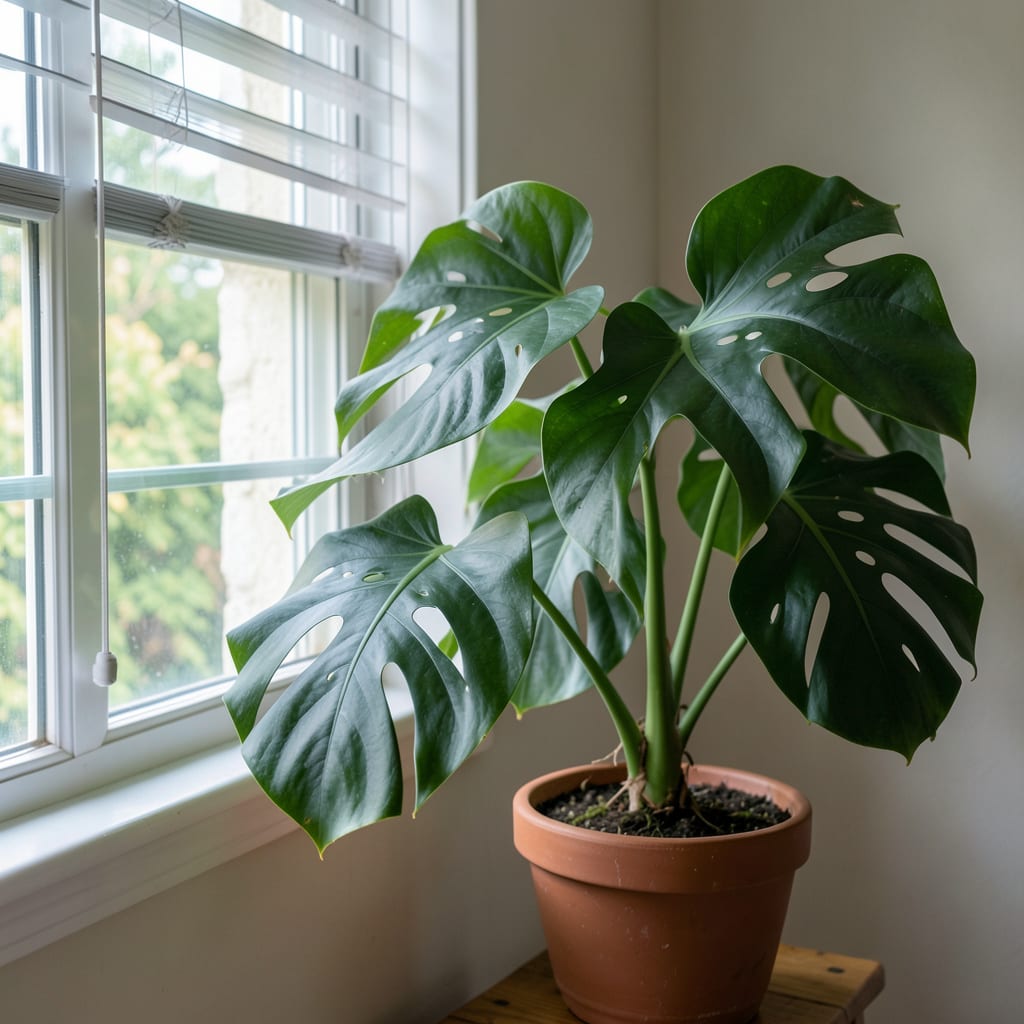
I’ve always been fascinated by the Cheese Plant 🌱, known for its stunning, glossy leaves that can brighten up any room. To keep this beautiful houseplant thriving, understanding its light requirements is crucial.
So, how much light does it actually need? Let’s explore the optimal lighting conditions that will keep your Cheese Plant healthy and vibrant in USDA Zone 6.
 Best Window Placement
I’ve found that the Cheese Plant is quite particular about its lighting conditions. To keep it thriving, it’s essential to understand its specific needs. The right amount of light can make all the difference in maintaining its beautiful, glossy leaves 🌿.
The Cheese Plant requires bright, indirect light to grow well. Direct sunlight can be too harsh and may cause the leaves to become scorched. On the other hand, too little light can lead to weak and spindly growth 🌱.
In my experience, placing the Cheese Plant near an East or West-facing window provides the perfect amount of indirect light. This orientation allows the plant to receive gentle, indirect sunlight for several hours a day, promoting healthy growth and development.
It’s also worth noting that while Cheese Plants can tolerate some direct sunlight, it’s best to avoid exposing them to harsh, direct rays for extended periods. This can help prevent leaf scorch and maintain the plant’s overall health.
If you’re unsure about the lighting conditions in your home, you can use a light meter to measure the intensity. This can help you determine the best spot for your plant and ensure it’s getting the right amount of light 💡.
Cheese Plants are relatively adaptable to different lighting conditions, but they do best in bright, indirect light. By providing the right lighting conditions, you can enjoy a healthy, thriving plant with beautiful foliage 🌸.
In summary, the Cheese Plant needs 4-6 hours of bright, indirect light daily. By understanding and meeting its lighting requirements, you can keep your plant happy and thriving for years to come.
To further enhance your understanding, let’s consider some additional factors that can impact your Cheese Plant’s lighting needs.
For instance, the time of year and the plant’s growth stage can influence its light requirements. During the growing season, your Cheese Plant may require more light to support its active growth.
By being mindful of these factors and adjusting the lighting conditions accordingly, you can provide your Cheese Plant with the best possible care and enjoy its beautiful foliage for years to come 🌿.
I understand that providing the right amount of light for your Cheese Plant can be challenging, especially when dealing with different indoor environments. The key is to understand how to adjust the light exposure to meet your plant’s needs 🌿.
Cheese Plants generally require bright, indirect light, but they can adapt to various lighting conditions. For instance, if you have a room with limited natural light, you can still grow a Cheese Plant successfully with some adjustments 💡.
To ensure your Cheese Plant gets enough light in low-light conditions, consider using supplemental lighting such as LED grow lights. These can provide the necessary spectrum and intensity to support healthy growth 🌱.
In my experience, using LED grow lights can be a game-changer for indoor plants like the Cheese Plant. They offer a convenient way to provide the right amount of light, even when natural light is scarce. Plus, they’re energy-efficient and can be adjusted to different spectrums and intensities 🔦.
When placing your Cheese Plant in a low-light environment, it’s essential to monitor its condition closely. Look for signs of insufficient light, such as leggy growth or pale leaves. If you notice these symptoms, consider moving the plant to a brighter location or supplementing with artificial light 🌟.
On the other hand, if your Cheese Plant is exposed to too much direct sunlight, it may develop leaf scorch or become stressed. To avoid this, filter the sunlight using a sheer curtain or adjust the plant’s position to receive indirect light 🌞.
By understanding how to adjust the lighting conditions for your Cheese Plant, you can help it thrive in various indoor environments. Whether you’re dealing with low light or bright sunlight, being mindful of your plant’s needs will ensure it remains healthy and vibrant 🌿.
In summary, the key to growing a healthy Cheese Plant in different environments is to be flexible and observant. By adjusting the lighting conditions and using supplemental lighting when necessary, you can provide your plant with the best possible care and enjoy its beautiful foliage for years to come 🌱.
I’ve noticed that Cheese Plants can be quite sensitive to light conditions. Understanding the signs of too much or too little light is crucial for maintaining their health and vibrant appearance 🌱.
When a Cheese Plant receives too little light, it may exhibit leggy growth, where the stems become elongated as the plant stretches towards the light source. The leaves may also become pale or smaller than usual. On the other hand, too much direct sunlight can cause leaf scorch, leading to brown spots or edges on the leaves 🔥.
To keep your Cheese Plant healthy, monitor its leaves for signs of light stress and adjust its position accordingly. Providing the right amount of bright, indirect light is key to maintaining its beautiful foliage 🌿.
In my experience, it’s essential to be observant and adjust the lighting conditions based on your plant’s response. By doing so, you can ensure your Cheese Plant remains healthy and thrives in its environment 🌸.
To further enhance your understanding, let’s consider some additional factors that can impact your Cheese Plant’s lighting needs. For instance, the time of year and the plant’s growth stage can influence its light requirements 🌞.
During the growing season, your Cheese Plant may require more light to support its active growth. By being mindful of these factors and adjusting the lighting conditions accordingly, you can provide your plant with the best possible care 🌱.
In summary, monitoring your Cheese Plant’s response to light and making adjustments as needed is crucial for its health and well-being. By providing the right amount of bright, indirect light, you can enjoy a thriving plant with beautiful foliage for years to come 🌿.
While Cheese Plants can adapt to low light, they thrive best in bright, indirect light. In low light conditions, they may exhibit leggy growth or pale leaves. Consider using LED grow lights to supplement the natural light.
If your Cheese Plant is exposed to too much direct sunlight, it may develop leaf scorch, leading to brown spots or edges on the leaves. To avoid this, filter the sunlight using a sheer curtain or adjust the plant’s position to receive indirect light.
Placing your Cheese Plant near an East or West-facing window provides the perfect amount of indirect light. This orientation allows the plant to receive gentle, indirect sunlight for several hours a day, promoting healthy growth and development.
Yes, you can use LED grow lights to provide your Cheese Plant with the necessary light, especially in low-light conditions. These lights are energy-efficient and can be adjusted to different spectrums and intensities to support healthy growth.
